

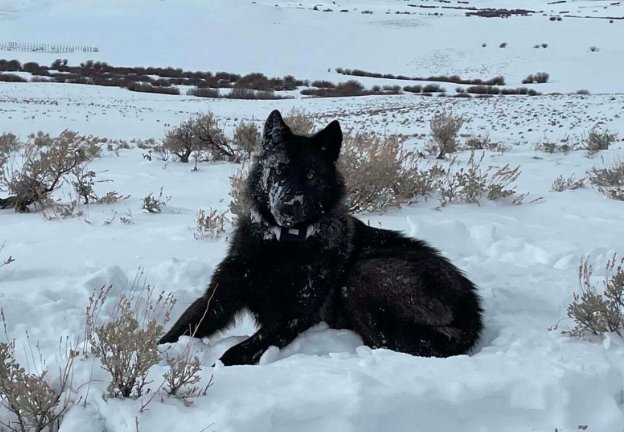





GRAND JUNCTION, Colo. — A gray wolf has been confirmed to be roaming through parts of Montrose County, Colorado Parks and Wildlife (CPW) officials said this week, marking a rare but increasingly anticipated sighting amid the state’s controversial wolf reintroduction initiative.
According to CPW, the animal—wearing a GPS collar—was detected in the southeastern region of Blue Mesa Reservoir last weekend before moving southwest toward Montrose County. On Tuesday morning, trackers located the animal just east of the county line, south of Morrow Point Reservoir.
This is not the first time this specific wolf has roamed far from its release zone. CPW noted that the same individual was observed in Delta County back in February, raising questions about the broader range and behavior of the newly released wolves as they explore unfamiliar territory.
Wolf Presence Confirmed Through Tracking
The sighting was part of CPW’s broader monitoring efforts launched after the state reintroduced wolves in late 2023 following a voter-approved initiative. Officials use GPS collars to monitor their location, health, and migration routes.
“This particular wolf is part of our initial release group,” a CPW biologist confirmed. “We’ve seen it move quite a bit across the Western Slope, which aligns with the natural behavior of wolves—especially young adults—establishing range and seeking out prey or other wolves.”
The wolf’s movement into Montrose County represents the furthest documented southwest travel of any reintroduced wolf in the state to date.
From Mesa to Montrose: A Dispersal Pattern
This latest report follows the March release of CPW’s gray wolf activity map, which for the first time visually outlined wolf sightings and confirmed movements across Mesa County and surrounding areas.
Since then, at least three counties—including Delta, Gunnison, and now Montrose—have reported confirmed activity, tracked either through GPS collar data or credible field sightings.
Wildlife experts say this “fanning out” is both expected and significant.
“Wolves can travel up to 30 miles a day when dispersing,” said Dr. Erika Hernandez, a large carnivore ecologist. “Seeing one travel this distance across counties is entirely in line with typical exploratory behavior—but it’s still rare, and it underscores how carefully we must manage these animals’ interactions with humans, livestock, and pets.”
A Political and Ecological Flashpoint
The sighting arrives as tensions remain high around wolf reintroduction in Colorado. Voters narrowly passed Proposition 114 in 2020, mandating that the state reintroduce gray wolves west of the Continental Divide by the end of 2023.
CPW released its first group of wolves in Grand County in December 2023, a move hailed by conservation groups but sharply criticized by ranchers and some Western Slope lawmakers who warn of threats to livestock and game herds.
Montrose and Delta counties have both expressed skepticism over the long-term impacts of the program. The confirmed presence of a roaming wolf is likely to rekindle local concerns—particularly among ranchers.
Key concerns include:
-
Livestock safety and compensation policies
-
Impact on elk and deer herds
-
Increased human-wildlife conflict potential
No Incidents Reported — Yet
As of Friday, CPW says there have been no confirmed livestock attacks tied to the Montrose-area wolf. However, local officials are advising ranchers to stay alert and report any suspicious activity involving livestock behavior or carcasses.
Under Colorado’s current policy, CPW compensates ranchers for verified livestock losses due to wolves, though the program’s funding and verification methods remain a point of contention in legislative hearings.
“We understand the concerns of landowners and producers,” said CPW’s Carnivore Program Manager. “We’re working hard to ensure early detection, proactive support, and open lines of communication.”
Public Access and Education
In an effort to promote transparency and education, CPW has encouraged the public to view its Gray Wolf Activity Map, which offers updated data on confirmed movements and general locations, based on collar signals.
However, officials warn against approaching or attempting to locate wolves in the wild.
“These are federally protected animals under the Endangered Species Act,” the agency reminds. “Harassing, feeding, or interfering with wolves can lead to serious legal consequences—not to mention disrupting natural behavior patterns.”
The map is updated weekly and aims to help communities track the presence of wolves in their region, as well as guide responsible recreation and backcountry use.
Looking Ahead
With spring upon the Western Slope, CPW expects more wolf dispersal and potential new sightings in other counties. The agency is also monitoring for pair formation and denning behavior, which could indicate early stages of reproduction—though no pups have yet been reported.
Meanwhile, wildlife advocates view the Montrose sighting as a positive indicator of ecological restoration.
“This is exactly what wolves are supposed to do—move, roam, establish territory, and rebalance ecosystems,” said Bethany Quinn of the Colorado Wildlands Foundation. “We understand the anxiety, but coexistence is possible.”
Community Vigilance Requested
Residents of Montrose, Delta, Gunnison, and Mesa counties are urged to:
-
Report sightings or tracks to Colorado Parks and Wildlife
-
Keep pets on leashes while hiking or camping in remote areas
-
Secure livestock attractants such as carcass piles or unsecured feed
-
Review CPW’s wolf coexistence guidelines for best practices
CPW has also scheduled community outreach events and town halls in affected counties later this spring, aimed at building dialogue and trust.



