
News
Fort Wayne Pastors Launch Hunger Strike to Protest Gaza Aid Blockade

Two local clergy members are refusing food in a bold plea for humanity, condemning the choking off of aid to Palestinians as famine fears escalate.
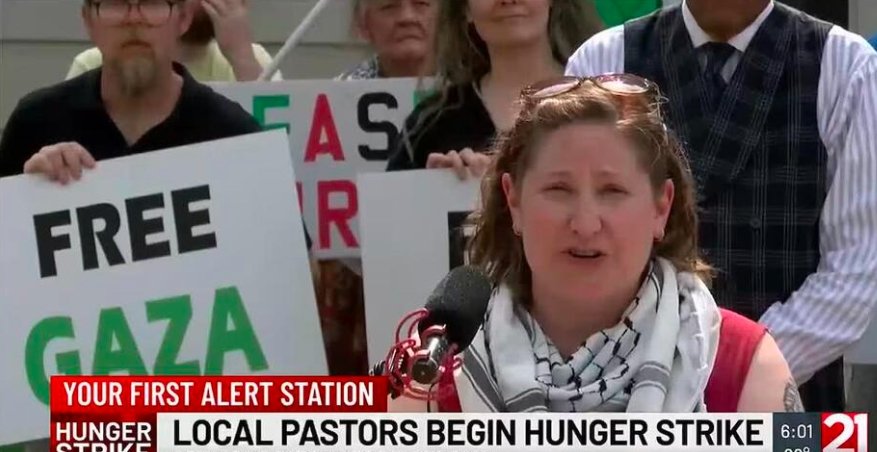
In a quiet corner of Indiana, a powerful protest has begun with nothing more than silence and empty stomachs. On Tuesday, two Fort Wayne pastors announced they would begin a hunger strike in response to mounting reports that food and humanitarian aid are being blocked from entering Gaza.
The move isn’t a publicity stunt. It’s personal.
Rev. Dr. Timothy Murphy and Rev. Sara Ofner-Seals of Plymouth Congregational Church say they’re taking this stand because they can’t sit idly by while children and families in Gaza face starvation. Their message? You don’t have to agree on politics to recognize the horror of famine.
“This is about basic human decency”
Speaking from the steps of their downtown church, Murphy didn’t mince words.
“You can have different feelings about the ethics of the war or the actions of Israel,” he said, “but what I think all of us can agree on is that starvation of a civilian population is not acceptable to anyone.”
He’s not alone. Ofner-Seals, standing beside him, nodded as he spoke, adding later that their protest is also rooted in their Christian values — values that demand compassion, justice, and action.
The decision to stop eating isn’t something they took lightly. But for both clergy members, it felt necessary. “We prayed. We talked. And we kept coming back to the same truth — we had to do something more,” said Ofner-Seals.
Why Gaza? Why now?
The timing of this protest is anything but random. In the last several weeks, global agencies and aid organizations have reported severe restrictions on the delivery of food and medicine into Gaza.
According to a recent update from the United Nations Relief and Works Agency (UNRWA), more than 1.1 million people in Gaza are facing catastrophic levels of food insecurity — that’s nearly half the population. Trucks filled with aid are stalled at border crossings, and some shipments are being turned away entirely.
What’s worse, children are dying. UNICEF reported that several infants and toddlers have already died from hunger or hunger-related illnesses. The World Food Programme has warned that Gaza is on the brink of a full-scale famine.
The local protest echoes international outrage. But for these Fort Wayne pastors, it’s also deeply rooted in Midwestern moral conviction — an old-school belief that doing what’s right shouldn’t depend on politics or polling.
A quiet movement with loud intentions
The hunger strike isn’t about grand speeches or social media theatrics. It’s simple, even understated. The two pastors will go without food for as long as they can physically manage it, checking in with doctors regularly. Water, juice, and occasional broths may be allowed, but solid food is off the table — literally.
There’s no press team. No hashtags.
And yet, the ripple effect is already beginning.
-
Members of the congregation have started calling their representatives.
-
A local Quaker group has expressed interest in joining the fast.
-
A handful of students at nearby Purdue University Fort Wayne held a vigil in solidarity.
Murphy and Ofner-Seals say they’re not interested in symbolic gestures. They want aid routes opened. Now.
Local reaction: empathy, support, and some pushback
The response in Fort Wayne has been mostly supportive — but not without friction.
Some community members have voiced discomfort with what they see as a politically charged act. Others have questioned why the pastors aren’t protesting Hamas or other militant groups.
Still, the majority reaction has been quiet admiration. A few neighbors have dropped off notes of support. Several parishioners, visibly emotional, said they felt proud — and challenged — by their pastors’ actions.
Not everyone agrees on Middle East policy. But even those with opposing views on Israel or Palestine are finding common ground on one thing: no one should die of hunger.
Clergy activism isn’t new — but it’s gaining traction
This isn’t the first time faith leaders have taken bold action.
In 1965, Martin Luther King Jr. led clergy in a march from Selma to Montgomery. In the 1980s, church leaders protested apartheid with public fasts. More recently, pastors were among the most vocal supporters of immigrant rights and Black Lives Matter.
Fort Wayne’s protest fits within that legacy — though it’s quieter, more personal.
And it’s part of a growing trend. Across the U.S., religious leaders are reasserting themselves as moral voices in an increasingly polarized political climate.
Here’s a quick comparison of recent clergy-led protests:
| Year | Location | Issue | Action Taken |
|---|---|---|---|
| 2018 | Washington, D.C. | Family separation at border | Prayer sit-ins, arrests |
| 2020 | Minneapolis | Police brutality | Marches, vigils |
| 2023 | Atlanta | Climate justice | Tree sits, hunger fast |
| 2025 | Fort Wayne | Gaza aid blockade | Hunger strike |
This isn’t about left or right. It’s about life or death.
What’s next: pressure building on elected officials
Murphy and Ofner-Seals hope their actions will inspire residents to pick up the phone — not just to thank them, but to contact their lawmakers.
They’re urging people to call Indiana Senators Todd Young and Mike Braun, and to press Congress to demand that humanitarian aid into Gaza resume immediately. Specifically, they want aid to be distributed through neutral agencies like the International Committee of the Red Cross or UNRWA, not military channels.
“We’re not naive,” said Murphy. “But we know people can move mountains when they’re hungry for justice. Literally.”
They aren’t placing blame on one side. They’re placing hope in everyone.
And for now, that hope looks like empty plates — and full hearts.











Spotify Running Mode hits Android and revives its old tempo experiment

Galaxy Tab S12 Ultra Renders Keep the Notch Fans Hate

Novato Spinning Round House Sells With Six Neighbors for $3.3 Million

Crop Tour Finds Indiana and Nebraska Corn Yields Lagging 2025

Best Buy 60th sale brings Android deals back to its roots

American Airlines reverses seatback screen bet years too late

Iran Hormuz Strikes Force Gulf Oil Onto Costlier Paths

Plague Tale Prequel Day One Joins Game Pass Wave 2 as Witcher Exits

NBA 2K27 opens The City to everyone and rewrites career eras

iOS 26.6.1 Patches 29 Flaws as AI Forces Faster Apple Updates

Double Fine Cuts 23 Jobs Weeks After Xbox Independence

Day-One Big Walk Lifts PS Plus August Beyond Recycled AAA

John Hight Exits Wizards After Digital Reckoning Hits

Curtis Mead’s Red Sox Debut Ends With Fractured Wrist

Red Sox Squander Hot Streak Chance in 4-3 Loss to Athletics

Moesch and Dressel Rewrite Night One at 2026 U.S. Nationals

Boutte’s Quiet Camp Takeover Forces Patriots Receiver Choices

Take-Two CEO Pushes Netflix Subs for GTA 6 Extended Look

Halo Campaign Evolved Skulls Meet Death Barriers That Kill the Hunt

Wildlands Free Update Hands Players the Tools They Already Invented
-

 TECHNOLOGY3 years ago
How to Adjust a Bulova Watch Band – An Easy Guide
-

 News3 years ago
Fred Pentland: Athletic Bilbao’s English mentor who changed the essence of Spanish football
-

 FINANCE3 years ago
Tax Planning for Every Season: Guide to Maximizing Your Tax Benefits
-

 Education3 years ago
African Ministers New Education Plan
-

 BUSINESS3 years ago
What is Entrepreneurial Operating System? A Comprehensive Guide to EOS
-

 Education3 years ago
Innovate Your Learning Journey with Technology and Enhance Education
-

 News3 years ago
Russians formally out of World Athletics Championships
-

 BUSINESS3 years ago
Top 9 Most Expensive American Cities to Rent an Apartment