
News
Loose Engine Part, Faulty Installation Cited in American Airlines Fire at Denver Airport

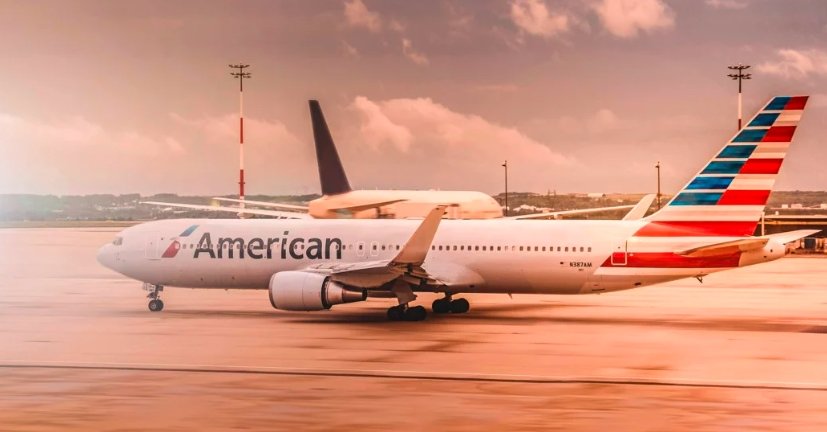
An American Airlines flight that caught fire after an emergency landing at Denver International Airport earlier this year had engine components installed incorrectly, according to a preliminary report released Thursday by the National Transportation Safety Board (NTSB).
The report cites two faulty installations inside the right engine as contributing to the incident, which forced the evacuation of 172 passengers and six crew members in March. While all passengers survived, 12 were taken to hospitals with minor injuries, largely sustained during the evacuation.
“Loose” and “Incorrectly Fastened” Engine Parts
The report identifies specific errors within the right engine’s assembly. One component was found to be loose and installed in the wrong direction, while another was incorrectly fastened, resulting in a fuel leak from the fitting. The presence of fuel near high-temperature engine surfaces significantly increased the risk of fire.
These defects led to visible signs of heat, smoke, and burn damage on and around the engine nacelle, the right wing, the fuselage area behind the wing, and the right main landing gear.
The right engine nacelle remained structurally intact, but investigators observed dark streaking consistent with airflow during flight and soot damage consistent with a fire that occurred on the ground, post-landing.
Smoke in the Cabin, Yells of “Fire”
Flight AA 2294, an Airbus A320, had departed Colorado Springs on March 13, 2025, en route to Dallas-Fort Worth International Airport, when crew members reported engine vibrations shortly after takeoff.
Following protocol, the flight crew informed passengers and cabin staff that the plane would divert to Denver. The aircraft landed safely and spent five minutes taxiing to the gate.
But once parked, the situation escalated quickly.
Within minutes, passengers began shouting “fire” and “smoke”, prompting flight attendants to investigate. Smoke began to visibly fill the cabin, even as the cockpit remained unaware of the growing emergency.
“No Answer From the Cockpit”
Flight attendants tried to call the flight deck but received no response. One attendant physically knocked on the cockpit door to alert the pilots about the smoke and visible flames outside.
The NTSB report states that passengers began leaving their seats, approaching flight attendants and demanding to be let off the plane. After conducting a cabin assessment, the flight crew made the call to initiate an evacuation.
All passengers exited the aircraft and were transported to the terminal. No fire reached the interior cabin, but the smoke exposure and panic during disembarkation led to minor injuries among a dozen travelers.
Engine Fan Damage Also Noted
Further inspection of the engine revealed that all fan blades were present, but one blade platform was fractured, raising additional questions about the extent of mechanical wear or stress inside the engine prior to takeoff.
Though not named in the report, industry experts have pointed out that improper installation of engine components—especially in high-compression zones—can lead to severe mechanical strain, vibrations, and fuel irregularities.
“This Was a Maintenance-Induced Event”
Aviation safety analysts say the early findings point toward maintenance oversight, possibly during a routine engine check or component replacement.
“This appears to be a maintenance-induced event,” said Mark Gibbons, a Denver-based aviation inspector with over two decades in airline safety. “When you install parts facing the wrong way or with incorrect fastening, it’s not just a small error—it’s a catastrophic risk in waiting.”
American Airlines has not released its own internal maintenance findings. The airline said it is cooperating fully with the NTSB investigation.
Repeat Spotlight on Airline Safety Protocols
The March incident is the latest in a series of mechanical issues across U.S. carriers that have placed airline maintenance practices under fresh scrutiny. While the FAA has not issued a directive on the specific part involved, the findings could lead to broader inspections across the Airbus A320 fleet used by multiple carriers.
“It’s not about a bad engine,” said Gibbons. “It’s about a bad installation, which is a human process failure.”
Evacuation Oversight and Communication Breakdown
While the evacuation was ultimately successful, the report hints at communication breakdowns between the cabin crew and cockpit.
The delay in informing the pilots about smoke conditions in the cabin raises concerns about post-landing alert systems, especially when visible cues such as smoke are present but not being relayed through standard comms.
NTSB did not state whether cockpit voice recordings or flight data recordings had been reviewed in full but noted that such materials were being analyzed as part of the ongoing probe.
Official Cause Still Undetermined
The report remains preliminary, with the exact cause of the fire still under investigation. The NTSB emphasized that its final report could take months and may include further findings on maintenance records, part sourcing, and oversight procedures.
For now, the improperly installed components stand as the most significant lead.
Airport fire crews responded swiftly after passengers were evacuated, containing the ground fire before it spread beyond the engine and lower fuselage. The aircraft sustained thermal distress damage but has not been deemed a total loss.













Walmart’s $50 Million Opioid Settlement Closes Case Without Admission

California Sues Over $120 Million Morro Bay Wind Lease Buyout

Gilead Bixlenvo FDA Nod Opens Single Pill Path for Complex HIV Cases

Meta’s $18B Kids Deal Forever Shields Data Used to Spot Under-13s

Lettuce Outbreak Drove Record Cyclospora Spike Across 20 States

Amazon Shaves $20 Off M6 Mac Mini Before It Even Ships

SpaceX Louisiana Port Tests Debt Markets on Orbital AI Scale

Microsoft High Lifts Indexes as Small Caps Crack Support

Apple Replays 2015 Saturday Midnight Preorder for iPhone 18 Pro

Updated COVID Shots Clear FDA but Access Friction Hits High-Risk Groups

Take-Two CEO Pushes Netflix Subs for GTA 6 Extended Look

Wildlands Free Update Hands Players the Tools They Already Invented

Quake Gets 19 Free Maps From MachineGames Quake Club

Destiny 2 Fans Unlock Vaulted Maps After Live Service Ends

Quordle Monday Delivers Gavel Crush Speed Ethos Cleanly

Stripe Bid Shows PayPal Moat Cracked After Years of Slide

Tyson’s Five-Year Utah Plant Falls to Cattle Shortage Reckoning

Silver Lake Workday Talks Signal Private Floor for Software

Kennedy Lewis Takes Majority Control of The Greenbrier in $500M Deal

Best Buy Marks 60 Years With Sale That Echoes Its Audio Shop Roots
-

 TECHNOLOGY3 years ago
How to Adjust a Bulova Watch Band – An Easy Guide
-

 News3 years ago
Fred Pentland: Athletic Bilbao’s English mentor who changed the essence of Spanish football
-

 FINANCE3 years ago
Tax Planning for Every Season: Guide to Maximizing Your Tax Benefits
-

 Education3 years ago
African Ministers New Education Plan
-

 BUSINESS3 years ago
What is Entrepreneurial Operating System? A Comprehensive Guide to EOS
-

 Education3 years ago
Innovate Your Learning Journey with Technology and Enhance Education
-

 News3 years ago
Russians formally out of World Athletics Championships
-

 BUSINESS3 years ago
Top 9 Most Expensive American Cities to Rent an Apartment