
News
Grand Junction Doctor-Pilot Takes to the Skies in Unlikely Climate Mission

A Colorado-based physician has quietly clocked over 30 conservation missions from the cockpit. One of them just happened to help a national challenge meet its ambitious target.
Flying for a Cause, Without Even Realising It
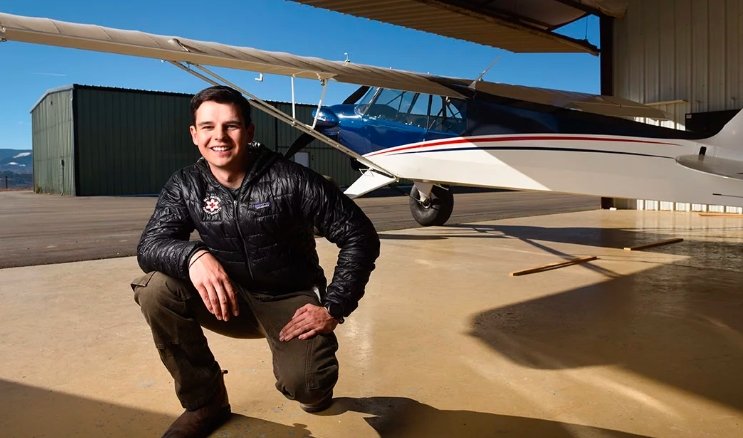
Stephen Meyer wasn’t trying to be part of any national movement. He was just doing what he’s done dozens of times before — take his plane up, fly a route, capture key ecological data, and send it back to LightHawk.
Turns out, that one flight was part of something bigger. LightHawk, the largest conservation flight nonprofit in North America, had launched a “50 in 50” campaign — 50 conservation flights in 50 days across the U.S. Meyer’s flight made the list. It wasn’t planned. It just lined up.
He laughed when he found out. “I’ve done this for years, just flying when I can. I didn’t even know I was part of their challenge this time,” he told reporters.
LightHawk’s Aerial Campaign Reaches New Heights
The 50 in 50 campaign wasn’t a marketing gimmick. It was a real push to show the tangible role of conservation aviation.
Each flight had a unique ecological goal. Some helped track wildlife migration. Others assessed wildfire scars or shrinking rivers. Meyer’s mission focused on something rare and easily missed: hanging gardens and isolated wetlands, almost invisible from satellite images.
-
These habitats are often tucked into cliff faces or canyons.
-
Satellite mapping often fails to detect them due to shadows or obstructions.
-
Aerial surveys provide visual confirmation and help scientists document their extent.
And that’s where pilots like Meyer come in.
He’s a Doctor First, Pilot Second
Or maybe the other way around, depending on the day.
Meyer has been a physician for over 40 years. He still works full-time. But flying isn’t just a hobby — it’s his way of giving back. He’s flown 34 conservation missions over seven years with LightHawk.
“I think if you have the means to be charitable, you should,” he said. “It costs me time, money, fuel — but I do it because I see it making a difference.”
There’s something quietly compelling about that statement. No fanfare. No PR stunt. Just an aging plane, a skilled pilot, and a view of the earth you can’t get from the ground.
Sometimes, that’s all it takes.
What the Flights Actually Do on the Ground
Meyer’s flight in this campaign wasn’t just symbolic. The data he collected directly contributed to environmental research teams trying to map out rare wetland types in the Southwest.
These fragile areas are disappearing. Urban development, water extraction, and climate pressure are drying them out faster than researchers can monitor.
Here’s how the flight data helps:
| Purpose of Flight | Impact on Conservation Efforts |
|---|---|
| Document hanging gardens | Guides field researchers to specific GPS locations |
| Identify rare wetlands | Helps track ecosystem loss and potential restoration sites |
| Provide aerial imagery | Enhances remote sensing validation and public outreach visuals |
| Monitor ecosystem health | Detects early warning signs like erosion, algae blooms, or pests |
It’s not just photos from 10,000 feet. These are actionable insights.
Grand Junction’s Quiet Environmental Contribution
The Grand Junction community isn’t exactly known as a conservation hub. But pilots like Meyer change that narrative. Quietly. Consistently.
He flies solo. Takes time off work. Pays for the fuel himself. And hands over data that full-time researchers rely on. That’s a kind of grassroots contribution you don’t often see in headlines.
Meyer’s work has taken him over the San Juan Mountains, across the Dolores River, and into remote patches of the Colorado Plateau. Sometimes he’s spotting signs of illegal land use. Other times he’s confirming beaver dam systems or vegetation growth.
It’s not glamorous. But it matters.
Not Just a Flight Log — A Mission Log
What stands out is that this wasn’t a one-off. Meyer doesn’t do this for a certificate or recognition. In fact, he’s flown over 30 missions, and he can barely remember each one distinctly.
He keeps a log, but it’s more of a memory map than a checklist. “There’s a flight where I saw the drying of a creek that had always been full. That one stuck with me,” he said.
And then there are the moments that remind him why he does it:
-
Spotting an unexpected elk herd in an area thought to be abandoned
-
Catching the glow of healthy vegetation in a spot recovering from wildfire
-
Seeing new illegal roads carved into public lands, before ground crews do
None of that’s visible from your desk or a car window.
Charity in the Sky Isn’t Cheap
Flying for charity sounds noble, sure. But it’s not free.
Private pilots like Meyer shoulder the cost. A single conservation flight can cost several hundred dollars in fuel, maintenance, and time. LightHawk covers none of it. They coordinate the missions, pair pilots with scientists or conservationists, and handle logistics.
But the aircraft? That’s Meyer’s. The fuel? Out of pocket. The risk? All his.
And yet, he doesn’t hesitate. “It’s fun. I get to see parts of the country no one else does. And I know I’m helping something that’s bigger than me.”
It’s not often a full-time doctor chooses to spend his weekends scanning canyons and wetlands for science. But maybe it’s the unexpected stories — like a Grand Junction physician quietly flying for endangered ecosystems — that remind us that change doesn’t always shout. Sometimes, it flies quietly over desert cliffs.











Spotify Running Mode hits Android and revives its old tempo experiment

Galaxy Tab S12 Ultra Renders Keep the Notch Fans Hate

Novato Spinning Round House Sells With Six Neighbors for $3.3 Million

Crop Tour Finds Indiana and Nebraska Corn Yields Lagging 2025

Best Buy 60th sale brings Android deals back to its roots

American Airlines reverses seatback screen bet years too late

Iran Hormuz Strikes Force Gulf Oil Onto Costlier Paths

Plague Tale Prequel Day One Joins Game Pass Wave 2 as Witcher Exits

NBA 2K27 opens The City to everyone and rewrites career eras

iOS 26.6.1 Patches 29 Flaws as AI Forces Faster Apple Updates

Double Fine Cuts 23 Jobs Weeks After Xbox Independence

Day-One Big Walk Lifts PS Plus August Beyond Recycled AAA

John Hight Exits Wizards After Digital Reckoning Hits

Curtis Mead’s Red Sox Debut Ends With Fractured Wrist

Moesch and Dressel Rewrite Night One at 2026 U.S. Nationals

Red Sox Squander Hot Streak Chance in 4-3 Loss to Athletics

Boutte’s Quiet Camp Takeover Forces Patriots Receiver Choices

Take-Two CEO Pushes Netflix Subs for GTA 6 Extended Look

Halo Campaign Evolved Skulls Meet Death Barriers That Kill the Hunt

Wildlands Free Update Hands Players the Tools They Already Invented
-

 TECHNOLOGY3 years ago
How to Adjust a Bulova Watch Band – An Easy Guide
-

 News3 years ago
Fred Pentland: Athletic Bilbao’s English mentor who changed the essence of Spanish football
-

 FINANCE3 years ago
Tax Planning for Every Season: Guide to Maximizing Your Tax Benefits
-

 Education3 years ago
African Ministers New Education Plan
-

 BUSINESS3 years ago
What is Entrepreneurial Operating System? A Comprehensive Guide to EOS
-

 Education3 years ago
Innovate Your Learning Journey with Technology and Enhance Education
-

 BUSINESS3 years ago
Top 9 Most Expensive American Cities to Rent an Apartment
-

 News3 years ago
Russians formally out of World Athletics Championships