
News
New Study Pushes Back Age of World’s Oldest Boomerang to 40,000 Years

Turns out the boomerang’s roots go deeper into prehistory than anyone thought — and the latest findings from a Polish cave just changed the timeline of early human toolmaking yet again.
A Surprising Twist in a Polish Cave
The dusty limestone chambers of Obłazowa Cave, nestled in Poland’s southern mountains, don’t exactly look like the birthplace of the boomerang. But since the 1980s, archaeologists have been fascinated by what they’ve found in its shadows.
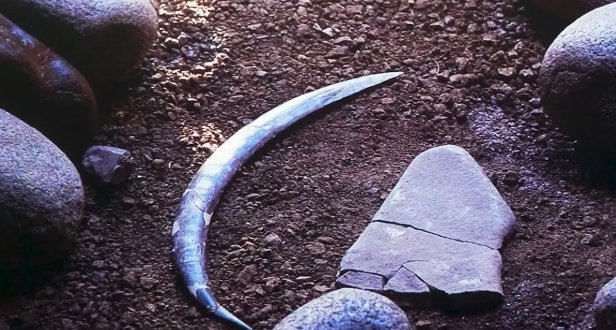
Among the mammoth bones, human remains, and ancient stone tools was a single curved artifact — unmistakably a boomerang, but carved from mammoth tusk instead of wood.
Back then, early estimates dated the find to around 18,000 years old. Even that was mind-blowing — the oldest known boomerangs in Australia clock in at about 10,000 years old.
But that estimate always nagged at researchers. Other bones and artifacts in the same layer were way older. Something didn’t add up.
Recalibrating the Ancient Timeline
Now, a team led by scientists including Sahra Talamo has revisited the cave’s contents using advanced radiocarbon dating methods and fresh analysis.
Their verdict? The boomerang is almost twice as old as once believed.
“We knew something didn’t line up,” Talamo explained. “So we recalculated its age based on new samples from the same stratigraphic level. The result — 39,000 to 42,000 years — makes this the earliest known boomerang anywhere.”
A Mammoth Tusk in the Shape of Innovation
This wasn’t your average hunting stick, either. The boomerang was expertly carved from mammoth tusk, hinting at the craftsmanship and creativity of Upper Paleolithic humans living in the Carpathians.
Obłazowa’s people, it seems, knew how to make use of what they had: mammoths for meat, shelter, and now, precision tools that could fly through the air.
Boomerangs — whether returning or not — weren’t just toys. They were practical hunting weapons. A curved stick could knock down birds or small game from a distance.
Europe vs. Australia: An Unexpected Rivalry
When you think boomerang, you probably think Australia — and for good reason. Aboriginal Australians have used them for thousands of years.
But the Obłazowa find flips that script, at least for now.
Here’s a simple comparison:
| Location | Age Estimate | Material | Use |
|---|---|---|---|
| Obłazowa Cave, Poland | 39,000–42,000 years | Mammoth tusk | Likely hunting |
| Australia | ~10,000 years | Wood | Hunting & ceremonies |
Source: Talamo et al., PLOS ONE, 2025
It’s a reminder that different cultures stumbled on similar aerodynamic ideas, half a world apart.
What Else Lurked in Obłazowa?
The boomerang wasn’t the only surprise in that cave.
Over the decades, researchers have unearthed:
-
Human bones, including a thumb phalanx.
-
Flint tools.
-
Charcoal layers hinting at ancient fires.
-
Bones of woolly mammoths, reindeer, and horses.
Put together, these finds paint a vivid picture: small groups of humans huddled around fires, crafting weapons from the giants they hunted.
“A Testament to Ingenuity”
One of the original discoverers, Jerzy Opioła, described the cave as a “time capsule.” New dating only makes its treasures more remarkable.
“Obłazowa shows us that early Homo sapiens were far more innovative than we give them credit for,” said Talamo. “They adapted to harsh Ice Age environments with tools that were both effective and elegant.”
The boomerang’s curved shape, aerodynamic edge, and polish suggest it was more than just a stick. It was, in a sense, technology — and a peek into how our ancestors solved problems with what they had.
Lessons From a 40,000-Year-Old Weapon
If there’s one thing this discovery underscores, it’s that history’s timeline is slippery.
Artifacts get reinterpreted. Dates get recalculated. And sometimes, old finds come roaring back with new meaning.
In the quiet corners of southern Poland, this mammoth tusk boomerang — chipped, shaped, and hurled by humans who lived and died long before the first pyramids — is a humble but powerful reminder.
Our ancestors didn’t just survive. They adapted, experimented, and yes, they made boomerangs.













Halo Campaign Evolved Skulls Meet Death Barriers That Kill the Hunt

Spotify Running Mode Returns After the 2015 Experiment Failed

Amazon AWS Hits Fastest Growth in Years as AI Spend Pays Off

Amazon Bets Platform Beats Models in the AI Race

Apple C2 Modem Edges Into iPhone 18 Pro After Qualcomm Drop

Google Earth Adds Nano Banana 2 to Reimagine Real Places

Apple Upgrade Turns Phones Into Monthly Utility Bills

Asha Sharma Bets Xbox Growth on Console and Four C’s

MacBook Ultra Design Follows Apple’s Familiar Cascade Path

TAG Heuer Carrera x Team Ikuzawa Revives 1970s Roadmaster Stopwatch DNA

Pokémon GO Developer Niantic Rebrands as Scopely Explore

Jaylen Brown Traded to 76ers for Paul George and Four Draft Picks

Doom Studio id Software Cuts Half Its Staff in Xbox Layoffs

Nintendo Switch Online Adds Four Classics and One Japan-Only Title

Jordan Henderson Hospitalized After Wrist Injury at the Azteca

Mexico’s World Cup Run Ends at Azteca as England Hold On 3-2

Meta’s Muse Image Lets Anyone Use Your Instagram Photos in AI

Louis Vuitton Beats Molly Tea in China, Triggers Cultural Backlash

Pink Bearista Cup Returns July 13 as Starbucks Pink Vibes Drops

Samsung Sets Galaxy Unpacked for July 22 in London With a Wider Fold
-

 TECHNOLOGY3 years ago
How to Adjust a Bulova Watch Band – An Easy Guide
-

 News3 years ago
Fred Pentland: Athletic Bilbao’s English mentor who changed the essence of Spanish football
-

 FINANCE3 years ago
Tax Planning for Every Season: Guide to Maximizing Your Tax Benefits
-

 Education3 years ago
African Ministers New Education Plan
-

 BUSINESS3 years ago
What is Entrepreneurial Operating System? A Comprehensive Guide to EOS
-

 Education3 years ago
Innovate Your Learning Journey with Technology and Enhance Education
-

 News3 years ago
Russians formally out of World Athletics Championships
-

 BUSINESS3 years ago
Top 9 Most Expensive American Cities to Rent an Apartment