
An ordinary fishing trip turned into an extraordinary brush with ancient history when a fallen tree in Brazil’s Amazon revealed burial urns older than any local could remember.
A Hidden Past Beneath The Roots
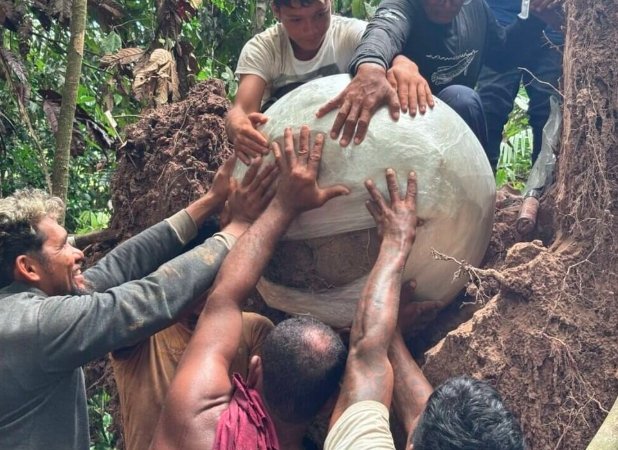
The roots of the Amazon jungle have always hidden secrets. But even seasoned archaeologists didn’t expect seven enormous ceramic urns packed with human remains to appear at the tangled base of a single fallen tree.
It was fisherman Walfredo Cerquiera who stumbled on them first. He wasn’t sure what he’d found but knew enough to call someone who’d know better.
Indigenous Islands And Forgotten Graves
Lago do Cochila, where the urns emerged, is more than just a quiet Amazon backwater. Centuries ago, Indigenous communities transformed swampy terrain into artificial islands — raising the ground for homes, farming, and burials.
The newly uncovered urns were tucked just 16 inches beneath the surface, probably once hidden beneath stilted houses long reclaimed by the jungle.
According to researcher Geórgea Layla Holanda, the urns are “large in size and have no visible ceramic lids, which may indicate the use of organic materials for sealing, which have now decomposed.”
Locals Played A Key Role
This wasn’t a solo effort. After Cerquiera’s find, he went to Father Joaquim Silva, a priest at the Tefé Prison Ministry, who wasted no time contacting archaeologist Márcio Amaral.
Amaral, who knows the region well, led the delicate excavation with the help of locals, improvising scaffolds from vines and wood to keep the fragile urns intact.
He later said, “We had never excavated like this, 3.2 meters above the ground. It was completely collaborative and unprecedented work.”
What Exactly Was Found?
The urns are remarkably intact, considering they sat buried through centuries of rainforest storms, root growth, and shifting soil.
Inside the ceramic vessels, researchers found:
-
Skeletal fragments and teeth
-
Charcoal traces that might point to burial rituals
-
No lids — suggesting covers of organic materials that rotted away
Small details like these give clues about daily life and death among the region’s ancient communities.
Mystery Of The Makers
One puzzle remains: who exactly made them?
Unlike other Amazonian burial sites, these urns don’t have distinctive markings tying them to a known pre-Columbian culture. They might belong to one of the Upper Solimões River groups — or an entirely new community yet to be documented.
Here’s how they compare to other known burial sites:
| Site | Estimated Age | Notable Features | Location |
|---|---|---|---|
| Lago do Cochila | Unknown | Large, lidded urns with organic sealers | Brazilian Amazon |
| Marajó Island | ~1,000 years old | Elaborate painted pottery | Pará, Brazil |
| São Luís | ~2,000 years old | Burial jars with geometric patterns | Maranhão, Brazil |
Source: Brazilian Ministry of Science, Technology, and Innovation
Burial Practices Rooted In Community
Funeral urns like these show that ancient Amazonians didn’t simply abandon their dead. Instead, they built communities that integrated the living and the dead into the same physical space.
They buried loved ones under house floors, inside homes on raised islands that kept them safe from seasonal floods.
Holanda says, “It’s about seeing the dead as part of the daily cycle — ancestors close by, not far removed.”
An Archaeological Challenge Like No Other
Working in the Amazon is never easy. Add precarious heights, fragile pottery, and unpredictable weather, and you get a dig that tests every ounce of patience and creativity.
Amaral’s team balanced on a platform lashed together with vines. They used hand tools and soft brushes to avoid cracking the urns. Villagers ferried the heavy pots across muddy ground, one slip away from ruin.
But their effort paid off. The urns survived the journey from tree roots to lab shelves.
Local Knowledge Keeps The Past Alive
This find wouldn’t exist without local know-how. Cerquiera recognized what he’d uncovered. Father Silva connected the right people. Villagers guided Amaral’s team through terrain they knew by heart.
And when asked how they managed it, Amaral just laughed: “Sometimes you have to trust the people who fish these rivers every day. They know what’s hidden under the mud better than any satellite ever will.”