
News
New Firefighters Join Grand Junction Ranks After 19 Weeks Of Grueling Training

Thirteen recruits stood a little taller this week — and not just because they were in uniform. Grand Junction’s Fire Academy Class of 2025 is officially ready for duty.
“Brotherhood” And The Bonds That Last
After nearly five months of drills, tests, and countless early mornings, each recruit crossed the stage to receive a handshake, a badge, and a brand-new title: firefighter.
“It’s a very fulfilling day,” said graduate Josh Ellens, beaming as he looked around at his fellow classmates-turned-family. “The brotherhood I created with my classmates that I hope to create going online is very exciting, and I couldn’t be more excited to get online and work for this city.”
There’s a reason so many firefighters call their team a brotherhood — or a sisterhood — or just plain family. Few other jobs demand this kind of trust. In a burning building, you bet your life on the person behind you holding the line.
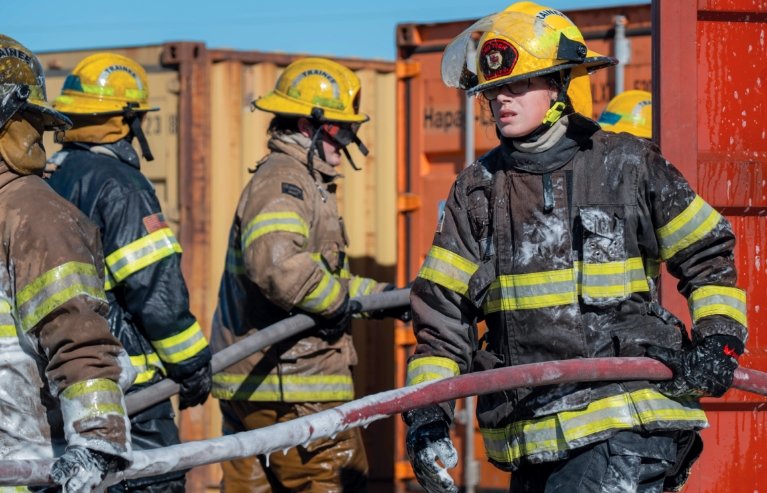
What 19 Weeks Looks Like
It’s easy to think of firefighters just charging into flames, but the Fire Academy’s 19-week course covers far more than that.
One line here: The training is a mix of muscle and mind.
Recruits learn:
-
How to handle hazardous materials.
-
Advanced medical response, since many calls are actually medical emergencies.
-
Rope rescues and swift-water safety.
-
Fire behavior, building construction, and ventilation tactics.
Leaders inside the department say the training reflects real-life calls. Grand Junction’s fire crews cover an area with urban, rural, and wildland risks — meaning they’re never quite sure what the next siren will bring.
A Moment That Matters To The Community
If you’ve ever seen a fire academy graduation, you know the pride is palpable. Families fill the seats, phones out recording every hug. City officials showed up to cheer the new recruits on.
One city council member called it “one of the most hopeful days of the year.” When a city pins a new badge on a rookie firefighter, it’s a promise that help is on the way, no matter what.
Who Makes The Cut?
Not everyone does.
Applications to Grand Junction’s Fire Academy usually outnumber slots by a wide margin. Recruits go through written exams, physical ability tests, and panel interviews before they ever touch a firehose.
A training officer joked, “The easy part is passing the interview. The hard part is passing the drills.”
By the end of 19 weeks, some drop out. It’s exhausting — both physically and mentally. But those who finish? They’re the ones you want showing up when everything’s gone wrong.
What It Means For Grand Junction’s Future
One sentence here: More boots on the ground means faster response times.
Like many cities, Grand Junction is growing. The Fire Department has expanded its coverage area and added new stations over the past few years to keep pace with new neighborhoods and commercial hubs.
Adding 13 fresh firefighters helps fill gaps in the daily staffing schedule and means fewer forced overtime shifts for veteran crews.
It’s a morale boost too. “When we see new recruits come in, it fires up the whole station,” said one senior firefighter. “You remember what it was like that first day on the truck.”
Firefighting In Numbers
Here’s a quick look at what the Grand Junction Fire Department faces each year:
| Call Type | Average Annual Calls |
|---|---|
| Fires | 350 |
| Medical | 10,500 |
| HazMat | 80 |
| Other Emergencies | 700 |
You read that right — medical calls dwarf fire calls by far. Modern firefighters spend more time helping people survive strokes, car crashes, and overdoses than putting out house fires. But when the big blaze does hit? That’s when all those drills and late nights at the Academy matter most.
Words From The Top
Fire Chief Ken Watkins — who’s watched more than a few classes come and go — told graduates during the ceremony that the work ahead will test them.
He reminded them that the real training begins on their first day in the station. The biggest lessons aren’t learned in classrooms but on calls, side by side with seasoned firefighters who’ve seen just about everything.
What Families Feel
One sentence here: It’s never just a job for the person wearing the badge.
Spouses, parents, and kids sat together at the graduation, snapping photos and wiping away tears. They know what’s ahead — the midnight phone calls, the holiday shifts, the hours waiting for their loved ones to come home safe.
A wife of one recruit said, “We’re proud, and yeah, a little scared too. But it’s what he wants to do. He’s wanted this since he was a kid.”
From Rookie To Lifesaver
Graduates will spend the coming months assigned to crews around the city. They’ll ride the trucks, pull hoses, run medical calls, and — as one captain put it — “get a real taste of what this job is.”
Not everyone will stay forever. Some might move up the ladder, some might move on. But the bonds they made in that 19-week crucible? Those are the ties that hold when the alarm bells ring.









Spotify Running Mode hits Android and revives its old tempo experiment

Galaxy Tab S12 Ultra Renders Keep the Notch Fans Hate

Novato Spinning Round House Sells With Six Neighbors for $3.3 Million

Crop Tour Finds Indiana and Nebraska Corn Yields Lagging 2025

Best Buy 60th sale brings Android deals back to its roots

American Airlines reverses seatback screen bet years too late

Iran Hormuz Strikes Force Gulf Oil Onto Costlier Paths

Plague Tale Prequel Day One Joins Game Pass Wave 2 as Witcher Exits

NBA 2K27 opens The City to everyone and rewrites career eras

iOS 26.6.1 Patches 29 Flaws as AI Forces Faster Apple Updates

Double Fine Cuts 23 Jobs Weeks After Xbox Independence

Day-One Big Walk Lifts PS Plus August Beyond Recycled AAA

John Hight Exits Wizards After Digital Reckoning Hits

Curtis Mead’s Red Sox Debut Ends With Fractured Wrist

Moesch and Dressel Rewrite Night One at 2026 U.S. Nationals

Red Sox Squander Hot Streak Chance in 4-3 Loss to Athletics

Boutte’s Quiet Camp Takeover Forces Patriots Receiver Choices

Take-Two CEO Pushes Netflix Subs for GTA 6 Extended Look

Halo Campaign Evolved Skulls Meet Death Barriers That Kill the Hunt

Wildlands Free Update Hands Players the Tools They Already Invented
-

 TECHNOLOGY3 years ago
How to Adjust a Bulova Watch Band – An Easy Guide
-

 News3 years ago
Fred Pentland: Athletic Bilbao’s English mentor who changed the essence of Spanish football
-

 FINANCE3 years ago
Tax Planning for Every Season: Guide to Maximizing Your Tax Benefits
-

 Education3 years ago
African Ministers New Education Plan
-

 BUSINESS3 years ago
What is Entrepreneurial Operating System? A Comprehensive Guide to EOS
-

 Education3 years ago
Innovate Your Learning Journey with Technology and Enhance Education
-

 News3 years ago
Russians formally out of World Athletics Championships
-

 BUSINESS3 years ago
Top 9 Most Expensive American Cities to Rent an Apartment