
News
CPW Acknowledges Wolf Deaths and New Packs, Settles Livestock Claims in Contentious July Meeting

Wildlife officials say more work is needed as producers demand clearer compensation rules
Colorado’s wolf reintroduction program continues to evolve — and stir debate. At the July 17–18 Colorado Parks and Wildlife (CPW) Commission meeting in Grand Junction, officials provided updates on the growing wolf population, new packs, recent mortalities, and efforts to reduce conflicts with ranchers. But the spotlight quickly shifted to compensation — or the lack of clarity around it.
Livestock producers impacted by suspected wolf predation pressed the commission for financial redress. They got it — for now — but questions about future payouts remain unanswered.
Five Wolves Dead So Far in 2025, CPW Confirms
One of the grimmer stats dropped early in the discussion: five wolves have died in Colorado in 2025 alone. The causes weren’t publicly detailed during the meeting, though CPW acknowledged the loss during its annual update.
That brings renewed concern from both environmental advocates and ranchers. Each death raises alarms — for different reasons. Conservationists worry the small population could struggle to establish stability, while ranchers fear rising tensions and less tolerance if packs become more territorial or aggressive near livestock.
Colorado’s wolf program, launched after voters approved Proposition 114 in 2020, is still in its early years. Wolves were first released in late 2023. Less than two years in, mortality is already part of the equation.
From Lone Wanderers to New Packs
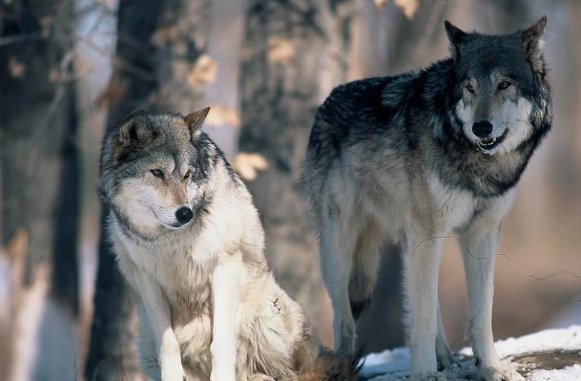
There was some good news too. CPW now recognizes three newly established wolf packs, bringing the official total to four in Colorado.
The agency didn’t release exact locations but noted that movement patterns suggest wolves are settling into specific territories, particularly in the western part of the state. That’s consistent with tracking data and public sightings.
The pack names are expected to be released soon. Officials are working with tribal leaders, biologists, and even students to come up with names rooted in Colorado’s natural heritage.
It’s a symbolic move, sure, but it helps build familiarity — maybe even public buy-in.
Range Riders: CPW’s Answer to Predation Risk
To reduce the risk of livestock losses, CPW is scaling up its use of range riders — folks who monitor herds on horseback or ATV and watch for predators. Right now, nine range riders are active, primarily in areas with heavy wolf movement.
The goal is simple: spot wolves early, change livestock patterns if needed, and discourage interaction.
In theory, it works. But it’s not foolproof. Wolves are clever, and even the most vigilant rider can’t catch everything in Colorado’s vast, rugged pastures.
Producers Speak Up, Commission Cuts a Check
Two livestock producers affected by missing calves testified before the commission. They weren’t dramatic. They were tired, honest, and clear: they want fair compensation when animals disappear, especially when wolves are likely involved.
The commission agreed to pay the amounts requested. The settlements weren’t massive, but they mattered.
Still, legal representatives say that’s just a Band-Aid.
Kathleen Pritchard, who represented the producers, put it bluntly: “The Commission’s decision today makes it clear that they thought these producers were entitled to the compensation requested… but for all producers going forward, this issue is not resolved.”
She’s right. The current regulation requires proof — often hard to come by when a calf goes missing without clear signs of predation. That’s left ranchers in limbo and the Commission in a tricky spot.
Compensation Policy Still in Legal Gray Area
While the commission approved the two claims at face value, there’s no guarantee that will be the case next time. That’s where things get sticky.
Right now, CPW’s rules only compensate for confirmed wolf kills — carcass, evidence, etc. But in many cases, ranchers simply find a missing calf and have no idea what happened. No proof, no payment.
This has led to growing calls for interpretation flexibility or even a rewrite of the rule.
Here’s what’s on the table:
-
Option 1: Stick to confirmed kills only (status quo).
-
Option 2: Allow compensation for probable kills based on circumstantial evidence.
-
Option 3: Pay out on all missing livestock claims in wolf-active areas, regardless of cause.
Each comes with trade-offs — cost, fairness, and potential for abuse.
CPW Faces a Balancing Act Moving Forward
CPW is stuck between two groups that don’t always see eye-to-eye: ranchers and rewilders.
The agency says it’s committed to both preserving wolf populations and protecting the livelihoods of those working the land. But making both sides happy? That’s a tall order.
“Conflict minimization” has become the buzzword — but as July’s meeting showed, some conflicts are already here.
Producers say the burden of proof is unfairly high. Conservationists fear too much flexibility will lead to overcompensation and political backlash against wolves.
For CPW, it’s like walking a tightrope in a windstorm.
Wolf Reintroduction Remains a Statewide Flashpoint
This isn’t just a Grand Junction issue. Across Colorado, from Routt to Rio Blanco, people are watching how CPW handles compensation, predator tracking, and public perception.
A lot of folks are supportive — even excited — about wolves returning to the Rockies. But for those whose livelihoods depend on calves surviving the season, idealism doesn’t pay the bills.
And with more packs forming and more livestock grazing underway, these tension points are only going to grow.












Mortgage Rates Climb to an 11-Month High, and Buyers Retreat Fast

FCC Sets August 6 Vote to Erase the 39% TV Ownership Cap

Netflix Heads Into Earnings With Its 2022 Playbook Already Spent

China’s Economy Grows Just 4.3% as Exports Boom and Households Retreat

United Airlines Beats Earnings Estimates Despite $6 Billion Fuel Hit

California’s Plastic Packaging Law Draws Fire From Every Side

xAI Sues a Grok User for CSAM Deepfakes It Struggled to Stop

US Stocks Edge Within 0.5% of a Record as Oil Climbs on War

BlackRock’s Private Markets Bet Pays Off With a Record $15 Trillion in Assets

Kalshi Traders See 93% Odds Gas Tops $4 as Iran Strikes Return

Halo Studios Reverses PS Plus for Halo: Campaign Evolved on PS5

Black Ops 1 and 2 PS5 Ports: $40 Price Tag Has Fans Uneasy

Matt Brown Dismisses Rousey and Paul’s MVP MMA Ratings Win Over UFC

Star Wars: Galactic Racer Is a Roguelite Racer With a Podracing Skin

Julius Randle Traded to Nets as Wolves Reclaim Cap Space for Dosunmu

Sega’s $49.99 Sonic Classic and Modern Bundles Hit Switch in October

Colombia Edge DR Congo as Muñoz Books World Cup Knockout Place

Douze Dixièmes Closes Five Months After MIO: Memories in Orbit

Warriors Take Yaxel Lendeborg, the Oldest Pick in the 2026 NBA Draft

Meta’s Muse Image Lets Anyone Use Your Instagram Photos in AI
-

 TECHNOLOGY3 years ago
How to Adjust a Bulova Watch Band – An Easy Guide
-

 News3 years ago
Fred Pentland: Athletic Bilbao’s English mentor who changed the essence of Spanish football
-

 FINANCE3 years ago
Tax Planning for Every Season: Guide to Maximizing Your Tax Benefits
-

 Education3 years ago
African Ministers New Education Plan
-

 BUSINESS3 years ago
What is Entrepreneurial Operating System? A Comprehensive Guide to EOS
-

 Education3 years ago
Innovate Your Learning Journey with Technology and Enhance Education
-

 News3 years ago
Russians formally out of World Athletics Championships
-

 BUSINESS3 years ago
Top 9 Most Expensive American Cities to Rent an Apartment