
News
U.S. Beef Prices Surge Past $6 per Pound, Hitting 70-Year Cattle Inventory Low

America’s appetite for beef isn’t going anywhere—but the cattle to meet that demand are disappearing. That mismatch is now pushing retail beef prices to record highs, and producers say the trend isn’t slowing anytime soon.
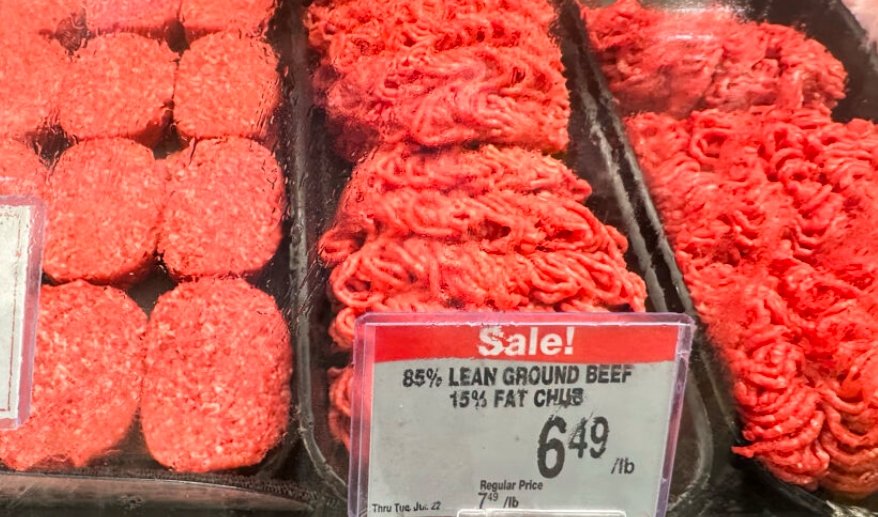
Beef now costs $6.12 per pound on average, the highest in recorded U.S. history, with supply struggling to keep up with consumer demand.
The Herd Is Shrinking—And So Are the Options
“This is the smallest cattle herd since 1951,” says Janie VanWinkle, a rancher from Colorado’s Western Slope.
Let that sink in for a second. Not in decades, not since the ’80s or ’90s—but since Harry Truman was president.
According to data from the Bureau of Labor Statistics, beef has climbed nearly a full dollar in the past year—from $5.47 to $6.12 per pound. While shoppers feel the pinch, VanWinkle sees something else entirely: a slow-burning crisis that’s been years in the making.
The reasons? Not just one.
Why Is This Happening? A Perfect Storm of Stressors
Janie, who also works with the AgriWest Initiative through the Business Incubator Center, points to a number of stress points in the beef supply chain.
Some of these issues have been brewing quietly for decades, like the aging of ranching families. Others—like prolonged drought—have added sudden pressure.
Here’s what’s driving the surge:
-
Aging Producers: Many ranchers are nearing retirement, with uncertain succession plans. This could reshape land ownership and production over the next decade.
-
Drought: Ongoing dryness in the American West has decimated forage, water sources, and pasture productivity.
-
Low Inventory: Fewer cattle means less beef on shelves. And rebuilding a herd isn’t like restocking a store—cattle take time to breed and raise.
“It’s classic supply and demand,” VanWinkle says. “The supply is down, the demand is growing. That’s why we’re here.”
Beef Prices Over Time
A quick look at the data shows just how sharp the climb has been. Below is a snapshot of average beef prices in the U.S. over the past 15 years:
| Year | Avg. Beef Price (per pound) |
|---|---|
| 2010 | $3.88 |
| 2014 | $5.85 |
| 2019 | $5.29 |
| 2023 | $5.47 |
| 2025 | $6.12 |
The 2025 price represents a 38% jump over 2010 and a nearly 12% increase just from last year.
And we’re still in July.
Ranchers Catch a Break—But It’s Not All Profit
At first glance, higher prices might look like good news for ranchers. And in part, that’s true.
VanWinkle says she used to sell a calf in 2014 for around $1,600. Now, that figure is nearly double.
“We started selling direct to consumer in 2019,” she explains. “And in just six years, those prices have gone up significantly.”
She adds that over 90% of U.S. ranches are family-owned. That means more of the profit, when there is one, stays local.
Still, it’s not a free ride. Feed is more expensive. Hay costs have spiked. Transport, water rights, fencing, equipment—all up.
One-sentence paragraph? Sure. Most ranchers are barely breaking even.
Consumers Are Still Buying—For Now
So far, folks haven’t stopped buying steaks.
“We’re lucky,” VanWinkle says. “Our customers are staying with us, and they want to keep getting that high-quality protein from someone they know.”
That’s good news. But it’s also fragile. Price sensitivity could shift quickly if inflation eats more into household budgets or if cheaper protein sources lure families away from beef.
And while many consumers express support for local, ethical sourcing, their wallets ultimately make the decision.
VanWinkle remains optimistic—but realistic.
What Happens Next?
The beef industry isn’t facing a temporary blip. This is structural. Herds don’t rebuild in a year. Pastures don’t regrow overnight. And 70-year lows in cattle inventory don’t bounce back without deep changes.
“It’s not going to look the same in 10 years,” VanWinkle said of ranching in the West.
She hopes her work with AgriWest can help influence that transition, slowly addressing issues from land access to generational transfer.
But right now, the focus is on getting through 2025—and keeping the herd healthy through wildfire season and drought.
For shoppers at the meat counter, the reality is simple: Beef is going to stay expensive for a while. For the ranchers behind that price tag, it’s anything but simple.













Spotify Running Mode hits Android and revives its old tempo experiment

Galaxy Tab S12 Ultra Renders Keep the Notch Fans Hate

Novato Spinning Round House Sells With Six Neighbors for $3.3 Million

Crop Tour Finds Indiana and Nebraska Corn Yields Lagging 2025

Best Buy 60th sale brings Android deals back to its roots

American Airlines reverses seatback screen bet years too late

Iran Hormuz Strikes Force Gulf Oil Onto Costlier Paths

Plague Tale Prequel Day One Joins Game Pass Wave 2 as Witcher Exits

NBA 2K27 opens The City to everyone and rewrites career eras

iOS 26.6.1 Patches 29 Flaws as AI Forces Faster Apple Updates

Double Fine Cuts 23 Jobs Weeks After Xbox Independence

Day-One Big Walk Lifts PS Plus August Beyond Recycled AAA

John Hight Exits Wizards After Digital Reckoning Hits

Curtis Mead’s Red Sox Debut Ends With Fractured Wrist

Red Sox Squander Hot Streak Chance in 4-3 Loss to Athletics

Moesch and Dressel Rewrite Night One at 2026 U.S. Nationals

Boutte’s Quiet Camp Takeover Forces Patriots Receiver Choices

Take-Two CEO Pushes Netflix Subs for GTA 6 Extended Look

Halo Campaign Evolved Skulls Meet Death Barriers That Kill the Hunt

Wildlands Free Update Hands Players the Tools They Already Invented
-

 TECHNOLOGY3 years ago
How to Adjust a Bulova Watch Band – An Easy Guide
-

 News3 years ago
Fred Pentland: Athletic Bilbao’s English mentor who changed the essence of Spanish football
-

 FINANCE3 years ago
Tax Planning for Every Season: Guide to Maximizing Your Tax Benefits
-

 Education3 years ago
African Ministers New Education Plan
-

 BUSINESS3 years ago
What is Entrepreneurial Operating System? A Comprehensive Guide to EOS
-

 Education3 years ago
Innovate Your Learning Journey with Technology and Enhance Education
-

 News3 years ago
Russians formally out of World Athletics Championships
-

 BUSINESS3 years ago
Top 9 Most Expensive American Cities to Rent an Apartment