
News
“It’s All Hands on Deck”: How Olathe’s Iconic Sweet Corn Farms Are Battling a Pest Invasion

Olathe, Colo. | July 23, 2025 — At the peak of harvest season, Olathe’s legendary sweet corn is rolling off the fields by the truckload — more than 400,000 ears a day, destined for dinner tables across Colorado and beyond. But behind the sunlit rows and seasonal bounty lies a serious threat: corn earworms, a destructive pest that’s been chewing away at both the crop and the farmers’ peace of mind.
Reid Fishering, President of the Olathe Corn Company and Mountain Quality Farms, knows exactly how high the stakes are.
“We rely on the sweet corn harvest to stay afloat,” he said from the edge of his fields. “When these pests hit, it wasn’t just a bad year — it was an existential threat.”
Sweet corn isn’t just a crop in Olathe. It’s a regional identity. Every summer, the small farming community in Montrose County turns out over 20 million ears of corn, generating vital revenue for farms that also grow onions, beans, and field corn during other parts of the year.
So when the corn earworm started showing up in force, the industry had to do more than spray and pray.
A valley-wide collaboration
Rather than tackling the problem in isolation, Olathe’s sweet corn growers mounted a rare collaborative response — sharing notes, pest data, field photos, and real-time strategies in an all-hands effort to outsmart the invaders.
“We had to try to adapt,” Fishering said. “We started a collaborative effort between all the sweet corn growers in our valley — sharing what we were seeing in the fields, what worked the previous week, and what didn’t.”
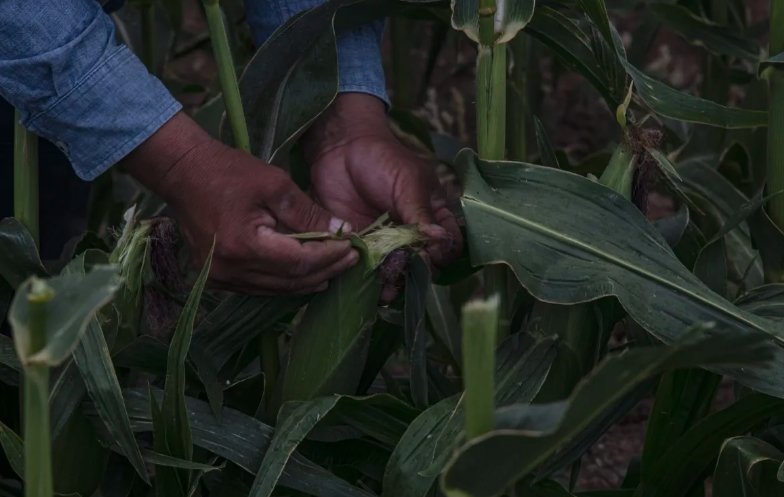
The corn earworm (Helicoverpa zea) is known to burrow into the tips of corn ears and feast on the kernels. Its presence doesn’t just damage the product — it can ruin entire shipments headed to stores and markets.
To protect the crop’s reputation — and maintain consumer trust — Olathe farmers have turned to near-total inspection.
“Right now, we’re identifying and inspecting almost every single ear of corn to make sure there’s no pest inside,” said Fishering. “We don’t want the consumer pulling back that husk and finding a worm.”
Fighting pests from the ground up
-
Planting starts: Early April
-
Growing season: April to June
-
Harvest window: Mid-July through September
-
Pest inspections: Daily, manual checks during peak harvest
-
Volume: 400,000 ears per day across the valley
The growing season itself is tightly choreographed. Each ear of corn has a short window of prime sweetness before it must be picked, cooled, and packed. The addition of pest monitoring has added a new layer of urgency to the process.
Farms across the valley are also tweaking planting schedules, rotating crops more aggressively, and evaluating integrated pest management (IPM) strategies — including pheromone traps, biological control insects, and limited chemical applications when absolutely necessary.
Still, even when earworms are present, not all is lost.
“If you do find one, don’t panic,” Fishering advised. “It’s still safe to eat. Just break off the piece with the worm and enjoy the rest.”
A product with pride — and vulnerability
Olathe sweet corn has long enjoyed a golden reputation across Colorado. It’s featured in farmers markets from Grand Junction to Denver and headlines the annual Olathe Sweet Corn Festival, a marquee summer event that draws thousands.
But that fame has a cost: it’s a brand that must be protected.
With rising temperatures and changing precipitation patterns, pests like the earworm are becoming more unpredictable and widespread — and more resistant to traditional treatments.
“This isn’t just about one year,” Fishering said. “It’s about what comes next. Can we adapt faster than the pests? Can we keep our corn clean, safe, and sweet?”
For now, Olathe’s farms are holding the line — ear by ear, row by row.












Spain’s Diaspora-Rooted Squad Wins Over New York Ahead of the Final

Colby Covington Stuns Tsarukyan as Askren Retires in Tears at RAF 11

AI Solvent Recipe Doubles QLED Efficiency, Lifts Lifetime 40-Fold

England Beats France 6-4 to Claim World Cup Bronze Medal

BTS’ J-Hope Fold8 Tease Follows Samsung’s Five-Year Ambassador Playbook

Antonelli’s Perfect Throttle Lift Beats Verstappen and Leaves Russell Behind

Phantom Twist Drone Fools the Eye, Not Radar or Ears

Galaxy Watch 9 Leak Confirms Snapdragon Chip Swap From Exynos

iPhone 18 Pro’s Price Hike Is Collateral in an AI Chip War

KFC’s 1991 Name Change Reason Still Splits the Fact-Checkers

Halo Studios Reverses PS Plus for Halo: Campaign Evolved on PS5

Black Ops 1 and 2 PS5 Ports: $40 Price Tag Has Fans Uneasy

Matt Brown Dismisses Rousey and Paul’s MVP MMA Ratings Win Over UFC

Star Wars: Galactic Racer Is a Roguelite Racer With a Podracing Skin

Julius Randle Traded to Nets as Wolves Reclaim Cap Space for Dosunmu

Sega’s $49.99 Sonic Classic and Modern Bundles Hit Switch in October

Colombia Edge DR Congo as Muñoz Books World Cup Knockout Place

Warriors Take Yaxel Lendeborg, the Oldest Pick in the 2026 NBA Draft

Douze Dixièmes Closes Five Months After MIO: Memories in Orbit

Warhammer Horus Heresy Super-Heavy Tanks Share a Plastic Chassis
-

 TECHNOLOGY3 years ago
How to Adjust a Bulova Watch Band – An Easy Guide
-

 News3 years ago
Fred Pentland: Athletic Bilbao’s English mentor who changed the essence of Spanish football
-

 FINANCE3 years ago
Tax Planning for Every Season: Guide to Maximizing Your Tax Benefits
-

 Education3 years ago
African Ministers New Education Plan
-

 BUSINESS3 years ago
What is Entrepreneurial Operating System? A Comprehensive Guide to EOS
-

 Education3 years ago
Innovate Your Learning Journey with Technology and Enhance Education
-

 News3 years ago
Russians formally out of World Athletics Championships
-

 BUSINESS3 years ago
Top 9 Most Expensive American Cities to Rent an Apartment