
News
Yellowstone’s Aspen Comeback: Wolves Rewrite the Rules of the Wild

A quiet ecological shift is taking place in Yellowstone. Aspen trees, once thought lost to time, are thriving again — and the reason has teeth.
The northern stretch of Yellowstone is turning green in ways it hasn’t in nearly a century. For the first time in over 80 years, aspen saplings are not just sprouting — they’re surviving. And it’s all thanks to the gray wolf, a predator whose return has flipped an entire food chain on its head.
A forest nearly forgotten
Back in the 1990s, if you had wandered through Yellowstone’s Lamar Valley, you’d be hard-pressed to find a single young aspen.
Survey teams at the time documented a bleak picture — the forest was old, stagnant, and eerily silent in places where young trees should have flourished. Elk, unchecked by predators, had been browsing the landscape relentlessly for decades.
This wasn’t just a random hiccup in nature. It was a direct consequence of something that happened over half a century earlier.
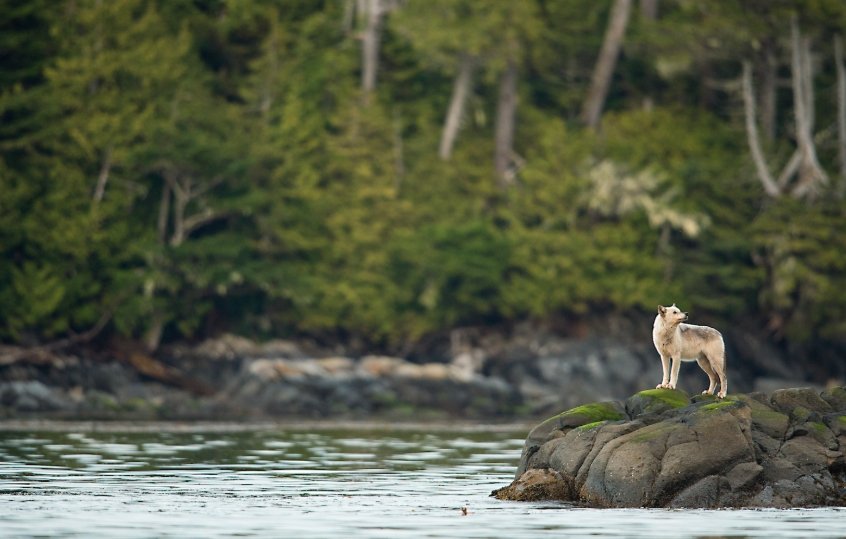
The missing predator and the hungry elk
Wolves were wiped out of Yellowstone by the 1930s — hunted, trapped, and poisoned as part of government campaigns to protect livestock.
Without their top predator, the elk population ballooned. More elk meant more mouths, and more mouths meant saplings didn’t stand a chance. Aspen, which once stretched across the park, became an ecological ghost.
Two things happened in tandem: Elk herds exploded, and young aspens stopped growing altogether.
The elk weren’t doing anything unusual — they were just surviving. But without wolves keeping them moving and on alert, they parked themselves in the same areas for too long. That’s all it took.
The wolves return — and bring balance
In 1995, federal wildlife agencies reintroduced 14 gray wolves into Yellowstone. The decision sparked controversy at the time. Ranchers worried about livestock losses. Some ecologists weren’t sure it would even work.
It worked.
Twenty-five years later, the transformation is undeniable. Scientists from Oregon State University and the National Park Service have tracked changes year by year, and the patterns are crystal clear.
-
Elk populations have dropped significantly.
-
Elk behavior has changed — they now move more and stay alert.
-
Aspen saplings are surviving, sometimes even outpacing expectations.
A researcher from OSU put it bluntly in their recent report: “This is the most significant regrowth of aspens in the park since the early 20th century.”
Trees, wolves, and everything in between
This isn’t just about trees, either. It’s about what trees bring with them. And what wolves push away.
In areas where wolves roam freely, you now find:
-
Thriving aspen groves
-
Beavers returning to dam up creeks again
-
More songbirds nesting in thicker brush
-
Better soil stability from tree roots
-
Even water flow improvement in some streams
That’s the kicker — it’s not just a tree story. It’s a ripple effect story. Wolves altered the elk, which helped the trees, which helped the birds, which helped the rivers.
Science in bark and bite
The numbers speak louder than any wildlife documentary. Let’s break down the timeline of Yellowstone’s ecological shift:
| Year | Major Change | Impact on Aspen |
|---|---|---|
| 1930s | Wolves eliminated from the park | Elk overpopulate, trees suffer |
| 1995 | Wolves reintroduced | Elk populations decrease |
| 2005 | Elk behavior significantly altered | Some saplings begin to survive |
| 2020 | Noticeable growth of new aspen groves | Young forests taking shape |
| 2025 | First sustained aspen population in 80 years | Ecosystem stabilizing |
In short, the forest isn’t just back — it’s fighting for a future.
An ecological success — with caveats
Of course, it’s not a fairy tale. Some areas are still lagging behind. Not every patch of land is seeing saplings shoot up. And harsh winters or dry spells can undo years of slow gains.
But overall, there’s hope. Rangers and ecologists see it with their own eyes. In spots where wolves roam regularly, the difference is striking.
“This is exactly the sort of recovery we hoped for,” said one senior Yellowstone ranger. “But honestly, we weren’t sure we’d ever actually see it.”
Nature, when left to fix itself
Sometimes, the best fix is letting nature run its course. That’s what’s happening here. Humans stepped in to restore just one part of the chain — the wolves — and the rest has been falling back into place, slowly, messily, beautifully.
You can’t really choreograph something like this. You just give it room.
And if you walk through those groves today, the difference is right in front of you. Young aspens. Green, slender, swaying in the breeze like they belong there. Because they do.













Spotify Running Mode hits Android and revives its old tempo experiment

Galaxy Tab S12 Ultra Renders Keep the Notch Fans Hate

Novato Spinning Round House Sells With Six Neighbors for $3.3 Million

Crop Tour Finds Indiana and Nebraska Corn Yields Lagging 2025

Best Buy 60th sale brings Android deals back to its roots

American Airlines reverses seatback screen bet years too late

Iran Hormuz Strikes Force Gulf Oil Onto Costlier Paths

Plague Tale Prequel Day One Joins Game Pass Wave 2 as Witcher Exits

NBA 2K27 opens The City to everyone and rewrites career eras

iOS 26.6.1 Patches 29 Flaws as AI Forces Faster Apple Updates

Double Fine Cuts 23 Jobs Weeks After Xbox Independence

Day-One Big Walk Lifts PS Plus August Beyond Recycled AAA

John Hight Exits Wizards After Digital Reckoning Hits

Curtis Mead’s Red Sox Debut Ends With Fractured Wrist

Moesch and Dressel Rewrite Night One at 2026 U.S. Nationals

Red Sox Squander Hot Streak Chance in 4-3 Loss to Athletics

Boutte’s Quiet Camp Takeover Forces Patriots Receiver Choices

Take-Two CEO Pushes Netflix Subs for GTA 6 Extended Look

Halo Campaign Evolved Skulls Meet Death Barriers That Kill the Hunt

Wildlands Free Update Hands Players the Tools They Already Invented
-

 TECHNOLOGY3 years ago
How to Adjust a Bulova Watch Band – An Easy Guide
-

 News3 years ago
Fred Pentland: Athletic Bilbao’s English mentor who changed the essence of Spanish football
-

 FINANCE3 years ago
Tax Planning for Every Season: Guide to Maximizing Your Tax Benefits
-

 Education3 years ago
African Ministers New Education Plan
-

 BUSINESS3 years ago
What is Entrepreneurial Operating System? A Comprehensive Guide to EOS
-

 Education3 years ago
Innovate Your Learning Journey with Technology and Enhance Education
-

 News3 years ago
Russians formally out of World Athletics Championships
-

 BUSINESS3 years ago
Top 9 Most Expensive American Cities to Rent an Apartment