
News
New Team Takes Over Turner Gulch Fire as Crews Push Toward Full Containment

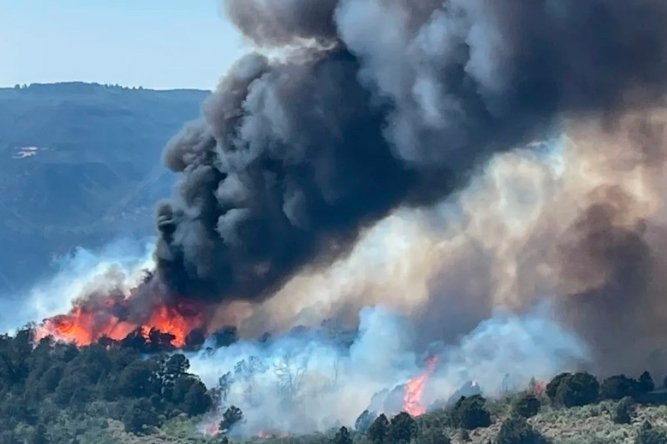
A fresh crew is now in charge of battling the Turner Gulch Fire in Mesa County, as 20,000+ acres continue to smolder and officials edge closer to containment.
The transition happened quietly but purposefully on July 28. At 6 a.m., a Type 3 Incident Management Team officially took over from the Rocky Mountain Complex Incident Management Team One — a move that signals a shift in both pace and approach as conditions begin to stabilize.
Change of Command, but No Room for Complacency
The outgoing Type 1 team had been overseeing operations since the fire was first reported on July 10. Under their watch, the blaze surged to over 20,000 acres — but so did containment. And they didn’t leave before ensuring a smooth handoff.
Chris Owens, Incident Commander Trainee for the Type 3 Team, praised the groundwork laid. “The Rocky Mountain Team One, they’ve done a lot of great work. They set us up very well for success going forward.”
The new team shadowed their predecessors for several days before stepping in fully. That overlap wasn’t just procedural — it was strategic. With fire behavior still unpredictable and dry fuels still abundant, transitioning smoothly was non-negotiable.
Where Things Stand Now
By the morning of July 29, the fire had scorched 20,044 acres — a figure that hasn’t moved much in recent days. That’s partly thanks to improved containment, which now sits at 54%.
Along Highway 141, the fireline is locked down. Crews are now focusing eastward.
The priority? Divide Road. Crews have been cutting and reinforcing lines there, hoping for what Owens called “a high level of confidence” that they’ll hold.
“We’re looking for that high level of confidence that the line will hold against adverse conditions,” Owens told reporters on Monday. That confidence is key — not just to current operations, but to deciding whether this stays a Type 3 fire or gets kicked back to a higher-level team.
One official described the current fire behavior as “moderate but stubborn.” That’s not code for harmless. It’s code for don’t blink.
So What Exactly Is a Type 3 Team?
Fire command teams in the U.S. are categorized by “type” — a shorthand for their capacity and specialization.
Here’s a quick breakdown:
| Team Type | Responsibility Level | When They’re Deployed |
|---|---|---|
| Type 1 | Most complex, large-scale incidents | Fast-spreading, unpredictable, or dangerous fires |
| Type 2 | Moderately complex incidents | Mid-size fires or emerging threats |
| Type 3 | Local/regional incidents, lower complexity | Fires nearing containment or under control |
So, a Type 3 team taking over isn’t a sign of slacking off — it’s actually a sign of progress. They’re geared for sustained operations and mop-up, but they remain nimble. If the winds shift or heat flares up, the command structure can escalate fast.
Owens hinted that such a shift could still happen: “If conditions change and we’re not able to respond to the fire activity on the ground, we will be assessing and working with the local units, whether it needs to be elevated back up.”
What Happens Next? A Two-Week Window to Watch
Type 3 is expected to manage the Turner Gulch Fire for the next 14 days. During that time, they’ll monitor weather, fuel conditions, and line integrity. But nothing’s set in stone.
Here’s what they’ll be watching:
-
Containment progress along eastern and southern lines
-
Hotspot flare-ups during peak heat hours
-
Smoke levels affecting local communities and air quality
-
Wind direction and its impact on spot fires
-
Access routes for crews and equipment if terrain shifts
One of the key hurdles remains terrain. Parts of the fire area are remote, rugged, and hard to navigate. That slows down everything — from line construction to engine support.
But there’s also optimism. With cooler nights and increased humidity, fire behavior has mellowed. Ground crews are reporting better visibility and safer working conditions. That’s no guarantee, but it’s better than the chaos of two weeks ago.
Local Response Still Crucial
Though a federal team is in charge, local agencies and volunteer fire departments remain deeply involved. Many of them know this landscape better than anyone. They’ve been protecting ranches, homes, and infrastructure since Day One.
And with more than 20,000 acres burned, the local toll isn’t just measured in flames. Grazing land, wildlife habitats, and outdoor recreation spots have all taken a hit. Recovery will take months — maybe longer.
Still, the current containment numbers are encouraging. So is the tone from leadership.
“This isn’t over,” Owens reminded. “But it’s under control — for now.”











OpenAI Says Apple’s Trade Secret Lawsuit Lacks Any Merit

Lucid’s Bankruptcy Denial Can’t Quiet Wall Street’s Doubts

IBM Stock Suffers Its Worst Trading Day Since the 1987 Crash

Cheap Chinese AI Models Are Undercutting Anthropic and OpenAI

ASML’s AI Chip Forecast Lifts Futures, Deepens Market’s Big Bet

SK Hynix’s Nasdaq Shares Race Ahead of Seoul by Up to 51%

Meta Workers Sue Over AI Layoffs That Targeted Medical Leave

Taco Bell Pulls Lettuce as Michigan Cyclosporiasis Cases Top 3,300

PayPal’s Five-Year Slide Makes It a $53 Billion Target for Stripe

Mega Millions Jackpot Hits $672 Million, but Taxes Claim Nearly Half

Halo Studios Reverses PS Plus for Halo: Campaign Evolved on PS5

Black Ops 1 and 2 PS5 Ports: $40 Price Tag Has Fans Uneasy

Matt Brown Dismisses Rousey and Paul’s MVP MMA Ratings Win Over UFC

Star Wars: Galactic Racer Is a Roguelite Racer With a Podracing Skin

Julius Randle Traded to Nets as Wolves Reclaim Cap Space for Dosunmu

Sega’s $49.99 Sonic Classic and Modern Bundles Hit Switch in October

Colombia Edge DR Congo as Muñoz Books World Cup Knockout Place

Douze Dixièmes Closes Five Months After MIO: Memories in Orbit

Warriors Take Yaxel Lendeborg, the Oldest Pick in the 2026 NBA Draft

Meta’s Muse Image Lets Anyone Use Your Instagram Photos in AI
-

 TECHNOLOGY3 years ago
How to Adjust a Bulova Watch Band – An Easy Guide
-

 News3 years ago
Fred Pentland: Athletic Bilbao’s English mentor who changed the essence of Spanish football
-

 FINANCE3 years ago
Tax Planning for Every Season: Guide to Maximizing Your Tax Benefits
-

 Education3 years ago
African Ministers New Education Plan
-

 BUSINESS3 years ago
What is Entrepreneurial Operating System? A Comprehensive Guide to EOS
-

 Education3 years ago
Innovate Your Learning Journey with Technology and Enhance Education
-

 News3 years ago
Russians formally out of World Athletics Championships
-

 BUSINESS3 years ago
Top 9 Most Expensive American Cities to Rent an Apartment