
News
Unhealthy Air Quality Possible as Wildfire Smoke Lingers Over Western Colorado

An air quality alert remains in place for several Western Colorado counties, with wildfire smoke expected to worsen before conditions improve later this week.
Air Quality Alert in Effect
Residents in Garfield, Pitkin, Gunnison, Dolores, Rio Blanco, and Eagle counties remain under an Air Quality Health Advisory until at least 9 a.m. Tuesday. Officials say the advisory will likely be extended and may expand to cover more areas if conditions deteriorate.
Around Grand Junction, current air quality is considered “moderate,” but the Colorado Department of Public Health and Environment warns it could reach “unhealthy” levels at times. That would especially impact sensitive groups, including children, older adults, and people with respiratory issues.
Tracking the Smoke
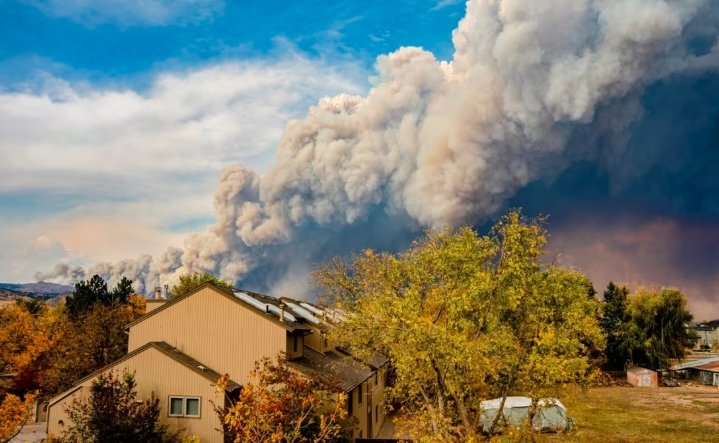
Heavy smoke from wildfires burning southwest of Meeker is drifting south into Garfield County, affecting areas like Parachute and Rifle, before moving into Mesa County near Collbran. By late Monday evening, a wind shift will push smoke westward into Grand Junction, continuing overnight and into Tuesday morning.
Forecasters say the Highway 50 corridor from Delta to Montrose may also see increased smoke, with the heaviest concentrations settling in valleys during the night and early morning hours. While daytime mixing can lift some of the smoke higher into the atmosphere, pockets of poor air quality may persist into Wednesday.
Health Precautions Recommended
Officials recommend limiting outdoor activity when smoke levels rise, especially for those with asthma, heart disease, or other respiratory conditions. Closing windows, using air purifiers, and wearing N95 masks outdoors during high-smoke periods can help reduce exposure.
Weather Shift May Bring Relief
The first half of the week will remain hot, with highs in the mid-to-upper 90s through Thursday. But by Friday, temperatures are expected to drop into the upper 80s and lower 90s as humidity increases.
Higher dewpoints — a more direct measure of atmospheric moisture — will make the air feel more humid, climbing from the teens and 20s typical of the region to the 40s and lower 50s by Friday and Saturday. That added humidity could hinder the performance of evaporative coolers, a common home cooling method in the area.
Short-Lived Change
The shift to cooler, more humid conditions is expected to be brief. By Sunday and Monday, drier air will return, bringing cooler mornings, warmer afternoons, and improved air quality — provided wildfire activity and wind patterns cooperate.











Spotify Running Mode hits Android and revives its old tempo experiment

Galaxy Tab S12 Ultra Renders Keep the Notch Fans Hate

Novato Spinning Round House Sells With Six Neighbors for $3.3 Million

Crop Tour Finds Indiana and Nebraska Corn Yields Lagging 2025

Best Buy 60th sale brings Android deals back to its roots

American Airlines reverses seatback screen bet years too late

Iran Hormuz Strikes Force Gulf Oil Onto Costlier Paths

Plague Tale Prequel Day One Joins Game Pass Wave 2 as Witcher Exits

NBA 2K27 opens The City to everyone and rewrites career eras

iOS 26.6.1 Patches 29 Flaws as AI Forces Faster Apple Updates

Double Fine Cuts 23 Jobs Weeks After Xbox Independence

Day-One Big Walk Lifts PS Plus August Beyond Recycled AAA

John Hight Exits Wizards After Digital Reckoning Hits

Curtis Mead’s Red Sox Debut Ends With Fractured Wrist

Moesch and Dressel Rewrite Night One at 2026 U.S. Nationals

Red Sox Squander Hot Streak Chance in 4-3 Loss to Athletics

Boutte’s Quiet Camp Takeover Forces Patriots Receiver Choices

Take-Two CEO Pushes Netflix Subs for GTA 6 Extended Look

Halo Campaign Evolved Skulls Meet Death Barriers That Kill the Hunt

Wildlands Free Update Hands Players the Tools They Already Invented
-

 TECHNOLOGY3 years ago
How to Adjust a Bulova Watch Band – An Easy Guide
-

 News3 years ago
Fred Pentland: Athletic Bilbao’s English mentor who changed the essence of Spanish football
-

 FINANCE3 years ago
Tax Planning for Every Season: Guide to Maximizing Your Tax Benefits
-

 Education3 years ago
African Ministers New Education Plan
-

 BUSINESS3 years ago
What is Entrepreneurial Operating System? A Comprehensive Guide to EOS
-

 Education3 years ago
Innovate Your Learning Journey with Technology and Enhance Education
-

 News3 years ago
Russians formally out of World Athletics Championships
-

 BUSINESS3 years ago
Top 9 Most Expensive American Cities to Rent an Apartment