
News
School Resource Officers in Mesa County Take on Safety, Mentorship and More

With a new school year kicking off, Mesa County’s School Resource Officers are stepping back into the halls — not just to guard the doors, but to guide the people inside them.
Safety First, but Not Safety Only
Across Mesa County, five School Resource Officers (SROs) are assigned to four schools: Redlands Middle School, Grand Mesa Middle School, Mount Garfield Middle School, and Central High School, which gets two officers.
Their official mission sounds straightforward — keep students, staff, and visitors safe. But ask Sgt. Marco Montez from the Mesa County Sheriff’s Office, and you’ll get a broader picture.
“Our main function is to make sure that it’s a safe environment for the students, the staff, family, administrators and people visiting,” Montez says. That’s the baseline. The rest of the job goes well beyond what most people picture when they hear “school security.”
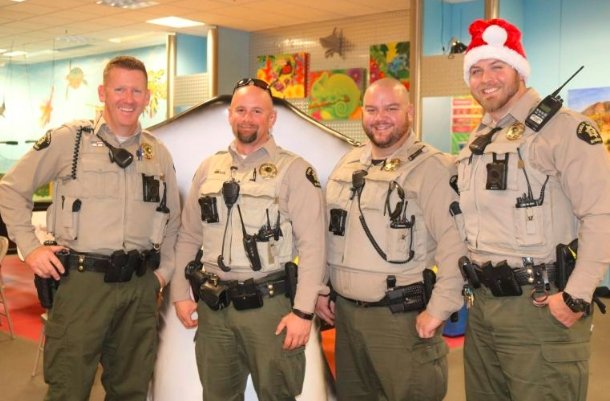
A Role That Requires More Than a Badge
Unlike many other law enforcement positions, being an SRO in Colorado demands a specific certification just to work in schools. It’s not a quick checkbox either — the role requires extensive training in areas that have nothing to do with patrol cars or courtrooms.
Montez explains that SROs get deep instruction in crisis intervention and de-escalation techniques. “Having somebody around that has that much training and experience is very beneficial to the staff and students,” he says.
It means they’re trained to spot trouble early, calm tense situations, and prevent problems from snowballing. The work is often proactive, quietly steering conflicts away from becoming major incidents.
Bridging the Gap Between Students and Law Enforcement
For many young people, an SRO might be the first law enforcement officer they interact with on a regular basis. That makes relationship-building a critical part of the job.
Montez says the goal is to be approachable, not intimidating. “We help guide these young men and women to make better choices and to deal with some of the stressors that they deal with in, in today’s world, especially around social media.”
That could mean helping a student navigate online bullying, supporting a teen under family stress, or just being a trusted adult to talk to when things get rough.
The Daily Responsibilities
While no two days look exactly the same, the work of an SRO typically revolves around three main areas:
-
Safety oversight: Monitoring school entrances, ensuring security protocols are followed, and responding to potential threats.
-
Student support: Meeting with students one-on-one, offering guidance, and addressing behavioral concerns before they escalate.
-
Crisis management: Leading responses during emergencies, from medical incidents to lockdown situations.
Much of this happens behind the scenes. An officer might spend one morning greeting students at the door and the afternoon in a private conversation with a struggling student.
Navigating Social Media Challenges
Social media has changed the landscape for school safety officers. Issues can now spill into the school environment without anyone stepping foot on campus.
Cyberbullying, harassment, and the rapid spread of rumors are problems SROs see frequently. Montez says the training they receive equips them to address these issues with sensitivity, while still ensuring the safety and wellbeing of everyone involved.
Sometimes, that’s about enforcing rules. Other times, it’s about connecting a student with resources that can help them manage anxiety or conflict.
Why the Role Has Grown in Importance
Mesa County isn’t unique in having SROs, but the role has become more critical nationwide as schools juggle safety concerns with the need for strong community ties.
Parents want to know that their kids are physically safe at school. Administrators want a point of contact for security issues. Students want someone they can approach without fear. The SRO role sits at the intersection of those needs.
Colorado’s requirement for a separate school law enforcement certification underscores how seriously the state takes that balance. It’s recognition that patrolling a hallway is nothing like patrolling a street.
Building Trust Takes Time
Trust between students and SROs doesn’t happen automatically. It grows from consistent presence — being there in the cafeteria, at after-school events, and during the quiet moments between classes.
That’s why Montez and his colleagues spend so much time simply being visible, even when nothing urgent is happening. Those everyday interactions make it easier for students to open up when they really need help.
“Sometimes it’s just a smile in the hallway,” Montez says. “Other times it’s sitting down with a student who’s made a bad choice and helping them figure out how to do better next time.”
Looking Beyond the Badge
At their best, SROs in Mesa County are more than uniformed officers. They’re mentors, conflict mediators, and community connectors. While their job description might start with safety, the reality is much more layered — and much more human.










The $1.2 Million Retirement Number Comes From Its Biggest Seller

US Foreclosures Jump to a Six-Year High as Buyers Circle

Iran Attack Kills Two US Troops as Wall Street Braces for AI Earnings

Retirement’s Bonus Decades Are Flowing Mostly to the Well-Off

PG&E’s Glitch Told 120,000 San Franciscans They Lost Power

DOJ’s Retreat From Corporate Crime Leaves No One Facing Charges

Dollar Tree’s Substandard Stores Trace Back to Family Dollar’s Fall

Costco’s Chicken Tenders Go Nationwide, and the Calzone Didn’t Survive

Braum’s Cuts Cone Prices to $1.45, No App Downloads Needed

FDA Finds Cyclospora in Taylor Farms Lettuce Outside Its Recall

Halo Studios Reverses PS Plus for Halo: Campaign Evolved on PS5

Black Ops 1 and 2 PS5 Ports: $40 Price Tag Has Fans Uneasy

Matt Brown Dismisses Rousey and Paul’s MVP MMA Ratings Win Over UFC

Star Wars: Galactic Racer Is a Roguelite Racer With a Podracing Skin

Julius Randle Traded to Nets as Wolves Reclaim Cap Space for Dosunmu

Sega’s $49.99 Sonic Classic and Modern Bundles Hit Switch in October

Colombia Edge DR Congo as Muñoz Books World Cup Knockout Place

Warriors Take Yaxel Lendeborg, the Oldest Pick in the 2026 NBA Draft

Douze Dixièmes Closes Five Months After MIO: Memories in Orbit

Warhammer Horus Heresy Super-Heavy Tanks Share a Plastic Chassis
-

 TECHNOLOGY3 years ago
How to Adjust a Bulova Watch Band – An Easy Guide
-

 News3 years ago
Fred Pentland: Athletic Bilbao’s English mentor who changed the essence of Spanish football
-

 FINANCE3 years ago
Tax Planning for Every Season: Guide to Maximizing Your Tax Benefits
-

 Education3 years ago
African Ministers New Education Plan
-

 BUSINESS3 years ago
What is Entrepreneurial Operating System? A Comprehensive Guide to EOS
-

 Education3 years ago
Innovate Your Learning Journey with Technology and Enhance Education
-

 News3 years ago
Russians formally out of World Athletics Championships
-

 BUSINESS3 years ago
Top 9 Most Expensive American Cities to Rent an Apartment