
News
Ancient Viking Sword Unearthed in Norway

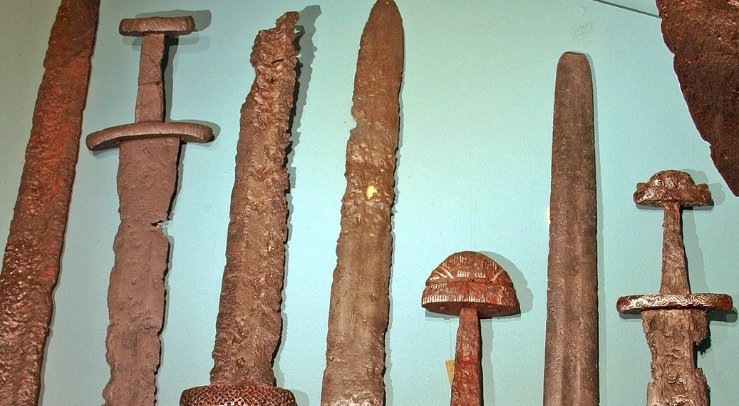
Reindeer hunters in Norway’s Oppland County made a stunning find while trekking through high mountains. They discovered a 1,200 year old Viking sword dating back to 850 to 950 AD, remarkably preserved by the cold environment.
This exciting discovery happened in August 2025, when Einar Ambakk and his friends spotted the rusted blade wedged between rocks on a barren scree covered slope. The find sheds light on Viking travels and raises questions about how such a valuable item was left behind in this remote spot.
Discovery Details and Location
The sword came to light during a routine reindeer hunt in the rugged mountains of Oppland County. Hunters often explore these high altitude areas, but this time they uncovered something far from ordinary.
Experts from Secrets of the Ice, a group focused on glacial archaeology, quickly got involved after Ambakk shared photos online. They confirmed the sword’s age through careful analysis, linking it to the Viking Age when Norse warriors roamed far and wide.
The site sits at a high elevation where freezing temperatures and low pressure helped preserve the metal. No other artifacts turned up nearby, even after teams used metal detectors to search the area.
This lack of additional finds suggests the sword was not part of a burial or hoard. Instead, it might have been abandoned during a harsh journey.
Historical Significance of the Sword
Viking swords were more than weapons; they symbolized power and status in a society of explorers and fighters. Crafted with skill, these blades often featured intricate designs, though time has worn away any decorations on this one.
Dating to the height of the Viking era, from 793 to 1066 AD, the sword likely belonged to a swordsman who ventured into Norway’s wild interior. Researchers believe blizzards or getting lost could explain why it was left on the mountain surface, exposed for centuries.
Similar finds in Norway highlight how climate change is revealing ancient items as glaciers melt. For instance, recent years have uncovered arrows, skis, and textiles from the same period, painting a fuller picture of Viking life.
This sword adds to that story, showing how these people navigated tough terrains for trade, raids, or exploration. It connects us to a time when Vikings influenced much of Europe, from Britain to Russia.
- Key Viking sword features: Often made of iron with pattern welded blades for strength.
- Common uses: Combat, ceremonies, and as heirlooms passed down generations.
- Preservation factors: Cold, dry conditions prevent rust and decay.
Expert Analysis and Preservation Efforts
Local archaeologists took the sword for detailed study, using modern techniques like X rays to examine its structure without damage. Early results show it is a typical Viking design, possibly with faint inscriptions that hint at its maker.
Preservation is key now. The team plans to clean and stabilize the blade before displaying it in a museum. This process ensures future generations can learn from it.
Norway has seen a surge in such discoveries due to warming temperatures melting ice patches. In 2024 alone, over 100 ancient items emerged from similar sites, including tools and clothing.
Experts stress the need for quick action as climate shifts expose more relics but also risk destroying them through exposure.
| Aspect | Details |
|---|---|
| Age | 850 to 950 AD |
| Location | Oppland County, Norway |
| Discoverers | Reindeer hunters led by Einar Ambakk |
| Condition | Rusted but well preserved due to cold |
| Likely Owner | Viking swordsman |
| Current Status | Under analysis by local researchers |
Theories on How the Sword Was Lost
Why would a Viking leave behind such a prized possession? Theories point to extreme weather as a culprit. Norway’s mountains are known for sudden storms that could disorient travelers.
Historical records describe Viking routes through these areas for hunting or trading. A lost warrior might have dropped the sword in a blizzard, unable to retrieve it.
Another idea suggests it was part of a larger event, like a skirmish or accident. Without bones or other clues, these remain educated guesses.
This mystery fuels interest in Viking history, inspiring books, shows, and even video games that recreate their world.
Recent events, like the 2025 melting of ice revealing a Viking packhorse net nearby, show how these finds are linking up to reveal broader patterns of ancient travel.
Impact on Modern Archaeology
This sword discovery boosts Norway’s reputation as a hotspot for Viking artifacts. It draws tourists and scholars, supporting local economies through heritage sites.
Globally, it contributes to understanding how ancient climates differed from today. As ice retreats, more secrets surface, urging better protection laws.
For enthusiasts, it is a reminder of history’s surprises hidden in plain sight.
What do you think happened to the sword’s owner? Share your theories in the comments and pass this story along to fellow history buffs.













Spotify Running Mode hits Android and revives its old tempo experiment

Galaxy Tab S12 Ultra Renders Keep the Notch Fans Hate

Novato Spinning Round House Sells With Six Neighbors for $3.3 Million

Crop Tour Finds Indiana and Nebraska Corn Yields Lagging 2025

Best Buy 60th sale brings Android deals back to its roots

American Airlines reverses seatback screen bet years too late

Iran Hormuz Strikes Force Gulf Oil Onto Costlier Paths

Plague Tale Prequel Day One Joins Game Pass Wave 2 as Witcher Exits

NBA 2K27 opens The City to everyone and rewrites career eras

iOS 26.6.1 Patches 29 Flaws as AI Forces Faster Apple Updates

Double Fine Cuts 23 Jobs Weeks After Xbox Independence

Day-One Big Walk Lifts PS Plus August Beyond Recycled AAA

John Hight Exits Wizards After Digital Reckoning Hits

Curtis Mead’s Red Sox Debut Ends With Fractured Wrist

Moesch and Dressel Rewrite Night One at 2026 U.S. Nationals

Red Sox Squander Hot Streak Chance in 4-3 Loss to Athletics

Boutte’s Quiet Camp Takeover Forces Patriots Receiver Choices

Take-Two CEO Pushes Netflix Subs for GTA 6 Extended Look

Halo Campaign Evolved Skulls Meet Death Barriers That Kill the Hunt

Wildlands Free Update Hands Players the Tools They Already Invented
-

 TECHNOLOGY3 years ago
How to Adjust a Bulova Watch Band – An Easy Guide
-

 News3 years ago
Fred Pentland: Athletic Bilbao’s English mentor who changed the essence of Spanish football
-

 FINANCE3 years ago
Tax Planning for Every Season: Guide to Maximizing Your Tax Benefits
-

 Education3 years ago
African Ministers New Education Plan
-

 BUSINESS3 years ago
What is Entrepreneurial Operating System? A Comprehensive Guide to EOS
-

 Education3 years ago
Innovate Your Learning Journey with Technology and Enhance Education
-

 News3 years ago
Russians formally out of World Athletics Championships
-

 BUSINESS3 years ago
Top 9 Most Expensive American Cities to Rent an Apartment