
News
500-Year-Old Skeleton in Boots Found in London

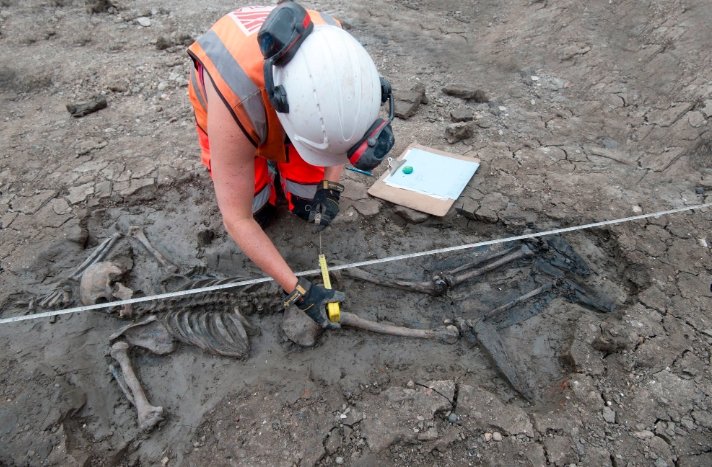
Archaeologists in London uncovered a 500-year-old skeleton wearing thigh-high leather boots face-down in the mud near the River Thames. This surprising find happened during work on the city’s massive super sewer project, sparking questions about the man’s life and sudden death in Tudor times.
The discovery came to light in Bermondsey, south London, as teams built a system to handle sewage and rainwater overflow. Experts believe the man likely died by accident around 500 years ago, given the valuable boots still on his remains.
The Unearthing During Sewer Construction
Workers on the Thames Tideway Tunnel, a major infrastructure effort costing over five billion pounds, stumbled upon the skeleton in late 2024. The project aims to clean up the river by redirecting waste, but it paused briefly for this historical gem.
Archaeologists from a leading firm examined the site right away. They found the body in a splayed position, suggesting a fall or drowning. The boots, preserved by the mud, offer clues to daily life back then.
This is not the first time construction in London has revealed ancient secrets. Similar digs have turned up Roman artifacts and medieval tools along the riverbanks.
The super sewer, set to finish by 2026, highlights how modern needs often intersect with the past. Teams now map out more areas to avoid damaging potential sites.
Clues from the Well-Preserved Boots
Leather boots like these were rare and expensive in the 15th and 16th centuries. People did not bury bodies with such items, pointing to an untimely end rather than a planned grave.
Experts analyzed the footwear for wear patterns. Signs of heavy use suggest the man walked or worked in wet conditions often.
The boots reached up to the thighs, ideal for wading in rivers or mud. This fits with jobs common along the Thames at the time.
Mud from the river helped keep the leather intact for centuries. Similar preservation has occurred in other waterlogged sites across Europe.
Theories on the Man’s Identity and Death
Archaeologists think he could have been a fisherman, sailor, or mudlark scavenging the shores. The River Thames was busy with trade and danger back then.
His bones show a hard life, with injuries from labor. No signs of violence appear, supporting the accident theory.
Records from Tudor England describe hazardous river work. Many drowned or got stuck in tides.
Recent studies link this find to climate patterns of the era, when floods were common.
Possible roles for the man include:
- Fisherman: Catching fish in the busy waterway.
- Sailor: Working on ships docking in London.
- Mudlark: Searching mud for lost items to sell.
Historical Context of Tudor London
London in the 1500s buzzed with growth under kings like Henry VIII. The Thames served as a lifeline for trade, food, and transport.
Leather goods marked status, but workers needed sturdy gear for harsh jobs. This skeleton sheds light on everyday people often overlooked in history books.
Comparisons to other finds, like skeletons from battles or plagues, help piece together the era. For instance, mass graves from the Black Death show different burial practices.
Today, with London’s population over nine million, such discoveries remind us of the city’s layered past. Ongoing digs tie into broader efforts to preserve heritage amid urban expansion.
| Aspect | Details from Discovery | Historical Insight |
|---|---|---|
| Age of Skeleton | Around 500 years old | Dates to Tudor period, 1485-1603 |
| Location | Bermondsey, near River Thames | Busy trade area with high accident risk |
| Key Artifact | Thigh-high leather boots | Valuable, used for wet work; rarely buried |
| Condition | Face-down in mud, boots intact | Suggests accidental death, preserved by silt |
| Modern Context | Found during super sewer build | Project costs $5.4 billion, completion by 2026 |
Impact on Archaeology and Future Digs
This find boosts interest in underwater archaeology. Teams now use advanced scans to spot more items without full excavation.
It also raises questions about protecting sites during big projects. Laws require checks, but surprises like this can delay timelines.
Experts plan to display the boots in a museum soon. This could draw visitors eager to learn about Tudor life.
Related events include a 2025 boat race on the Thames, echoing historical river activities. Such traditions keep the past alive.
Broader Lessons from the Past
Discoveries like this connect us to ancestors’ struggles. They show how environments shaped lives, much like today’s climate challenges.
Researchers continue testing bones for diet and origin details. Early results hint at a local man with a seafood-heavy diet.
This story entertains with its mystery while informing about history. It solves puzzles for those curious about old London.
Share your thoughts on this Tudor mystery in the comments below. What do you think happened to the booted man? Pass this article along to friends interested in archaeology.













Spotify Running Mode hits Android and revives its old tempo experiment

Galaxy Tab S12 Ultra Renders Keep the Notch Fans Hate

Novato Spinning Round House Sells With Six Neighbors for $3.3 Million

Crop Tour Finds Indiana and Nebraska Corn Yields Lagging 2025

Best Buy 60th sale brings Android deals back to its roots

American Airlines reverses seatback screen bet years too late

Iran Hormuz Strikes Force Gulf Oil Onto Costlier Paths

Plague Tale Prequel Day One Joins Game Pass Wave 2 as Witcher Exits

NBA 2K27 opens The City to everyone and rewrites career eras

iOS 26.6.1 Patches 29 Flaws as AI Forces Faster Apple Updates

Double Fine Cuts 23 Jobs Weeks After Xbox Independence

Day-One Big Walk Lifts PS Plus August Beyond Recycled AAA

John Hight Exits Wizards After Digital Reckoning Hits

Curtis Mead’s Red Sox Debut Ends With Fractured Wrist

Red Sox Squander Hot Streak Chance in 4-3 Loss to Athletics

Moesch and Dressel Rewrite Night One at 2026 U.S. Nationals

Boutte’s Quiet Camp Takeover Forces Patriots Receiver Choices

Take-Two CEO Pushes Netflix Subs for GTA 6 Extended Look

Halo Campaign Evolved Skulls Meet Death Barriers That Kill the Hunt

Wildlands Free Update Hands Players the Tools They Already Invented
-

 TECHNOLOGY3 years ago
How to Adjust a Bulova Watch Band – An Easy Guide
-

 News3 years ago
Fred Pentland: Athletic Bilbao’s English mentor who changed the essence of Spanish football
-

 FINANCE3 years ago
Tax Planning for Every Season: Guide to Maximizing Your Tax Benefits
-

 Education3 years ago
African Ministers New Education Plan
-

 BUSINESS3 years ago
What is Entrepreneurial Operating System? A Comprehensive Guide to EOS
-

 Education3 years ago
Innovate Your Learning Journey with Technology and Enhance Education
-

 News3 years ago
Russians formally out of World Athletics Championships
-

 BUSINESS3 years ago
Top 9 Most Expensive American Cities to Rent an Apartment