
News
Titanic Mourning Necklace Found in Wreck Debris

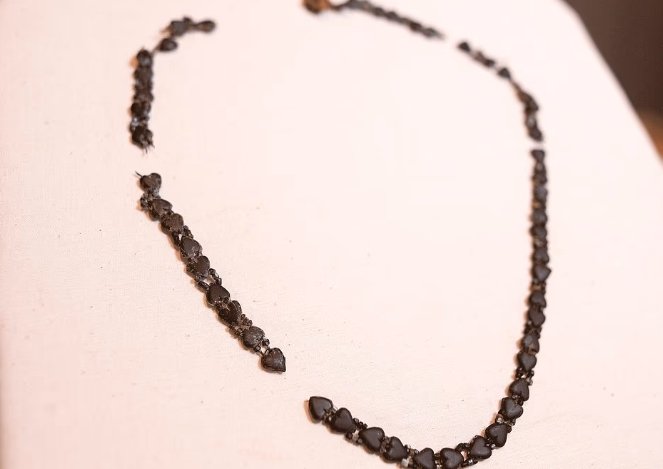
A black glass necklace from a Titanic passenger has surfaced after hiding in ocean debris for over a century. Experts believe it served as mourning jewelry for someone grieving a recent loss when the ship sank in 1912, and it now appears in an Orlando exhibition after careful restoration.
How the Necklace Stayed Hidden for Decades
Divers pulled a large piece of wreckage from the Titanic site in the North Atlantic back in 2000. This chunk included layers of sediment, rust, and other materials fused by deep sea pressure into a solid mass known as a concretion.
Inside this hardened block, tiny beads from the necklace remained trapped and unnoticed for 25 years. Conservators only spotted them during recent detailed examinations using advanced tools to break apart the concretion without damage.
The process revealed octagonal and heart shaped black glass beads made from French jet, a popular material in the early 1900s. This find adds to the over 5,000 artifacts recovered from the wreck over the years.
The Role of Mourning Jewelry in Titanic Times
Mourning jewelry became common in Victorian and Edwardian eras as a way to honor the dead. People wore pieces like this necklace to remember loved ones, often using black materials to symbolize grief.
On the Titanic, many passengers carried such items due to high death rates from diseases and wars in the early 20th century. The necklace likely belonged to a woman who boarded the ship shortly after a personal tragedy, seeking a new start in America.
Experts note that French jet offered an affordable alternative to expensive black stones like onyx. Its lightweight design made it ideal for daily wear, even on a luxury liner like the Titanic.
This artifact highlights the personal stories behind the disaster. While the owner remains unknown, it evokes the era’s customs and the emotional weight passengers carried.
- Black glass beads symbolized eternal mourning and were molded for intricate shapes.
- Heart motifs represented love lost, common in jewelry after a spouse or child’s death.
- Such pieces often included locks of hair or inscriptions, though this one shows no such details yet.
Conservation Challenges and Modern Techniques
Restoring the necklace took months of patient work by skilled conservators. They used micro tools and chemical baths to separate the fragile beads without breaking them further.
The concretion formed under extreme conditions, with pressures over 5,000 pounds per square inch compressing everything together. This preserved the beads but made extraction tricky, as any mistake could shatter them.
Today, digital imaging and 3D modeling help experts document such finds. For the Titanic necklace, these methods allowed a full reconstruction before display.
The effort paid off, turning scattered fragments into a complete piece. This success story shows how technology revives history from the ocean floor.
| Key Facts About the Titanic Necklace | Details |
|---|---|
| Material | French jet black glass |
| Bead Shapes | Octagonal and heart shaped |
| Recovery Year | 2000 |
| Display Location | Titanic Artifact Exhibition, Orlando |
| Estimated Era | Early 1900s Victorian style |
| Owner Status | Unknown passenger |
Broader Impact on Titanic Research and Exhibitions
This discovery fuels ongoing interest in the Titanic wreck, which lies 12,500 feet deep and continues to yield surprises. Recent expeditions have mapped more of the 15 square mile debris field, uncovering items from daily life.
In Orlando, the exhibition draws thousands yearly, blending education with storytelling. The necklace joins other artifacts like china plates and personal letters, offering visitors a tangible link to 1912.
Similar finds, such as a silver pocket watch from a Jewish passenger recovered earlier this year, remind us of diverse lives lost. These items help fund preservation efforts and educate on maritime history.
The necklace also sparks debates on salvaging wrecks ethically. While it brings history alive, some argue sites like Titanic should remain untouched as memorials.
Connections to Recent Titanic News and Legacy
Just last month, auction houses in England prepared to sell items from first class passenger Frederick Sutton, including a canvas bag and gold watch valued over $100,000. Such sales highlight the market for Titanic relics.
The 2025 anniversary of the sinking approaches, prompting new documentaries and books. This necklace fits into that wave, providing fresh material for historians studying passenger experiences.
Overall, the find deepens our understanding of the human side of the tragedy. It shows how ordinary objects carry profound stories of loss and resilience.
Share your thoughts on this Titanic discovery in the comments below. What other artifacts from the wreck intrigue you most?













Spotify Running Mode hits Android and revives its old tempo experiment

Galaxy Tab S12 Ultra Renders Keep the Notch Fans Hate

Novato Spinning Round House Sells With Six Neighbors for $3.3 Million

Crop Tour Finds Indiana and Nebraska Corn Yields Lagging 2025

Best Buy 60th sale brings Android deals back to its roots

American Airlines reverses seatback screen bet years too late

Iran Hormuz Strikes Force Gulf Oil Onto Costlier Paths

Plague Tale Prequel Day One Joins Game Pass Wave 2 as Witcher Exits

NBA 2K27 opens The City to everyone and rewrites career eras

iOS 26.6.1 Patches 29 Flaws as AI Forces Faster Apple Updates

Caitlin Clark Skips the WNBA 3-Point Contest for a Third Straight Year

Rainout Gives Red Sox Two Shots at a Franchise-Record Win Streak

Double Fine Cuts 23 Jobs Weeks After Xbox Independence

Day-One Big Walk Lifts PS Plus August Beyond Recycled AAA

John Hight Exits Wizards After Digital Reckoning Hits

Curtis Mead’s Red Sox Debut Ends With Fractured Wrist

Moesch and Dressel Rewrite Night One at 2026 U.S. Nationals

Red Sox Squander Hot Streak Chance in 4-3 Loss to Athletics

Boutte’s Quiet Camp Takeover Forces Patriots Receiver Choices

Take-Two CEO Pushes Netflix Subs for GTA 6 Extended Look
-

 TECHNOLOGY3 years ago
How to Adjust a Bulova Watch Band – An Easy Guide
-

 News3 years ago
Fred Pentland: Athletic Bilbao’s English mentor who changed the essence of Spanish football
-

 FINANCE3 years ago
Tax Planning for Every Season: Guide to Maximizing Your Tax Benefits
-

 Education3 years ago
African Ministers New Education Plan
-

 BUSINESS3 years ago
What is Entrepreneurial Operating System? A Comprehensive Guide to EOS
-

 Education3 years ago
Innovate Your Learning Journey with Technology and Enhance Education
-

 News3 years ago
Russians formally out of World Athletics Championships
-

 BUSINESS3 years ago
Top 9 Most Expensive American Cities to Rent an Apartment