
News
Driver in Critical Condition After Horror Horse Crash on I-70 Near Fruita

A quiet Sunday morning on Interstate 70 turned into a nightmare when a loose horse wandered onto the highway near Fruita, triggering a violent two-vehicle collision that left one driver fighting for his life.
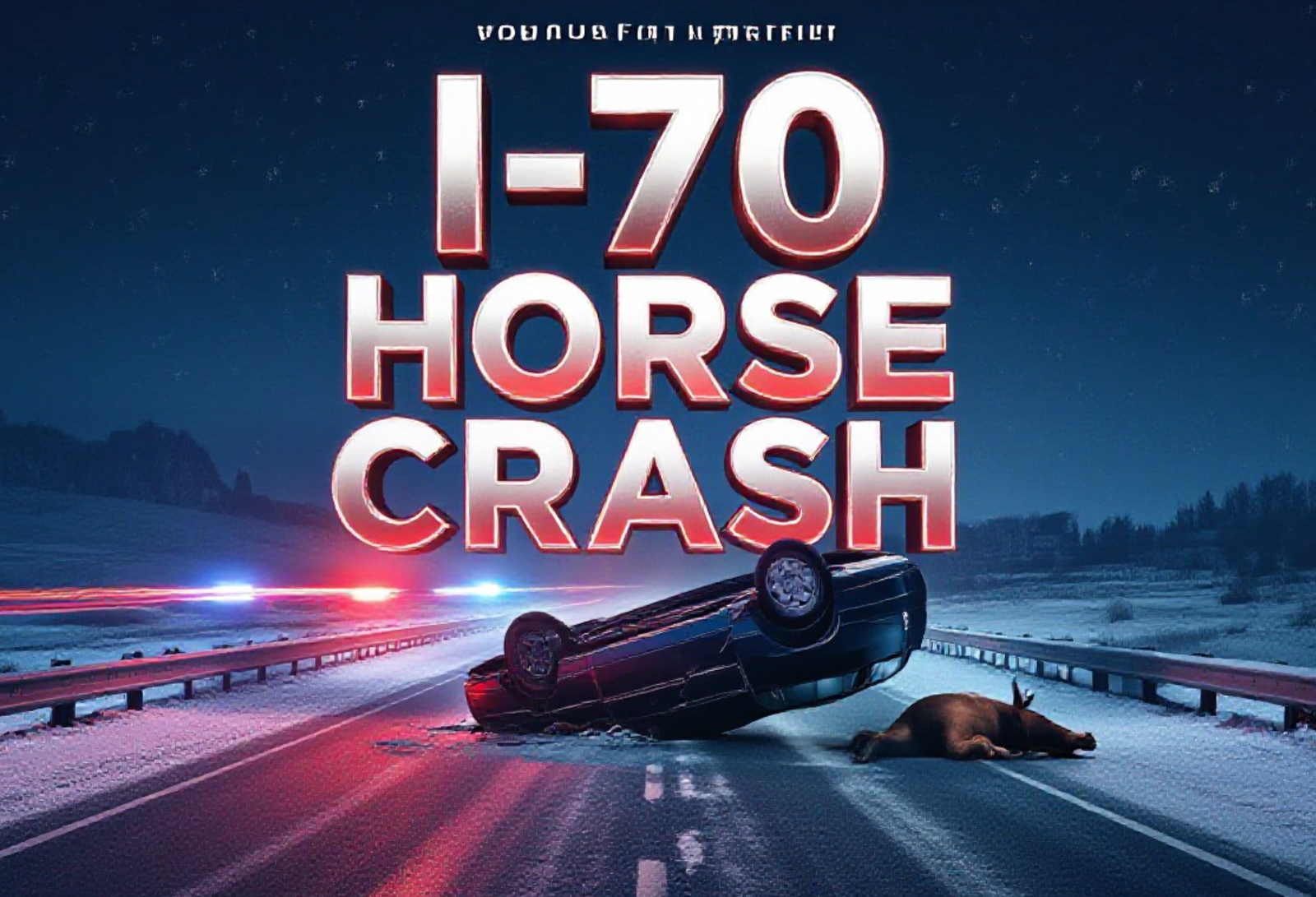
Colorado State Patrol says the incident happened at 1:37 a.m. on December 29, 2024, just east of Fruita in Mesa County. The horse was struck by two eastbound vehicles. One car rolled multiple times and came to rest upside down. That driver suffered life-threatening injuries and was rushed to St. Mary’s Medical Center in Grand Junction.
The second driver walked away unharmed. The horse did not survive.
Exact Sequence of the Crash
Colorado State Patrol troopers say the horse suddenly appeared in the eastbound lanes near mile marker 25. The first vehicle, a sedan, struck the animal head-on. The impact sent the horse into the path of a second vehicle traveling behind it.
The driver of the sedan lost control after the collision, veered off the roadway, and rolled. The car landed on its roof in the median. First responders found the driver trapped inside with severe injuries.
The second motorist managed to stop without rolling but still struck the already-injured animal. That driver was not hurt and cooperated fully with investigators.
Both eastbound lanes were shut down for nearly three hours while troopers investigated and crews removed the vehicles and the horse’s remains. Traffic was diverted through Fruita until the interstate reopened around 4:30 a.m.
Driver Remains Hospitalized in Critical Condition
As of Monday afternoon, the injured driver remains in the intensive care unit at St. Mary’s with life-threatening injuries, according to hospital sources familiar with the case. His name has not been released because next-of-kin notifications are still ongoing.
Colorado State Patrol Sergeant Michael Monrreal told local media the injuries are “very serious” and the driver underwent emergency surgery Sunday morning. No updates on his condition have been released since.
The uninjured driver has been cooperating with troopers and is not facing charges at this time.
Where Did the Horse Come From?
Investigators are still working to determine who owns the horse. The animal was not wearing tags or brands that could immediately identify it.
This section of western Colorado is surrounded by ranches and open range land. Troopers say fences along I-70 in that area are generally well-maintained, but horses do occasionally escape through gates left open or damaged fencing.
Livestock on highways remains a persistent danger in rural Colorado. Colorado Department of Transportation data shows Mesa County alone recorded 87 livestock-vehicle crashes in the past five years.
A Growing Danger on Colorado Highways
Vehicle-animal collisions are spiking across the state.
Colorado State Patrol reports more than 4,000 crashes involving animals each year, with deer making up the majority. But horses and cattle cause some of the most devastating wrecks because of their size.
In 2024, troopers worked at least 14 serious injury crashes involving livestock statewide. Three of those were fatal.
On I-70 between Grand Junction and the Utah line, troopers respond to loose livestock calls several times each month, especially during winter when animals search for food near the highway corridor.
Key statistics from Colorado State Patrol and CDOT (2020-2024):
- 412 livestock-vehicle crashes on Colorado highways
- 18 fatalities
- 147 serious injuries
- Average repair cost per crash: $28,000
- Most common time: between 10 p.m. and 6 a.m.
What Drivers Can Do to Stay Safe
Troopers remind drivers that speed is the biggest killer in animal collisions.
“If you see eyes on the highway at night, slow down immediately,” Sergeant Monrreal said. “Braking hard and staying in your lane gives you the best chance. Swerving often causes rollovers or head-on crashes.”
Simple safety tips when driving rural Colorado highways at night:
- Slow down after dark, especially in posted livestock areas
- Use high beams when no oncoming traffic
- Scan both sides of the road constantly
- Never swerve for large animals; brake firmly instead
- Report loose livestock immediately by calling *CSP on your cell
The stretch of I-70 near Fruita now joins a growing list of Colorado highways where a split-second encounter with a loose animal changed lives forever.
One driver is clinging to life in a Grand Junction hospital. A rancher somewhere is missing a horse. And every motorist who travels that road at night is reminded how quickly things can go wrong on our rural interstates.
What do you think needs to be done to stop these heartbreaking crashes? Better fencing? Harsher penalties for owners who let animals escape? Share your thoughts below.









Spotify Running Mode hits Android and revives its old tempo experiment

Galaxy Tab S12 Ultra Renders Keep the Notch Fans Hate

Novato Spinning Round House Sells With Six Neighbors for $3.3 Million

Crop Tour Finds Indiana and Nebraska Corn Yields Lagging 2025

Best Buy 60th sale brings Android deals back to its roots

American Airlines reverses seatback screen bet years too late

Iran Hormuz Strikes Force Gulf Oil Onto Costlier Paths

Plague Tale Prequel Day One Joins Game Pass Wave 2 as Witcher Exits

NBA 2K27 opens The City to everyone and rewrites career eras

iOS 26.6.1 Patches 29 Flaws as AI Forces Faster Apple Updates

Caitlin Clark Skips the WNBA 3-Point Contest for a Third Straight Year

Rainout Gives Red Sox Two Shots at a Franchise-Record Win Streak

Double Fine Cuts 23 Jobs Weeks After Xbox Independence

Day-One Big Walk Lifts PS Plus August Beyond Recycled AAA

John Hight Exits Wizards After Digital Reckoning Hits

Curtis Mead’s Red Sox Debut Ends With Fractured Wrist

Moesch and Dressel Rewrite Night One at 2026 U.S. Nationals

Red Sox Squander Hot Streak Chance in 4-3 Loss to Athletics

Boutte’s Quiet Camp Takeover Forces Patriots Receiver Choices

Take-Two CEO Pushes Netflix Subs for GTA 6 Extended Look
-

 TECHNOLOGY3 years ago
How to Adjust a Bulova Watch Band – An Easy Guide
-

 News3 years ago
Fred Pentland: Athletic Bilbao’s English mentor who changed the essence of Spanish football
-

 FINANCE3 years ago
Tax Planning for Every Season: Guide to Maximizing Your Tax Benefits
-

 Education3 years ago
African Ministers New Education Plan
-

 BUSINESS3 years ago
What is Entrepreneurial Operating System? A Comprehensive Guide to EOS
-

 Education3 years ago
Innovate Your Learning Journey with Technology and Enhance Education
-

 News3 years ago
Russians formally out of World Athletics Championships
-

 BUSINESS3 years ago
Top 9 Most Expensive American Cities to Rent an Apartment