
News
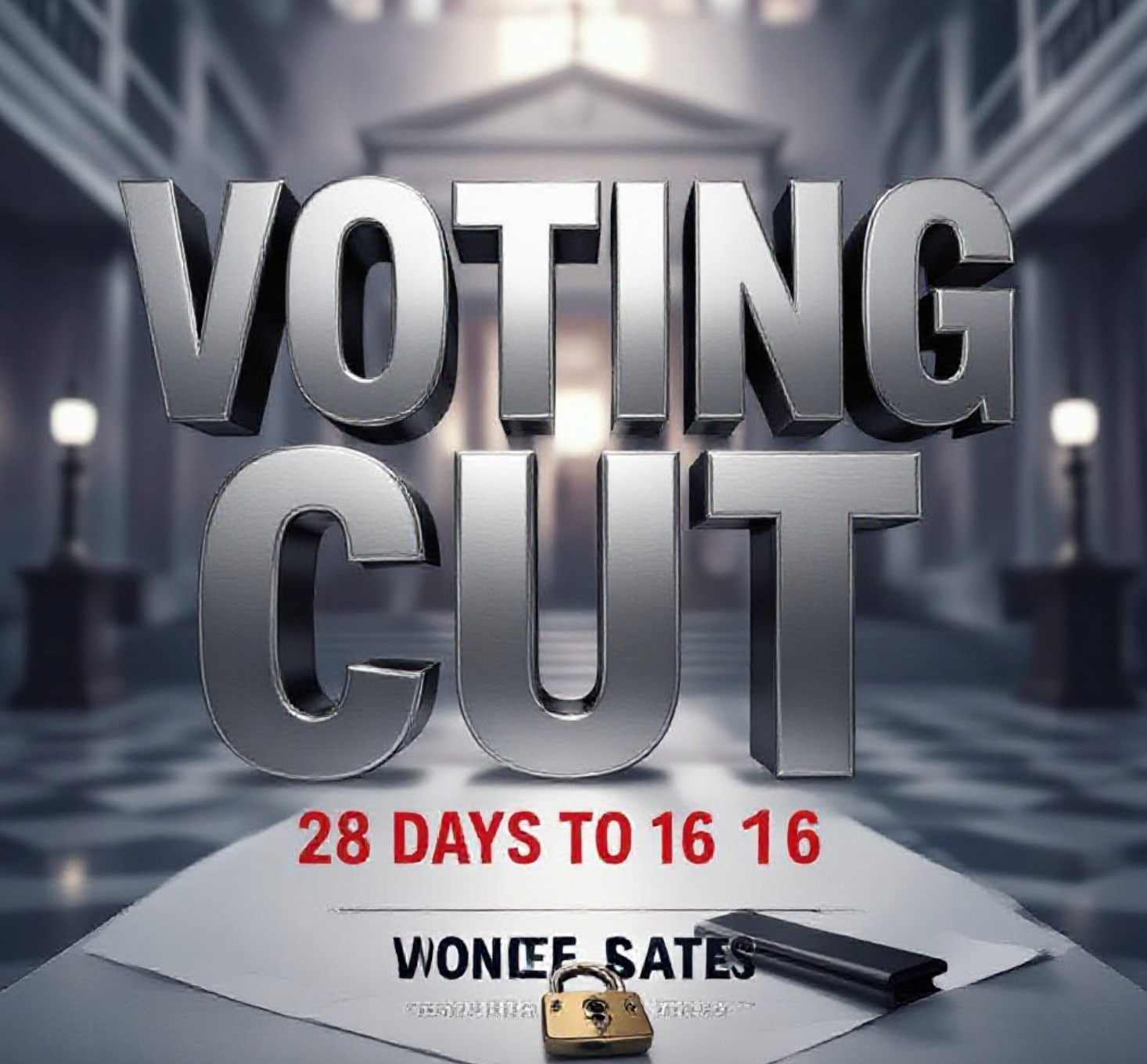
Indiana Lawmakers Advance “Sneak Attack” Amendment to Slash Early Voting Days

Senators Quietly Push to Cut Early Voting from 28 to 16 Days, Sparking Outrage Among Advocates and Election Officials
INDIANAPOLIS — A controversial proposal to cut Indiana’s early voting period nearly in half is moving fast through the Statehouse, catching voters and election administrators off guard. In a move described by critics as a “sneak attack” on the democratic process, the Senate Elections Committee voted Monday to advance an amendment to House Bill 1359 that would reduce early voting availability from 28 days to just 16 days.
The amendment was added at the last minute without public testimony, transforming a routine bill about ballot scanning procedures into a lightning rod for voting rights debates. If passed by the full Senate and signed into law, the changes would take effect immediately, forcing a scramble to adjust schedules before the upcoming May 5, 2026 primary election.
“Election Day, Not Election Month”
The amendment, introduced by Committee Chair Sen. Mike Gaskill (R-Pendleton), would eliminate the first two weeks of in-person absentee voting. Under current law, Hoosiers have four weeks to cast their ballots at their county clerk’s office. The new proposal would shrink that window to just over two weeks.
Sen. Gaskill defended the reduction as a necessary step to save taxpayer money and relieve the burden on county election staff. He argued that Indiana’s current 28-day window is excessive compared to neighboring states and that the extended period stretches resources too thin.
“I’m sure many of you have heard the argument that, even here at the legislature, it’s Election Day, not Election Month,” Gaskill told committee members. He framed the change as a “process improvement” that aligns Indiana with the national average, suggesting that most voters do not utilize the earliest days of the current window.
However, the decision to attach this significant policy shift to an unrelated technical bill—without allowing the public to speak on it—has drawn sharp bipartisan criticism. The committee voted 6-3 to advance the measure, with Sen. Greg Walker (R-Columbus) joining Democrats in voting no. Walker, the only Republican to break ranks, voiced concerns that the move could undermine voter confidence in a system that is already working well for his constituents.
Officials and Advocates Sound the Alarm
The proposal has triggered immediate backlash from election administrators and voting rights groups who warn that shortening the window will suppress turnout in a state that already ranks near the bottom nationally for voter participation.
Julia Vaughn, Executive Director of Common Cause Indiana, blasted the maneuver, calling it a “sneak attack” designed to make voting harder for working families.
“It’s not just an inconvenience to face a long line when you’re a voter,” Vaughn said. “Again, for some people, they don’t have the luxury of being able to wait.”
Local election officials are also pushing back, citing the logistical nightmare of changing rules just months before a primary. Amy Scrogham, Director of Elections for the Allen County Election Board, emphasized that local communities know what works best for their voters.
“As an Election Administrator, I am not in favor of reducing early voting from 28 days to 16 days,” Scrogham stated. “I think it should be up to each county to decide what is best for their voters and community. Allen County is already preparing for the 28 days of early voting for the upcoming primary election in May.”
Scrogham added that while her office would comply if the bill passes, the sudden shift forces administrators to overhaul plans that have been in the works for months.
Data Contradicts “Low Usage” Claims
While proponents argue that the first two weeks of early voting are a “ghost town,” data from recent elections tells a different story. Opponents of the bill point to statistics showing that hundreds of thousands of Hoosiers utilize the full 28-day window.
During the 2024 general election, approximately 309,000 voters—nearly 22% of all early voters—cast their ballots during the specific two-week period this amendment seeks to eliminate.
Sen. Fady Qaddoura (D-Indianapolis) argued during the committee hearing that cutting these days would funnel those hundreds of thousands of voters into a shorter timeframe, inevitably causing bottlenecks.
“I think between the policy of saving dollars versus allowing access and increasing voter participation at a time when Indiana ranks in the bottom five nationwide on voter participation, I think it’s extremely problematic,” Qaddoura said.
He noted that wait times at some polling locations in his district have already reached up to six hours in past elections. Compressing the voting schedule, critics argue, will only exacerbate these delays, disproportionately affecting hourly workers, the elderly, and parents who rely on flexible voting options to participate in democracy.
What Happens Next?
The bill now heads to the full Senate for a final vote. Because the amendment significantly altered the original House bill, if it passes the Senate, it must return to the House for approval before it can head to the Governor’s desk.
With the legislative session nearing its end, time is running out. Supporters are rushing to push the measure through, while opponents are mobilizing to stop it. If the bill becomes law, Indiana voters will need to mark their calendars with a new, tighter deadline: early voting would likely begin on April 19, 2026, instead of the originally scheduled April 7.
This accelerated timeline leaves little room for voter education, raising fears that many Hoosiers might show up to vote in early April only to find the doors locked.
Summary: Indiana lawmakers have quietly advanced an amendment to House Bill 1359 that would slash early voting days from 28 to 16. The proposal, which passed the Senate Elections Committee 6-3, is championed by Republicans as a cost-saving measure but is fiercely opposed by Democrats, voting rights advocates, and some election officials who argue it will suppress turnout and increase wait times. With no public testimony allowed on the change, the bill now moves to the full Senate, threatening to disrupt the upcoming May 2026 primary.
What are your thoughts on reducing early voting days? Do you think it saves money or hurts democracy? Share your opinion in the comments below.











OpenAI Says Apple’s Trade Secret Lawsuit Lacks Any Merit

Lucid’s Bankruptcy Denial Can’t Quiet Wall Street’s Doubts

IBM Stock Suffers Its Worst Trading Day Since the 1987 Crash

Cheap Chinese AI Models Are Undercutting Anthropic and OpenAI

ASML’s AI Chip Forecast Lifts Futures, Deepens Market’s Big Bet

SK Hynix’s Nasdaq Shares Race Ahead of Seoul by Up to 51%

Meta Workers Sue Over AI Layoffs That Targeted Medical Leave

Taco Bell Pulls Lettuce as Michigan Cyclosporiasis Cases Top 3,300

PayPal’s Five-Year Slide Makes It a $53 Billion Target for Stripe

Mega Millions Jackpot Hits $672 Million, but Taxes Claim Nearly Half

Halo Studios Reverses PS Plus for Halo: Campaign Evolved on PS5

Black Ops 1 and 2 PS5 Ports: $40 Price Tag Has Fans Uneasy

Matt Brown Dismisses Rousey and Paul’s MVP MMA Ratings Win Over UFC

Star Wars: Galactic Racer Is a Roguelite Racer With a Podracing Skin

Julius Randle Traded to Nets as Wolves Reclaim Cap Space for Dosunmu

Sega’s $49.99 Sonic Classic and Modern Bundles Hit Switch in October

Colombia Edge DR Congo as Muñoz Books World Cup Knockout Place

Douze Dixièmes Closes Five Months After MIO: Memories in Orbit

Warriors Take Yaxel Lendeborg, the Oldest Pick in the 2026 NBA Draft

Meta’s Muse Image Lets Anyone Use Your Instagram Photos in AI
-

 TECHNOLOGY3 years ago
How to Adjust a Bulova Watch Band – An Easy Guide
-

 News3 years ago
Fred Pentland: Athletic Bilbao’s English mentor who changed the essence of Spanish football
-

 FINANCE3 years ago
Tax Planning for Every Season: Guide to Maximizing Your Tax Benefits
-

 Education3 years ago
African Ministers New Education Plan
-

 BUSINESS3 years ago
What is Entrepreneurial Operating System? A Comprehensive Guide to EOS
-

 Education3 years ago
Innovate Your Learning Journey with Technology and Enhance Education
-

 News3 years ago
Russians formally out of World Athletics Championships
-

 BUSINESS3 years ago
Top 9 Most Expensive American Cities to Rent an Apartment