
A controversial new theory suggests a 3,800-year-old inscription at a turquoise mine in Egypt might contain the name of Moses — long thought lost to history.
It sounds like something out of a movie script, but it’s unfolding in the sands of the Sinai Peninsula. An independent scholar says he’s discovered a Proto-Sinaitic inscription that could point to one of the most iconic figures in human history: Moses. Yes, that Moses.
The Mine, the Stones, and a Cryptic Mark
The story begins at Serabit el-Khadim, a now-quiet turquoise mine that buzzed with activity during Egypt’s Middle Kingdom.
Located in the rocky expanse of western Sinai, the mine dates back to the 12th Dynasty, around 1800 BCE. Egyptian officials, Semitic laborers, and enslaved workers once toiled under a fierce sun here. Left behind on the site’s sandstone walls and rocks? Strange markings — early alphabetic inscriptions in what scholars call Proto-Sinaitic script.
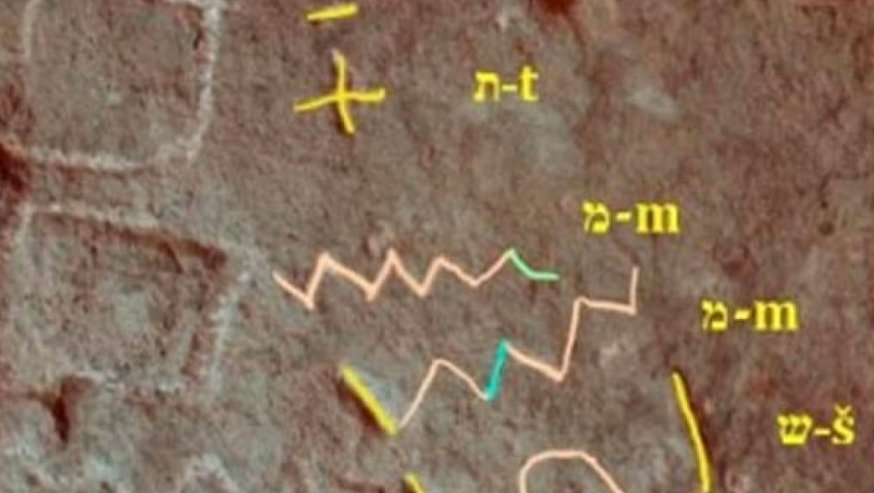
Among those markings, researcher Michael S. Bar-Ron believes, is something that’s eluded historians and theologians for centuries: the name of Moses, rendered as “MŠ.”
It’s a big claim. And not everyone’s on board.
Eight Years, Two Words, and a Tidal Wave of Questions
Bar-Ron has spent nearly a decade poring over these inscriptions. He’s not affiliated with a university or museum, which has made some in the academic world skeptical. Still, his findings are getting attention — and for good reason.
He zeroed in on two inscriptions in particular. They include a short phrase that could be translated as “This is from MŠ.” In ancient Semitic languages, this could mean “This is from Moses.”
That’s where things get dicey.
One sentence. Two letters. Thousands of years of religious, cultural, and political weight. Even Bar-Ron admits he’s standing on fragile ground.
But he’s not the only one fascinated. Epigraphers, biblical archaeologists, and historians of ancient Egypt are all watching.
What Is Proto-Sinaitic, Anyway?
If this sounds technical — it is. But stick with it, because this script might be the missing link between Egyptian hieroglyphs and the modern alphabet.
Proto-Sinaitic is the ancestor of ancient Hebrew and Phoenician, and by extension, the alphabets we use today. It first appeared around the 19th century BCE, likely invented by Semitic-speaking workers in Egypt who simplified hieroglyphs into something easier to scratch onto stone.
At Serabit el-Khadim, dozens of these early inscriptions have been found. They mention gods like “El” — a Semitic deity later associated with the Israelite tradition.
Some phrases are prayers. Others are names. Some are still undeciphered.
Which brings us back to “MŠ.”
If It’s True, What Would It Mean?
If Bar-Ron is right, this would be the first non-biblical inscription of Moses’ name — ever. It would also potentially push back the timeline for the Exodus or alter how historians view Moses’ historical role.
Here’s what that might imply:
-
Moses wasn’t just a religious symbol — he was a real person with a traceable presence.
-
The Israelites may have had an earlier, more direct connection to Egyptian labor systems.
-
The Proto-Sinaitic script may preserve more Hebrew elements than previously thought.
And that’s just the beginning.
Why Scholars Are Cautious — And Some Are Flat-Out Dismissive
Let’s be clear: the mainstream academic community is not rushing to rewrite history books.
Critics of Bar-Ron’s theory raise several red flags:
-
No confirmed link between “MŠ” and the Moses described in the Torah.
-
The name “MŠ” could refer to anyone — it’s not unique to Moses.
-
Bar-Ron’s status as an independent researcher, with no peer-reviewed publication (yet), makes verification tricky.
Others argue we simply don’t have enough context. One epigrapher noted: “Two consonants, carved 3,800 years ago, do not make a historical figure.”
Fair enough.
Still, the timing and location are oddly consistent with biblical tradition. That has some scholars curious, if not convinced.
Laying Out the Facts So Far
Here’s a basic comparison of what we know and what’s still uncertain:
| Claim/Topic | Supporting Evidence | Current Consensus |
|---|---|---|
| Location of discovery | Serabit el-Khadim, ancient turquoise mine | Confirmed |
| Script | Proto-Sinaitic | Confirmed |
| Phrase “This is from MŠ” | Found on two inscriptions | Confirmed |
| Connection to Moses | Hypothetical interpretation | Highly debated |
| Historical context | 12th Dynasty Egypt (~1800 BCE) | Agreed |
| Religious implication | Potentially links to Exodus-era narrative | No scholarly agreement |
In other words, we’re standing at the edge of a very deep rabbit hole.
What’s Next? Probably a Fight Over Every Letter
Bar-Ron’s full thesis is not yet published, but he’s planning to submit it to journals specializing in Semitic epigraphy and Near Eastern archaeology.
Until then, the inscriptions remain where they’ve always been — etched into the rock, waiting for someone else to take a closer look.
Academic interest is already heating up. Several linguists have requested new high-res scans. A team from a European university is planning a fresh expedition to reexamine the inscriptions.
So the story’s not over. In fact, it may just be getting started.