A growing wave of economists — nearly 2,000 and counting — are pushing back hard against the return of Trump-era tariffs, warning they hurt American families more than they help. One Indiana professor is adding his voice to the mix.
Tariffs Back in Spotlight as Economists Push Back
President Donald Trump’s trade playbook isn’t exactly a mystery. It’s tariffs — big, broad, and brash.
Back in 2018, Trump launched sweeping import taxes, targeting steel, aluminum, and later, Chinese goods. It rattled global markets, triggered retaliation, and sparked anxiety in farm towns across the Midwest. The debate has been simmering ever since.
Now, with Trump eyeing a second term and doubling down on the idea — even floating a universal 10% tariff on all imports — critics are speaking out again. This time louder. With signatures.
Close to 2,000 U.S. economists — including Nobel laureates, former economic advisers, and university professors — have signed an anti-tariff declaration, calling the policies “deeply misguided and economically harmful.”
Among them? Michael J. Hicks, a professor of economics at Ball State University in Muncie, Indiana.
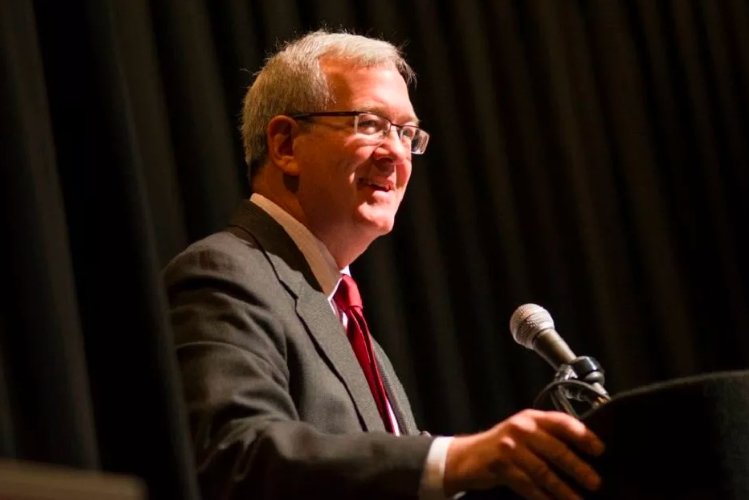
Michael Hicks Weighs In: ‘Tariffs Are Taxes, and People Forget That’
Sitting down with 21Alive News, Hicks didn’t mince words.
He described the tariffs not as strategic tools, but as blunt instruments — ones that have made life more expensive for everyday Americans.
“Tariffs are taxes, and people forget that,” Hicks said. “They’re not paid by China. They’re paid by the U.S. consumer.”
According to Hicks, many Hoosiers didn’t realize at the time how directly tariffs would hit their wallets. Higher prices on imported goods meant higher prices across the board — from tools and appliances to cars and groceries.
He pointed to 2018-2019 economic data showing that the average American household paid between $600 and $1,200 more annually due to tariffs.
How Indiana Felt the Squeeze
While the headlines often focused on global drama — China, trade wars, WTO disputes — the local impact in Indiana was much closer to home.
Manufacturing towns, already walking an economic tightrope, felt it first. Then came agriculture.
Hicks says Indiana’s farmers were especially vulnerable. Soybean exports to China tanked after retaliatory tariffs. Storage facilities overflowed. Prices dropped.
“There’s this narrative that tariffs protect American jobs,” Hicks said. “But for every job ‘protected’ in steel, we lost more downstream in industries that rely on it — like auto parts and construction.”
He said the numbers don’t lie. For Indiana, which depends heavily on manufacturing and farming, the ripple effects were brutal.
One sentence here.
Hicks on Political Messaging vs. Economic Reality
What frustrates Hicks — and many of his colleagues — is the disconnect between political messaging and economic outcomes.
“Politicians frame tariffs as a way to punish bad actors. But the people actually feeling the punishment are the ones buying groceries in Fort Wayne or fixing their tractors in Logansport,” he said.
In his view, the policies created short-term headlines and long-term costs.
Some of those costs?
-
Higher consumer prices across almost every major category
-
Disruption of long-term supply chains and business investment
-
Retaliatory tariffs on U.S. goods, especially ag products
-
Uncertainty in global trade relationships
“Businesses like predictability,” he added. “You can’t invest in a factory when the rules change every six months.”
A Deja Vu Moment as 2024 Tariff Talk Returns
Fast-forward to 2025, and it’s feeling a little like déjà vu.
Trump, now the presumptive Republican nominee, has floated a universal 10% tariff on all imports if re-elected. Supporters argue it’ll boost U.S. industry. Critics — like Hicks — say it could reignite inflation.
Hicks isn’t alone in his concern. The anti-tariff declaration is gaining traction fast. Signatures have poured in from universities coast to coast, including Harvard, Stanford, and the University of Chicago.
They’re not just objecting in principle. They’re warning of concrete consequences, like weaker GDP, rising costs, and potential trade wars.
Hicks said: “We’ve seen how this movie ends already. It doesn’t end well.”
What Can Hoosiers Do? Pay Attention, Hicks Says
So where does that leave the average person?
Hicks doesn’t suggest panic. But he does urge people — especially in trade-heavy states like Indiana — to stay alert.
“This stuff affects your life. Even if you’re not shipping soybeans to China, you’re buying shoes, food, electronics,” he said.
He also emphasized that tariffs can fly under the radar. They don’t come with a receipt or a line item. But they’re there. Hidden in the higher prices at checkout.
One sentence. Simple, but clear.
And while national economic debates might feel abstract, Hicks says local communities need to speak up too — especially in a political season where trade policy is once again a headline issue.