The Bureau of Land Management lifts the veil on wildfire defense in Western Colorado, offering a rare peek into how crews gear up for fire season.
The Grand Junction Air Center buzzed with controlled chaos on June 13. But it wasn’t a wildfire threatening the valley—it was a behind-the-scenes look at the agency fighting to prevent the next one. The Bureau of Land Management (BLM) opened its doors to the press, revealing how their Upper Colorado River Fire Management Unit tackles the region’s growing wildfire risks.
It wasn’t just about showing off helicopters and gear. It was about education, communication—and giving the public a clearer view of the chaos that often comes with summer smoke.
Western Colorado Is Dry, Hot, and One Spark Away
It’s no secret anymore—Western Colorado’s wildfire season is getting longer and meaner. The BLM says wildfires here aren’t some rare crisis. They’re routine. Relentless. Almost predictable.
Each year, dry brush and lightning storms play a dangerous game across the high desert. Toss in human activity—campfires, cigarettes, fireworks—and things get volatile fast.
This year, the risk level is already creeping up. Lathan Johnson, the Deputy Fire Management Officer for the BLM’s Upper Colorado River District, put it plainly: “The fuels are ready. The winds are strong. It doesn’t take much.”
One spark. That’s all it takes.
Firefighting Lingo Isn’t Just Talk—It Could Save Lives
One thing the BLM emphasized during the media tour: people don’t always understand what they’re hearing when a fire breaks out. And that can lead to confusion, panic—or worse, delay.
Terms like “contained,” “controlled,” or “out of control” are often thrown around without clarity.
Here’s a quick breakdown, straight from BLM’s media guide:
-
Contained: Fire lines are in place and holding, but flames may still be active inside.
-
Controlled: Fire activity has decreased, and officials believe it won’t escape.
-
Out of control: Flames are actively spreading with no full line around them yet.
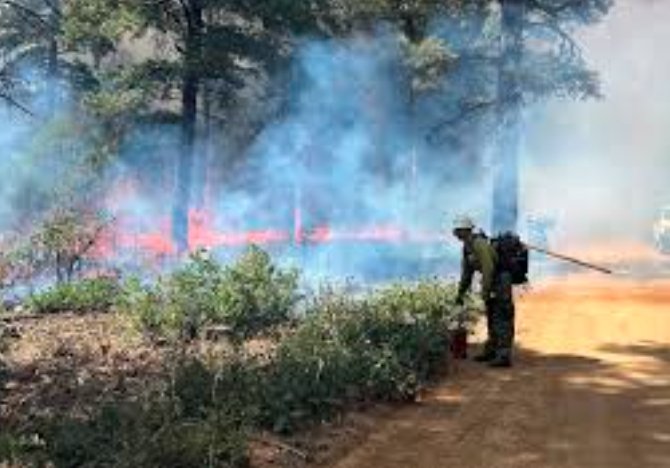
Even phrases like “prescribed burn” or “initial attack” sound technical, but they’re about real strategies—and real risks.
So yeah, the language matters. When you hear it on the news, now you’ll know what’s actually happening out there.
The Grand Junction Air Center Is the Nerve Center
Tucked on the outskirts of the city, the Grand Junction Air Center looks unassuming. But this is where many wildfire operations across western Colorado take flight—literally.
Airtankers roar off the runway, loaded with red slurry. Helicopters zip back and forth during high-alert days. Inside the command trailer? Maps. Radios. Weather readouts. Constant chatter.
It’s a mix of military precision and fire-season adrenaline.
And not everything is high-tech. Some of the best tools are still:
-
Sharp hand tools for creating firebreaks
-
Portable water tanks to drench hot spots
-
Human eyes spotting smoke before satellites do
The BLM says their success starts long before the flames show up. Training, coordination, and fast communication are everything.
Firefighters Now Have to Be Part Meteorologist, Part Psychologist
Fighting wildfires isn’t just about digging trenches and flying choppers. The job is changing. These crews read wind patterns, study weather models, and even monitor public sentiment.
That’s right—public sentiment.
When people don’t trust the information or don’t understand why evacuations happen, things fall apart quickly. Misinformation on social media? It spreads faster than flames.
One sentence that stuck from the tour: “You don’t just fight fire. You fight rumors.”
So, Johnson and his team now spend more time than ever trying to get the right info to the right people at the right time. Which, let’s be honest, isn’t easy when the Wi-Fi drops and there’s ash in the air.
One of the Most Fire-Prone Regions in the U.S.—And Still Under the Radar
If you think Colorado’s fire problems only happen up north or out west, think again. The Upper Colorado River Interagency Fire Unit (UCR) covers:
| Fire Zone | Coverage Area (Acres) | Primary Risks |
|---|---|---|
| Grand Junction | 2.8 million | Grass fires, canyon winds |
| Rifle | 1.2 million | Dense brush, remote terrain |
| Kremmling | 1.5 million | High-altitude forests |
That’s over 5 million acres combined—roughly the size of New Jersey.
Many of these regions aren’t easy to access. No roads. No power lines. When something catches, they’ve got to move fast—and often by air.
What’s Next? Preparedness, Then More Preparedness
The BLM isn’t waiting around. As fire season looms, the crews are already:
-
Holding live drills
-
Conducting fuel load surveys
-
Pre-positioning equipment near high-risk areas
There’s also a renewed push to connect better with local media, sheriffs, and emergency managers. Why? Because if one part of the system fails—whether it’s an unclear evacuation notice or a delayed weather alert—the consequences can be deadly.
“You can’t fake readiness,” Johnson said. “When it happens, you’re either prepared or you’re not.”