The Colorado Department of Transportation just flipped the switch on 18 new variable speed limit signs along a treacherous 10-mile stretch of Interstate 70 through Dowd Canyon west of Vail. These bright LED boards with flashing orange beacons can drop the posted speed in real time when snow flies, traffic backs up, or black ice forms.
This is the first time CDOT has installed variable speed technology in this exact section of the highway. Drivers who regularly battle this corridor know it all too well for wrong-way crashes, chain-reaction pileups, and sudden whiteouts that turn 70 mph into a nightmare in minutes.
Why Dowd Canyon Needed This Now
Dowd Canyon sits just west of Vail Pass and east of Eagle. It is a natural wind tunnel with steep grades, tight curves, and almost no runaway truck ramps. When storms hit, visibility can drop to zero in seconds.
From 2018 to 2023, CDOT records show this stretch averaged more than 120 crashes per year. At least eight fatalities occurred in weather-related incidents during that span. Truck drivers call it “the gauntlet.” Locals simply call it terrifying.
CDOT mountain corridor safety manager Emily Anderson told reporters the old static 65 mph signs were no longer enough. “We were asking drivers to make perfect decisions in terrible conditions,” she said. “These new signs give us the ability to lower the limit before things get out of control.”
How the Variable Speed System Actually Works
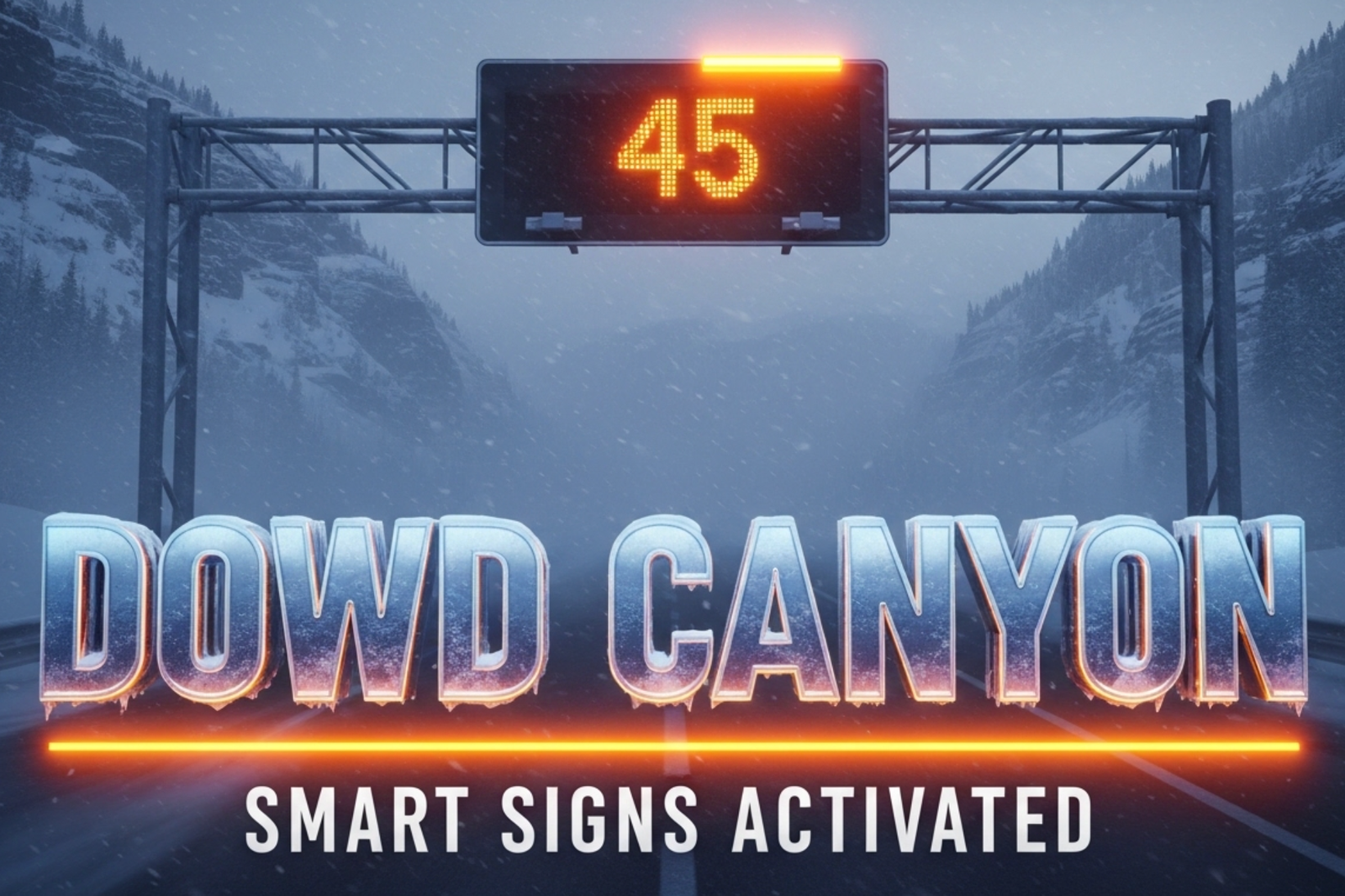
Eighteen solar-powered LED signs now line both eastbound and westbound lanes from mile marker 165 to 175. Sensors embedded in the pavement, weather stations on the canyon walls, and live traffic cameras feed data to a control center in Denver.
When conditions worsen, operators can drop the limit in 10 mph increments down to 35 mph. Orange beacons flash to grab attention. The lower speed stays in place until sensors confirm the road is clear and dry again.
CDOT tested the system during the first snow event last week. Speeds dropped to 45 mph for three hours during a squall. Traffic moved steadily with no major incidents reported.
Key features of the new signs:
- Bright white LED numbers visible in blowing snow
- Solar panels plus battery backup (no power lines needed)
- Flashing orange beacons that activate only when speed drops
- Real-time updates every 60 seconds if conditions change
- Automatic alerts sent to navigation apps like Waze and Google Maps
Early Results and Driver Reactions
Local plow driver Mike Trujillo has run this route for 19 years. He saw the signs in action during last Thursday’s storm.
“I watched cars actually slow down when those beacons started flashing,” Trujillo said. “That’s something I’ve never seen before in Dowd. Usually people fly until they hit the first wreck.”
CDOT data from similar variable speed corridors near Georgetown and the Eisenhower Tunnel shows crash reductions of up to 30 percent during storms. Officials expect similar results here.
Eagle County Sheriff deputies who patrol the area daily gave the project strong approval. “Anything that prevents one more fatality is worth it,” Sergeant Rachel Carter said.
Bigger Picture for Colorado Mountain Travel
This Dowd Canyon deployment is part of CDOT’s $1.2 billion mountain corridor improvement plan. Variable speed systems already operate successfully on Floyd Hill, near Idaho Springs, and through the twin tunnels.
More sections will come online in 2025, including the stretch from Silverthorne to the Eisenhower Tunnel. CDOT eventually wants every high-risk mountain pass on I-70 equipped with this technology.
For now, drivers heading to Vail, Beaver Creek, or points west have one more tool to get home safely. The flashing beacons are impossible to miss, and the message is simple: slow down before it’s too late.
Thousands of families travel this road every weekend. These 18 signs just became their best friend in a storm.
What do you think of the new smart signs? Have you driven Dowd Canyon since they went live? Drop your thoughts below and tag #DowdCanyonSmartSigns if you share photos or videos on social media.