
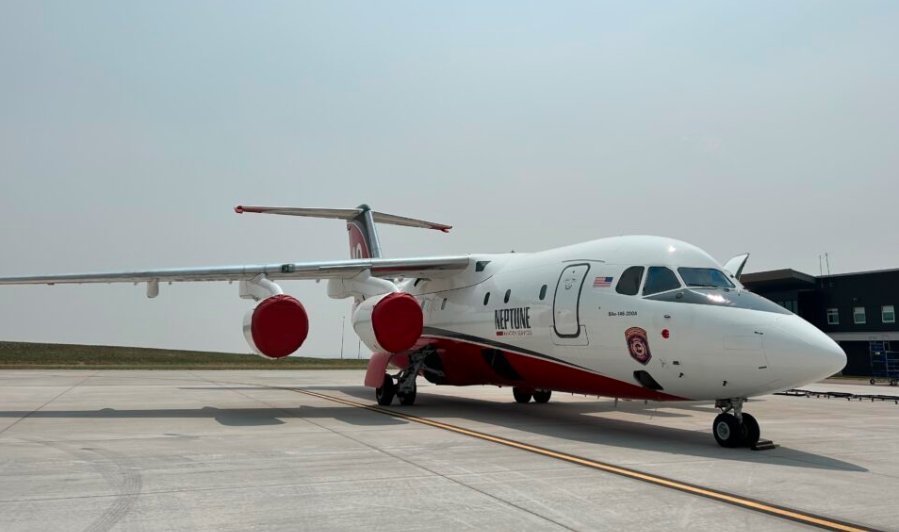
When flames break out on Colorado’s Western Slope, all eyes look up. At the Grand Junction Air Center, firefighting tankers sit fueled and waiting — engines cold but crews ready to roar into action with a moment’s notice.
It’s a sky-high effort that hinges on teamwork, precision, and more than a little courage. With wildfire season heating up, these aircraft have never been more vital.
A 15-Minute Launch Window
When Adam Goeden, Air Tanker Base Manager, says they’re quick, he means it.
One-liner: It takes as little as six minutes to load up a single engine air tanker.
Big tankers can take 15 minutes, tops. The difference? Capacity. Some of these aerial giants can hold up to 4,000 gallons of water and fire retardant.
One short line: That’s a lot of red goo raining down on burning brush.
Crews mix the retardant, load it up, hand dispatch orders to the pilots, and the planes are gone — sometimes all before locals even see the smoke plume.
More Than Planes and Pilots
It’s not just the pilots putting out the fires. Goeden says what you don’t see on the news is the web of support on the ground.
There’s the mixing crew. The loaders. The folks in the dispatch office relaying weather updates and coordinates.
• Every person has to be in sync, or the mission stalls.
Goeden says, “It’s a big network. These guys flying missions do the workload out on the fire, but the coordination to make that happen is huge.”
One short sentence: One missed step could waste precious time — and fuel.
Keeping Nature Safe Too
There’s an art to dumping that much retardant from the sky.
One small miscalculation, and it could do more harm than good. For example, tankers must drop at least 300 feet away from waterways. That keeps fish and fragile wetlands from getting swamped in chemicals.
Here’s what crews watch for every time they make a run:
| Safety Measure | Why It Matters |
|---|---|
| 300 ft buffer zone | Protects streams & wetlands |
| Avoiding sensitive areas | Minimizes wildlife disruption |
| Altitude checks | Ensures safe, accurate drops |
One line: It’s precision firefighting at its finest.
When Ground Crews Meet Air Crews
No matter how many tankers fly, wildfires don’t vanish on impact. The red slurry slows flames, giving ground crews time to dig lines and douse hotspots.
Goeden puts it simply: Air crews and ground teams are like two halves of the same coin.
One-liner: No boots on the ground? No fire containment.
It’s a balancing act — and in dry, windy conditions, every second counts.
Ready for the Call
The Grand Junction Air Center stays on high alert until fire season winds down. Every roar of an engine overhead means another line of defense is on its way to keep homes, forests, and lives safe.
As wildfires grow bigger and more frequent, those bright red tankers may be the one thing standing between a flicker and a full-blown catastrophe.