Less snow, more fuel. That’s the troubling equation wildfire experts are eyeing across the Western Slope, where this winter’s weak snowpack has set the stage for an early, intense fire season.
With Red Flag Warnings already in play and winds picking up, fire conditions are flaring before spring has even settled in.
A Thirsty Winter, A Fiery Forecast
The snowpack that Colorado relies on to slow the fire season is running dry. And not just in one area—almost the entire Western Slope is below average.
Lucas Boyer, a meteorologist with the National Weather Service in Grand Junction, didn’t mince words.
“It certainly looks like based on the climatological outlooks that we’re headed towards a more active fire season,” he said. “And based on the low snowpacks coinciding with that, it certainly seems like conditions are lining up for a busier fire season.”
The difference in snowpack between the northern and southern regions is startling.
Some areas are hanging on better than others.
Numbers Tell the Story: North Holds, South Crumbles
While parts of the Yampa Basin still hold onto 80% of their median snowpack, the situation nosedives further south. In Southwest Colorado, some basins are limping along with under 50%.
One sentence will do: That’s less than half the snow they normally get.
Here’s a look at current snowpack levels compared to the historical median for mid-April:
| Region | Current Snowpack (% of Median) |
|---|---|
| Yampa Basin (North) | 80% |
| Upper Gunnison | 63% |
| San Miguel/Dolores | 55% |
| Animas/San Juan (Southwest) | 48% |
| San Luis Valley | 42% |
What that means is simple. Less snow = quicker melting = drier ground = more burnable fuel, earlier.
Fire Fuels Are Drying Out Fast
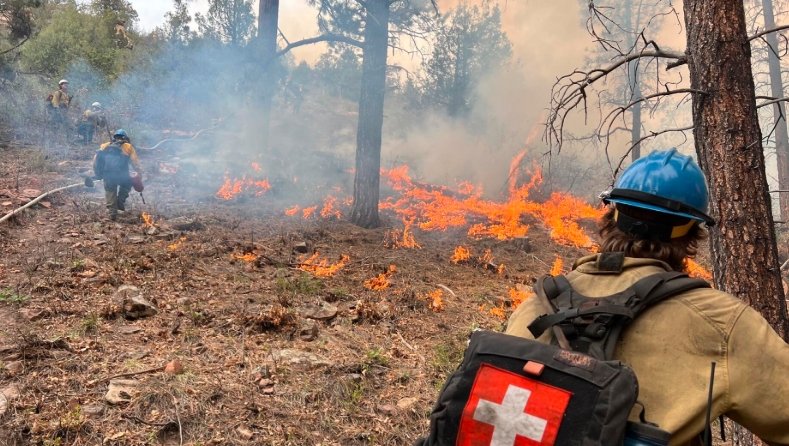
As temperatures warm, the forests, shrubs, and grasses that sat under the snow are now exposed—and drying. This creates a perfect setup for fires to ignite and spread.
It’s not just snow, though. Red Flag Warnings take more into account than just dry ground.
“Red Flag also includes winds,” Boyer explained. “You have to have 25 mph winds. And you have to have fuel susceptibility.”
Basically, it’s a dangerous cocktail of dry air, low humidity, strong gusts, and bone-dry vegetation.
It only takes one spark.
Even a dragging trailer chain or a tossed cigarette could start a disaster under the wrong conditions.
What Else Fuels Fire Risk? It’s Not Just Snow
While low snowpack is a major factor, it’s far from the only one. Several other variables decide how bad a wildfire season gets. Here’s a few:
-
Wind speeds above 25 mph (a key component of Red Flag Warnings)
-
Persistent low humidity over multiple days
-
Warm spring temperatures that accelerate drying
-
Lack of spring rain to compensate for snow shortfalls
-
Early summer thunderstorms bringing lightning but little rain
Put all that together? You’ve got a recipe for fast-spreading wildfires and hard-to-control flare-ups.
July Could Bring Relief—If Monsoon Rains Arrive On Time
There’s some hope, but it’s still weeks away.
Colorado’s summer monsoon season typically kicks off in July. That’s when increased moisture from the south brings relief in the form of thunderstorms, soaking rains, and higher humidity.
Until then? It’s dry, breezy, and flammable.
In past years, late-arriving monsoons have worsened fire conditions. In 2020 and 2021, delayed rains helped fuel some of Colorado’s largest wildfires on record, including the Pine Gulch Fire near Grand Junction.
One line to hold onto: If monsoon moisture misses its mark this year, things could spiral fast.
Western Slope on Edge as Spring Winds Pick Up
Today’s Red Flag Warnings might be a preview of the months ahead. Meteorologists and fire crews across the Western Slope are already bracing for a busier season.
Last year brought fewer major blazes. This year’s setup? Not so lucky.
And it’s not just wildland areas in danger. Rural homes, power lines, and oil and gas sites could all be at risk if fire spreads rapidly in high wind.
So while April still technically counts as spring, fire season has already begun—for real.