Motorcyclists in Colorado got a green light one year ago — legally. The state’s lane filtering law passed in 2024, and now, 12 months later, the results are starting to show.
Aimed at reducing rear-end collisions in stop-and-go traffic, the change was meant to boost both safety and efficiency. But how well has it worked? Depends on who you ask — and where you’re sitting.
From Controversial to Commonplace: The Road So Far
When the law was signed in mid-2024, it wasn’t exactly met with roaring applause. Critics feared chaos. Drivers worried about weaving bikes. Riders weren’t sure if it would even be enforceable.
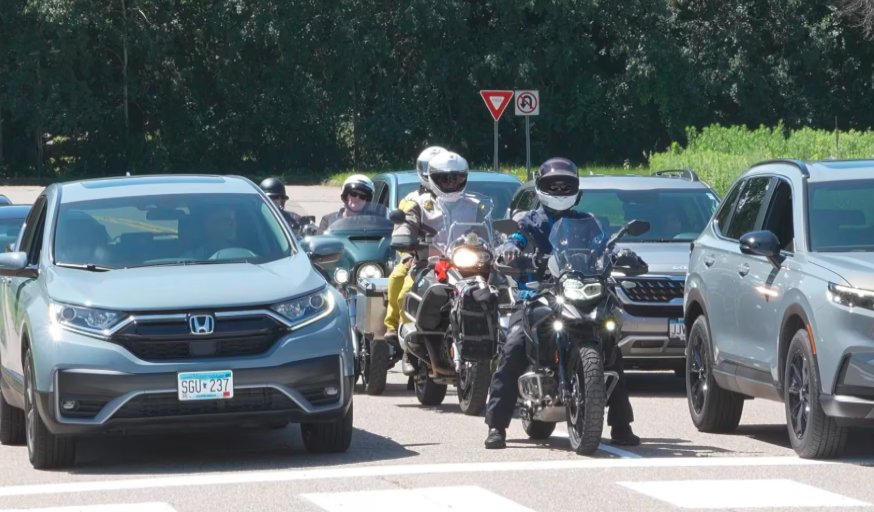
But a year later, something has shifted. Lane filtering — the act of motorcycles moving through stopped traffic at low speed — is no longer a novelty on Colorado roads. In places like Denver, Grand Junction, and even rural highway exits, it’s become part of the daily commute.
Sherri Mendez, a Colorado State Patrol trooper, says the goal was always about safety. “It was to reduce the number of crashes involving motorcyclists because they were getting struck from behind,” she explained. “And it was just to create more traffic flow as well as more safety for the motorcyclist.”
That clarity — protection over convenience — helped the law gain traction.
What the Law Actually Allows
Colorado’s lane filtering law isn’t a free-for-all. There are strict conditions. And yes, riders get ticketed for ignoring them.
Here’s what’s allowed — and only under these five conditions:
-
Riders can only pass on the left shoulder
-
Traffic must be fully stopped
-
Motorcyclists must be going under 15 mph
-
They must be in full control of the bike
-
There must be room for both the motorcycle and a vehicle in the same lane
If any one of those rules is broken — it’s a violation. Period.
What Riders Say: Safer or Scarier?
Opinions from the motorcycle community are… mixed, but passionate. Some feel like the law has done exactly what it promised. Others think it’s just created a new source of tension with car drivers.
Kevin Rolston, a local rider from Colorado Springs, says it’s a step in the right direction. “Before, I always worried someone would rear-end me in traffic. Now, I can move up and stay out of that danger zone.”
But not everyone’s thrilled.
“I get honked at constantly,” said another rider who commutes daily in Aurora. “Drivers don’t realize it’s legal. They think I’m cutting in line or being reckless.”
Awareness — or lack of it — is proving to be a bigger issue than enforcement.
Any Real Impact? Early Crash Data Offers Some Clues
While it’s still early to call it a win or a flop, the preliminary data from CSP suggests the law might be working.
Here’s a snapshot of state crash numbers involving rear-end collisions with motorcyclists during heavy traffic hours:
| Year | Rear-End Motorcycle Collisions | % Change |
|---|---|---|
| 2023 (Pre-Law) | 313 | — |
| 2024 (Post-Law) | 248 | -20.7% |
| 2025 YTD | 116 (through June) | On pace for -15% |
The numbers aren’t massive, but they’re not nothing either. A 20% drop in one year is meaningful, especially considering the rising number of motorcycle registrations statewide.
Still, the state has warned it’s far from a full picture. Factors like weather, road construction, gas prices, and urban sprawl can all affect these numbers.
Drivers Still Catching Up
You might’ve seen it. A car drifting to the left at a red light. A motorcycle pulling beside it. Confusion. Then a honk. Maybe some yelling.
That scene’s happening all over Colorado. Drivers are still adjusting — and many aren’t sure if what they’re seeing is legal.
Some traffic safety advocates say more public awareness campaigns are needed. “If you legalize something but don’t tell the public clearly, that’s a recipe for road rage,” said one Denver-based road safety analyst.
Even signage could help. Utah, which has a similar law, uses traffic signs at major intersections to remind drivers and riders of the lane filtering rule. Colorado hasn’t done that yet.
The Fine Line Between Legal and Reckless
Enforcement remains tricky.
Most officers agree the current law is enforceable — but only barely. Riders weaving between cars or jumping the gun at lights blur the line. And when crashes happen, assigning fault becomes a headache.
According to CSP sources, the majority of citations issued in 2025 related to lane filtering were due to riders:
-
Filtering between moving traffic instead of stopped traffic
-
Speeding over 15 mph
-
Filtering on the right instead of the left shoulder
So far, only a handful of those tickets have been contested. Most riders admitted fault.
But that hasn’t stopped calls for clarification — maybe even tweaks to the law.