
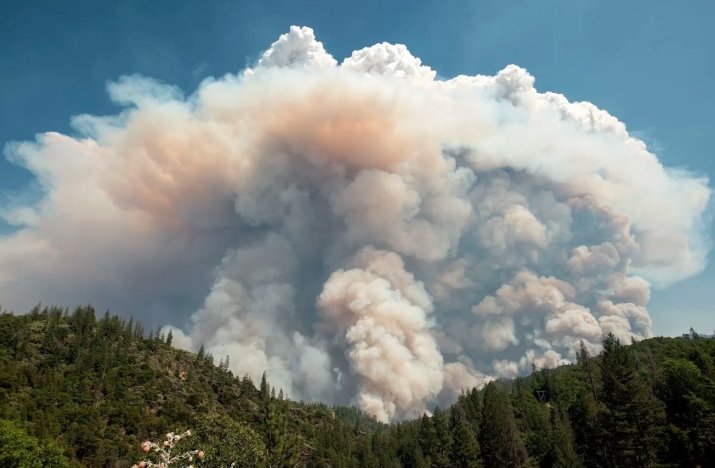
As wildfires rage across parts of western Colorado, residents and fire crews alike are keeping one eye on the sky—hoping for the clouds to thicken and the monsoon season to finally arrive.
And while it’s not a cure-all, the summer monsoon could offer much-needed help just when the state needs it most.
Monsoon Could Arrive Any Day—And It Matters
In Grand Junction and across the Western Slope, the monsoon season usually begins in late July or early August. It’s not guaranteed. Some years it barely shows up. Others, it brings days of rolling thunder and soaking rain.
Right now? Colorado is hoping it’s the latter.
“The monsoon moisture flow can reduce wildfire risk significantly, especially when we get consistent wetting rains,” said Lucas Boyer, a meteorologist with the National Weather Service.
These rains are more than just welcome—they’re essential. After weeks of high temperatures, low humidity, and multiple fires already in motion, moisture could be a literal lifesaver.
So, What Actually Causes the Monsoon?
It’s not just random luck. The monsoon season is driven by large-scale weather patterns, particularly high-pressure systems.
“When a high pressure parks itself over the Central U.S.,” Boyer explains, “it creates a clockwise wind flow. On the western edge of that circulation, moisture from the south gets pulled into Colorado.”
That southerly flow carries humidity up from places like the Gulf of Mexico or even subtropical regions. It moves across the Four Corners region, which includes western Colorado, and brings thunderstorms, increased humidity, and—hopefully—meaningful rainfall.
Just one sentence to paint the picture: if summer so far has felt like a blow dryer, the monsoon is the cool mist you’ve been waiting for.
Rain’s Timing Is Everything in Fire Season
Moisture alone isn’t enough. It needs to fall in the right places and at the right time.
Here’s why this matters:
-
Dry Lightning is a major wildfire threat. Storms that produce thunder and strikes but not enough rain can actually spark new fires.
-
Wetting Rains—where enough water reaches the ground—can reduce fuel ignition and help dampen fires already burning.
-
Consistent Showers over several days do more good than a single storm.
Boyer says the difference is obvious when monsoon patterns set in. “You’ll see higher morning humidity, more clouds, and afternoon storms forming over the mountains,” he noted.
And when those signs appear for more than a day or two in a row? That’s when you know the monsoon is really here.
A Look at the Numbers
In Grand Junction, about 15% of annual rainfall comes from monsoon activity. Other parts of the Western Slope may get up to 25%.
Here’s a breakdown of how much monsoon rains typically contribute:
| Region | Avg. Annual Rainfall | Rain from Monsoon (%) |
|---|---|---|
| Grand Junction | ~9.5 inches | ~15% |
| Montrose | ~9.7 inches | ~20% |
| Durango | ~19 inches | ~25% |
| Glenwood Springs | ~18 inches | ~10–15% |
That’s not a small chunk. Losing a strong monsoon season means months of extra dryness and fire risk.
It’s Not All Rainbows, Though
Even with the monsoon, the picture isn’t entirely rosy.
Colorado is still facing severe to extreme drought, especially in western counties. That dryness has weakened vegetation, stressed trees, and dried out the forest floor—turning entire regions into tinderboxes.
Rain may help dampen fires, but it won’t erase years of water deficit.
And then there’s the risk of flash flooding, particularly in burn scars from previous wildfires. Heavy rainfall on scorched land doesn’t soak in—it rushes downhill, fast.
So while everyone wants the rain, they’re also watching carefully.
Hoping the Skies Deliver—Soon
The Turner Gulch Fire, among others, continues to burn in Uncompahgre National Forest. Ranchers, firefighters, and local officials are banking on the monsoon to help slow its spread.
And it’s not just about this week. Every year that the monsoon underperforms, fire season stretches longer, hits harder, and gets more expensive.
For now, meteorologists are cautiously optimistic.
“We’re starting to see signs,” Boyer said. “If things line up, the next week or two could start to look more active.”
One-sentence closer? Colorado’s best firefighting tool this summer might not be on the ground—it could be in the clouds.