Colorado’s public broadcasters are bracing for a hard season ahead, after Congress yanked millions in federal support they were counting on. And for some rural communities? It could mean silence.
A painful blow years in the making
When lawmakers in Washington passed the Rescissions Act of 2025 last week, much of the media world barely blinked. But inside local newsrooms scattered across Colorado — especially public radio — the mood shifted fast. The bill quietly slashed $9.4 billion in spending, including a major chunk meant for the Corporation for Public Broadcasting (CPB), the lifeline that supports more than 1,000 public radio stations and over 360 public television outlets nationwide.
Colorado Public Radio (CPR) President and CEO Stewart Vanderwilt didn’t mince words.
“We’re deeply disappointed,” he said, clearly frustrated. “This has been in discussion for months, but the cut still hit hard. Colorado depends on public media in ways that often go unnoticed until it’s gone.”
CPR had been told two years ago that federal support was coming. The money was set to land in October this year. Plans were drawn. Reporters were about to be hired. Now it’s all off the table.
The domino effect on Colorado’s airwaves
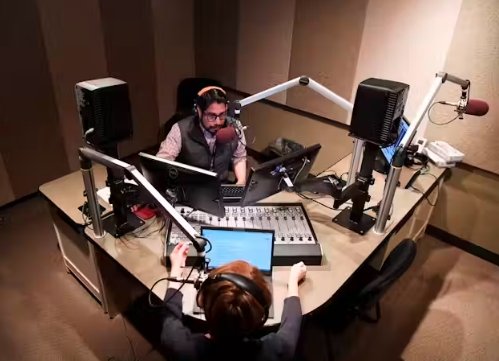
The real sting of the rescinded funds won’t just hit Denver. It’s the smaller, leaner stations — often running on fumes in rural corners of the state — that face a very different kind of crisis.
In places like Cortez, Alamosa, and Grand Junction, public radio isn’t just another option on the dial. It’s often the only source for community-specific news, local reporting, and emergency updates.
Vanderwilt warned of serious fallout: “You lose that federal funding, and suddenly it’s not just a matter of trimming back programming. It’s whether a station can survive.”
For CPR, the impact will still be felt, but they’ve got more breathing room due to diverse revenue streams. Not so for some of their peers.
One sentence. Sometimes that’s all it takes.
Where local stories fall through the cracks
The big concern now? Coverage gaps.
Hiring freezes will likely become the norm, particularly in communities that were expecting new journalists on the ground this fall. With fewer boots in towns, there’s no one to report on school board clashes, crumbling roads, or changes in water rights — the hyper-local issues that rarely make state or national headlines but deeply affect residents’ daily lives.
Vanderwilt put it plainly: “There are stories that matter that just won’t be told. Not because they’re not worth it — but because there’s no one left to tell them.”
Here’s the reality in numbers:
| Region | Station Type | % Budget from CPB Grants | Risk Level Post-Cut |
|---|---|---|---|
| Denver Metro | Large (CPR) | ~10% | Moderate |
| Grand Junction / Cortez | Small / Independent | 30–45% | High |
| San Luis Valley | Community-run | 40%+ | Severe |
| Statewide | Average across CO | ~18% | Mixed |
The table shows a wide range of vulnerability. For some, these numbers are more than budget lines — they’re existential.
Not just radio — a safety net, too
Here’s what many people don’t realize: public radio isn’t just about news and talk shows. In Colorado, it’s part of the state’s emergency response network. Tornado warnings. Wildfire evacuations. Flash flood alerts. These are delivered, often in real-time, through local stations.
Especially in mountainous or remote areas, cell signals drop. Internet dies. But FM signals? They keep going.
“It’s life-saving information,” said one station manager from the Western Slope who asked not to be named because their future funding is now uncertain. “People rely on us when everything else is down. That role doesn’t get factored in when Congress cuts funding.”
One paragraph, one truth.
Some listeners may not notice — at first
Let’s be honest: if you live in Denver or Boulder, the changes might barely register.
Maybe one less long-form documentary. Fewer local music spotlights. A delay in covering a community arts project.
But for people in Saguache County or the Four Corners region, a disappearing public station means losing the only daily news they get that isn’t filtered through the lens of New York, Washington, or even Denver.
• Local council meetings won’t be covered
• School closures might go unannounced
• Drought updates may not get airtime
And perhaps most damaging: the sense of belonging to something bigger — that faint, familiar voice on the radio reminding you that your story matters.
Is there a plan B? Sort of, but it’s shaky
Some stations are scrambling to backfill their budgets through donation drives and local grants. Others are eyeing partnerships or content sharing to stretch their limited staff.
Vanderwilt mentioned that CPR is exploring how to support neighboring stations — not with money, but with training, shared tech, or even content swaps. It’s helpful. But it won’t replace lost boots on the ground.
“Colorado has one of the strongest networks of independent public media in the country,” he said. “But even the strongest can only bend so far before something snaps.”
In other words, they’re holding on. But just barely.