
Forecasters are warning residents across Western Colorado to brace for dangerous fire conditions through Friday, with thunderstorms expected to bring more wind and lightning than rain.
First Alert Weather Days Declared
Thursday and Friday have been marked as First Alert Weather Days by local meteorologists — a designation aimed at grabbing public attention when conditions could cause significant disruption or danger.
This week, the concern is wildfire. Dry vegetation, gusty winds, and scattered lightning strikes will combine to create an elevated risk of new fires and rapid fire spread.
Stephen Bowers, a meteorologist with KJCT, says the warnings aren’t just for the high country. “It’s all of Western Colorado west of the I-25 Urban Corridor, plus eastern Utah. We’re talking about the Western Slope, the mountains, and the valleys in between,” he notes.
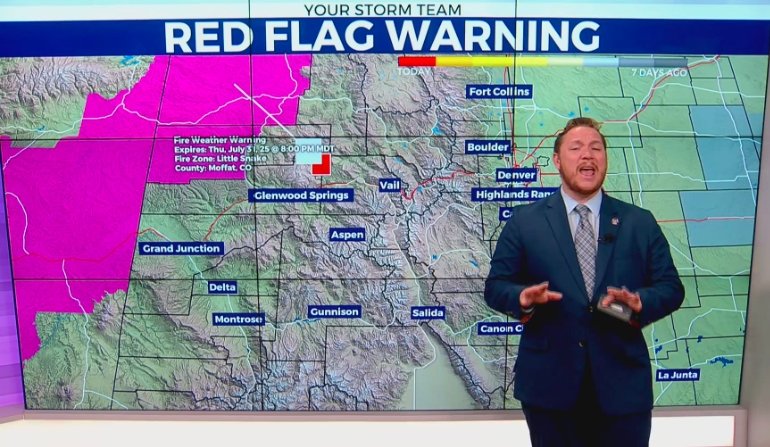
The Red Flag Warnings in Effect
Red Flag Warnings — the most urgent alerts issued for wildfire weather — are already active and will expand through the week.
-
Wednesday: Warning until 8 p.m. for the Grand Mesa in northeastern Mesa County, eastern Garfield County, eastern Rio Blanco County, and Routt County.
-
Thursday: Noon to 10 p.m. for all of Western Colorado west of I-25, plus eastern Utah.
-
Friday: Fire Weather Watch (likely to be upgraded to Red Flag) for the same broad area from noon to 10 p.m.
That means millions of acres of forests, grasslands, and rural communities will be under the highest fire-weather alert for at least two consecutive days.
Why Lightning Makes It Worse
Thunderstorms in summer often promise rain — but not these. Meteorologists say the storms rolling through are likely to be “dry,” meaning they produce little measurable rainfall.
That’s a problem because:
-
Lightning can strike miles away from the storm core, igniting new fires in bone-dry fuels.
-
Gusty outflow winds from thunderstorms can push existing fires rapidly in unpredictable directions.
In wildfire science, that combination is considered especially dangerous — new ignitions start quickly, and suppression efforts can be overwhelmed by shifting wind patterns.
Colorado’s 2025 Fire Season Already Active
This alert comes during a fire season that has already seen significant activity in Western Colorado. The Oak Fire near Pagosa Springs earlier this month burned through rugged terrain, forcing evacuations and requiring a multi-agency firefighting effort.
According to the National Interagency Fire Center, Colorado has reported more than 600 wildfires so far this year, burning tens of thousands of acres — above the 10-year average for this point in the season.
Safety Guidance for Residents
Authorities are urging residents to be extra cautious with any activity that could spark a fire. That includes outdoor grilling, welding, and even driving on dry grass.
Tips shared by the Mesa County Sheriff’s Office include:
-
Avoid open burning entirely during Red Flag Warnings.
-
Postpone yard work with power tools that could create sparks.
-
Keep vehicles off tall, dry grass.
-
Properly extinguish campfires and dispose of cigarettes.
While these precautions may sound obvious, officials note that human activity remains the leading cause of wildfires in Colorado.
The Meteorology Behind the Warnings
Bowers explains that a ridge of high pressure is keeping the region hot and dry, while monsoon moisture is trying to creep in from the southwest. The clash of these two systems is triggering isolated thunderstorms — but the moisture isn’t deep enough to deliver soaking rains.
Instead, the storms produce high-based clouds that drop rain, much of which evaporates before reaching the ground — a phenomenon known as virga. What does reach the surface is wind and lightning, not enough water to be helpful.
And with relative humidity levels dropping into the single digits in some spots, even a small spark can lead to a large fire.
Looking Ahead
The Fire Weather Watch for Friday is almost certain to be upgraded to a Red Flag Warning, meaning residents can expect at least three days of high wildfire danger in a row.
While conditions may ease slightly over the weekend, forecasters say it will take a significant change in the weather pattern — such as a widespread soaking rain — to truly reduce the fire threat.
Until then, the advice is simple: stay alert, follow local restrictions, and remember that one careless moment can have far-reaching consequences.