DELTA, Colo. — In a town known for quiet mesas and wide skies, the conversation around mental health has often remained just that—quiet. But a new nonprofit clinic is trying to change that, and fast.
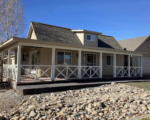
The Kadkhodaian Behavioral Health Center officially opened its doors with a ribbon-cutting ceremony on May 16, a hopeful new chapter for a region long plagued by troubling mental health statistics and lack of care access.
Run by a married couple—Dr. Ray Kadkhodaian, Executive Director, and Jean Kadkhodaian, Wellness Director—the center offers individual, couples, and family therapy, peer support workshops, and parenting skills training. But its mission goes beyond treatment. The Kadkhodaians are building something they hope will become a cornerstone of healing in Delta County.
A Quiet Crisis in Delta County
The clinic didn’t open on a whim. It opened in response to what the couple discovered after settling into the area four years ago, following a move from bustling Chicago to quiet Delta for a semi-retired life.
“In connecting with the community, we started to see a huge need on the entire western slope,” Dr. Ray Kadkhodaian said. “In fact, there were members of the community here that reached out to us and asked us, you know, to help out in whatever way that we could.”
What they found was staggering: Delta County’s suicide rate is three times the national average, and it surpasses even Colorado’s already-high rate, which consistently ranks among the top 10 states for suicide deaths in the U.S.
“It’s heartbreaking,” said Jean Kadkhodaian. “And I would think the main reason for that is there’s no one to turn to. There’s no one to talk to. And when you’re isolated and alone and you can’t see any other way out—then, you know, we hope to change that statistic.”

A Grassroots Effort Backed by Experience
Both Kadkhodaians bring deep experience in counseling and wellness from decades working in private practice, group therapy, and clinical education in Chicago. But their approach to mental health isn’t built around cold diagnostics. It’s rooted in empathy, connection, and human relationship.
The nonprofit model was a deliberate choice. “This isn’t about business,” said Dr. Kadkhodaian. “It’s about service. About being where we’re needed and doing what we’re called to do.”
Services Offered at the Kadkhodaian Center
| Program/Service | Description |
|---|---|
| Individual Therapy | One-on-one support for anxiety, depression, trauma, and more |
| Couples Counseling | Relationship-based therapy and conflict resolution |
| Family Therapy | Support for multi-generational issues and parenting struggles |
| Peer Support Workshops | Group sessions led by trained facilitators with lived experience |
| Parenting Skills Training | Tools for more effective and empathetic parenting in high-stress environments |
The goal, the couple says, is not just to address crises—but to build resilience before they start.
A Community That Asked—and Showed Up
The clinic is already feeling the effects of its community roots. At the ribbon cutting, town leaders, neighbors, and patients came out in support—not just to witness the launch, but to thank the Kadkhodaians for seeing a need and stepping into it.
“It was just so staggering to see that so many people are in need and are so disconnected, and there aren’t the services there for them,” said Dr. Kadkhodaian. “That’s what really got to us.”
The clinic’s launch has also been backed by a groundswell of local goodwill—donations of furniture, time, administrative help, even baked goods.
The couple is clear-eyed about the road ahead. “It has been a lot of work getting the center ready,” Jean noted. “But the support we’ve received from the community—it’s kept us going.”
Fighting Isolation With Connection
The word that comes up most often when speaking to the Kadkhodaians isn’t “depression” or “trauma.” It’s “isolation.”
“We’re not trying to be saviors,” said Jean Kadkhodaian. “We’re trying to build something that connects people again—to themselves, to each other, and to a bigger sense of hope.”
Part of that means making services accessible. Fees are sliding-scale. Some workshops are donation-based. And as funding grows, the couple plans to expand outreach into schools, rural townships, and veteran communities.
Bigger Than Delta?
Could the center be a model for other rural communities struggling with similar issues?
“I think so,” said Dr. Kadkhodaian. “The problem isn’t just Delta. It’s widespread. Small towns everywhere are in pain—but they’re also resilient. If we can start with connection, we can build healing from the inside out.”
Plans for the next year include:
-
Expanding teletherapy offerings across western Colorado
-
Launching teen-focused programming
-
Partnering with local medical providers for integrated care
-
Creating a resource network for patients who need food, housing, or transportation assistance
A Mission That’s Just Beginning
When asked what success would look like, Dr. Kadkhodaian doesn’t hesitate.
“I think it would be to do what we’re called to do,” he said. “And that’s to help wherever we can and to grow and fit in and fill in the gaps wherever the community needs us.”
In Delta, those gaps have been yawning for a long time. The hope now is that this small clinic—with its warm lights, open doors, and two people who care—might start to close them.