
In a dense patch of forest two miles west of Fort Ligonier, Pennsylvania, the past has whispered back.
A battlefield long buried beneath soil and silence—where America’s future first president once came within inches of death—has been uncovered, offering new insights into a tragic military mishap that shaped the man who would eventually lead a revolution.
Archaeologists from Juniata College’s Cultural Resource Institute, led by Jonathan Burns and aided by the Veterans Archaeology Program, have confirmed the location of a 1758 friendly fire incident during the French and Indian War. It was a moment of deadly confusion that saw British-aligned troops, including a young Colonel George Washington, turn their muskets on each other in the shadowy terrain of western Pennsylvania.
“It’s not every day that you get to announce that you discovered a heretofore undiscovered Washington battlefield,” Burns said, visibly moved at the Fort Ligonier museum on July 11.
The Worst Night of His Life
The story begins not with triumph but with terror.
In 1758, George Washington was just 26. As a colonel under British General John Forbes, he was participating in an ambitious campaign to seize Fort Duquesne—modern-day Pittsburgh—from the French. But it was a campaign plagued by fog, both literal and metaphorical.
On a dark October night, Washington and his men were part of a column navigating the thick forest. Another British-aligned force, led by Colonel James Grant, had set up nearby. What should have been a routine maneuver spiraled into a tragic miscommunication.
Under the cloak of night and with nerves taut, Washington’s force mistook Grant’s troops for the enemy. The resulting firefight lasted for hours. Dozens of men were killed or injured—by their own.
The Clues Beneath the Canopy
Now, more than two and a half centuries later, physical evidence from that battlefield has finally emerged.
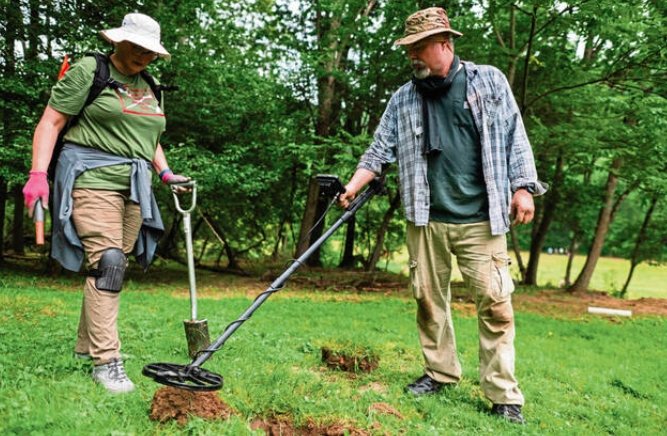
For four years, Burns and his team—some of whom were military veterans themselves—combed through historical records, topographic cues, and whispered oral histories. Their diligence led them to a quiet stretch of land not far from the reconstructed Fort Ligonier, where the final clues fell into place.
What they unearthed included:
-
Musket balls embedded in soil layers consistent with mid-18th century tactics
-
Uniform buttons and military accoutrements associated with British colonial troops
-
Scars in the earth from defensive entrenchments and hurried combat
It was the convergence of archaeology and history—a moment where a dusty record transformed into something tactile and haunting.
Why It Mattered
For George Washington, the incident was not just humiliating. It was transformative.
In letters written after the battle, Washington called it the worst “jeopardy” he ever faced. He admitted to being rattled, confused, and ashamed. But the horror also forged something within him—a hardened sense of caution, and a deep distrust of disorderly command structures that would linger throughout his military career.
Historians have long pointed to this moment as critical in shaping Washington’s later insistence on discipline and centralized authority during the Revolutionary War.
“The tragedy of that night revealed to Washington the dangers of poor communication and scattered leadership,” said military historian Dr. Evan Brookes. “He carried that lesson all the way to Valley Forge.”
Veterans Helping Veterans Unearth History
One of the most compelling aspects of this discovery is the people who made it happen.
Much of the excavation work was performed by veterans, many of whom found deep personal resonance in the battlefield they were unearthing. Burns intentionally involved the Veterans Archaeology Program to connect the past with those who understand the stakes of war on a visceral level.
“They know what it feels like to move through unfamiliar terrain, to rely on your comrades, and to feel the weight of command decisions,” Burns said. “That made their perspective invaluable.”
The team worked through harsh conditions, using ground-penetrating radar, metal detectors, and painstaking manual digs to ensure no artifact was lost.
Rediscovering a Quiet Corner of History
Unlike the famed battles of Bunker Hill or Yorktown, this firefight never made it into most textbooks. No monuments mark the site. No holiday recalls its memory.
But for scholars and locals alike, the find represents a moment of human frailty and consequence—a snapshot of chaos in the life of a man often remembered for composure and command.
Though the battlefield is not yet open to the public, plans are already being drawn to include the site in historical education programs at Fort Ligonier. Burns and his team hope that eventually, interpretive trails and guided tours might bring visitors face-to-face with a rarely told chapter of American origin.
For now, what remains is the quiet—a patch of Pennsylvania woods where muskets once cracked and orders dissolved, and where the boy who would be president first glimpsed the true cost of confusion in war.