A Grand Junction police officer will not face charges for firing the shots that killed a suspect during an assault call earlier this year. The ruling, announced by the District Attorney’s Office after months of painstaking review, has stirred relief, debate, and fresh questions about the line between necessary force and fatal outcomes.
A Deadly Encounter Unfolds
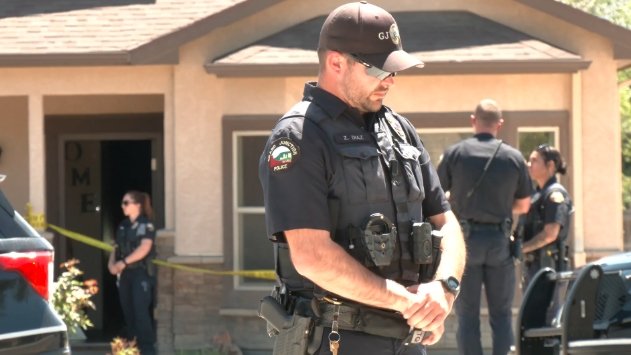
It started just like many calls do — a report of an assault on January 19. Police arrived at a shop near downtown Grand Junction to find chaos. Witnesses later told investigators they saw the suspect, 46-year-old Aaron Blount, armed and refusing to come out.
Officers, including Toby Baldwin, took cover. They announced themselves. They ordered Blount to surrender multiple times.
But the standoff turned deadly. Baldwin says Blount fired first. Fearing for his life — and the lives of other officers — Baldwin returned fire through an open shop door.
By sunrise, Blount lay dead with a gunshot wound to the torso.
Evidence Piles Up for the DA
The shooting triggered Colorado’s Critical Incident Response Team protocol. Baldwin was immediately placed on paid leave. The team gathered everything — witness statements, crime scene photos, body camera footage, even neighborhood surveillance clips.
The District Attorney’s Office got the thick file in February. For four months, prosecutors pored over it all. Recorded interviews. Forensic reports. Diagrams of bullet trajectories.
DA Daniel Rubinstein wrote in his final letter that Baldwin’s actions “appear to be justified by Colorado law, and likely to have saved the lives of the officers involved.”
One short line, but it carried the weight of the entire review.
What the Officer Said He Faced
In the tense moment, Baldwin believed he had no other choice. When asked by investigators what would have happened if he hadn’t fired, Baldwin didn’t mince words.
“Blount would have been able to get to that door and shoot at us again,” he said. “It would have been the death of one of us.”
It’s not something officers like to talk about. But in the Colorado high desert, where backup isn’t always minutes away, split-second decisions can mean life or death.
Community Reaction: Relief, Doubts, and Grief
Word spread quickly once the DA’s letter went public. For some, it was a measure of relief — proof that law enforcement had acted within the bounds of the law.
For others, it left a bitter taste.
Neighbors who knew Blount described him as troubled but not beyond help. One local woman said she’d seen him “struggle for years.” Another man, who asked not to be named, wondered aloud if more negotiation could have saved a life.
In towns like Grand Junction, where everyone knows someone, the line between suspect and neighbor can feel razor-thin.
What Colorado Law Actually Says
It might surprise some folks just how clear Colorado law is on use of force. According to state statutes, deadly force is permitted if an officer or person believes it’s needed to protect themselves or others from “imminent death or great bodily injury.”
The DA’s letter made that point crystal clear. If Blount had survived, he’d have faced charges including:
-
Murder of Joseph Columbo, the initial assault victim
-
Attempted murder of multiple officers
-
Additional weapons charges
In other words, Baldwin’s actions stopped what prosecutors say could’ve been more bloodshed.
A Glimpse Into Critical Incident Reviews
For the average person, it’s easy to miss how much goes into these reviews. But they’re intense.
The Critical Incident Response Team, or CIRT, pulls together investigators from across agencies. They look at:
| Review Component | What It Includes |
|---|---|
| Witness Statements | Testimonies from all sides |
| Body Cam Footage | Every frame scrutinized |
| Forensic Evidence | Trajectories, residue tests |
| Officer Interviews | Detailed, sometimes multiple |
It’s not unusual for a single officer-involved shooting review to run hundreds of pages. Mistakes can’t be made lightly.
What Happens to Officer Baldwin Now?
After nearly half a year on paid leave, Baldwin is clear to return to duty. That doesn’t mean it’s over.
Departments often offer counseling and peer support after deadly force incidents. Some officers step away altogether.
In a candid moment, a retired Mesa County deputy said, “You carry that with you. Doesn’t matter what the DA says.”
So far, Baldwin hasn’t spoken publicly. And maybe he never will.
Bigger Questions for Small-Town Policing
When a shooting like this hits a place like Grand Junction, it rattles folks. It also shines a spotlight on how local law enforcement trains and responds.
Could different tactics have helped? Should more mental health responders be on call? Would better de-escalation make a difference?
No easy answers. But these are the questions communities are asking more and more.