In a quiet corner of Grand Junction, away from traffic and screens and the rush of daily life, something remarkable is happening. A child climbs onto a horse for the first time. A nervous giggle. A soft nudge. A connection. Just like that, one more story begins at Grand Valley Horse Rescue.
And it’s not just about saving horses—it’s about healing humans too.
Mustangs once bound for slaughter now shape young lives
Over the past five years, the rescue has saved 41 mustangs from slaughter. That’s not just a number—it’s 41 stories of survival. And not just for the horses.
“These horses have been through a lot,” says Shelle deVergie, the heart behind Grand Valley Horse Rescue. “But you’d be surprised how fast they open up to love and trust again.”
It’s that willingness to trust that makes them powerful teachers.
Many of the horses that arrive at the ranch are skittish, shut down, or reactive. The same could be said for some of the kids who come here too. And somehow, they find each other.
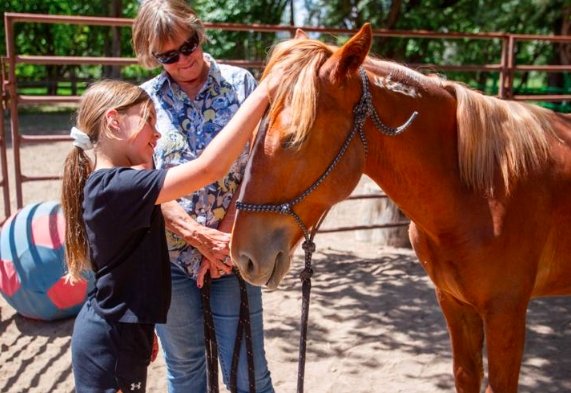
Poise, patience, and one very intuitive horse
“One of our main missions is to give kids affordable access to horses,” deVergie explains. “In June alone, we put over 80 kids on the back of horses. And for most of them? That was the very first time they’d ever even touched one.”
But there’s more going on than just pony rides.
One particular horse stands out. He’s not easy. In fact, he’s got what deVergie calls “anger management issues.”
“He works with kids to help them manage their emotions,” she says. “All they have to do is walk up to him. His ears tell them everything.”
If the child is anxious, the horse gets anxious. If they’re mad? He shows it right back. But if they calm themselves—breathe, slow down, settle—the horse settles too.
“We call it poise,” deVergie says. “The kids learn to find calm in themselves so they can earn the horse’s trust. That lesson sticks.”
Not assigned, but earned: every task, every horse
At Grand Valley Horse Rescue, nothing is handed out.
Once a child becomes comfortable around horses, they get a chance to do more—handle grooming, feeding, walking. But only if they’ve shown they’re ready.
“They aren’t given the jobs,” deVergie says. “They earn them.”
This isn’t just about teaching kids to take care of horses. It’s about teaching responsibility, patience, and work ethic. The more they show up, the more the horses show up for them too.
And it’s not about perfect kids either.
“I’ve seen kids who couldn’t look anyone in the eye, kids who were angry or struggling at home—and I’ve seen them completely transform once they found their place here,” she says.
Horses mirror what we can’t say out loud
What makes horses such unique emotional partners? It’s not magic—it’s something more primal.
Horses are prey animals. They read body language instinctively. They sense tension. They reflect it. That means if a kid is scared, the horse feels it. If a kid is frustrated, the horse picks up on that too.
And that mirroring effect becomes the teaching tool.
Some of the key impacts for kids include:
-
Improved emotional regulation
-
Greater confidence
-
Increased responsibility
-
Decreased anxiety or outbursts
-
A sense of purpose and connection
It’s not therapy in the clinical sense, but the results often speak louder than sessions ever could.
Numbers may be small, but the impact is huge
The rescue doesn’t serve hundreds every day—and that’s okay.
It’s not a factory. It’s not about volume. It’s about depth.
In just one month—June—they helped 80 children mount a horse for the first time. Some stayed longer, volunteering daily, mucking stalls, learning to feed and lead. Others just needed that first spark.
And yes, some of those kids had never even seen a horse before.
Funding, access, and what comes next
Unlike big riding schools or elite therapy centers, Grand Valley Horse Rescue is accessible.
That’s on purpose.
“We keep the cost low because we want every kid to have this chance,” deVergie says. “It’s about opening a door.”
But keeping it affordable also means funding is always tight. Volunteers help. Donations keep the lights on. But the work never slows.
Still, the mission is clear: save horses, and let the horses save the kids too.