The Harlan Food Bank is running smoothly for now. The shelves are stocked, the volunteers show up like clockwork, and every Thursday morning from 9 to 11, Peggy Nelson greets familiar faces as they trickle in for their monthly food assistance.
But that sense of normalcy may not last.
With whispers turning to headlines about a major federal overhaul to the Supplemental Nutrition Assistance Program (SNAP)—backed by former President Donald Trump—small community food banks like Harlan’s are bracing for what could be a very tough few months ahead.
“If SNAP gets cut, we’ll feel it first”
Peggy Nelson knows the ebb and flow of the food bank better than most. She’s been volunteering there for 18 years—long before food insecurity was a national talking point.
She’s also no stranger to political decisions hitting local communities hard.
“If clients’ food stamps are reduced,” she said, “they will need extra food, so then we’ll probably have an increase of clients that will start coming.”
And that’s the problem.
Food banks aren’t like grocery stores—they can’t just order more inventory when demand spikes. Harlan has a limited supply of food that’s divvied up monthly. More mouths mean smaller portions, unless donations surge to meet the new need.
For now, there’s a bit of breathing room. But that could change very quickly.
Quiet shelves, louder worries
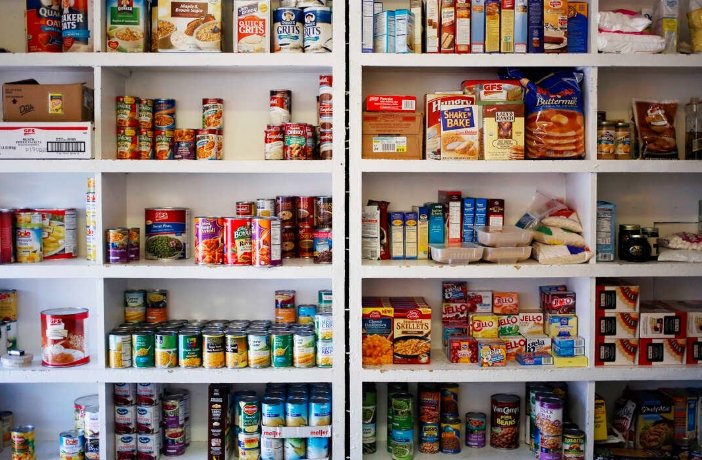
Right now, the pantry’s shelves look fuller than usual. That’s partly thanks to Meijer’s “Simply Give” program, which has funneled a generous haul of groceries into the Harlan Food Bank in recent weeks.
That partnership has made it possible to expand what’s given to each client—a rare luxury for a food bank.
But if SNAP funding gets slashed, that boost could be gone in a flash.
“We have a fixed amount of food that we give them every month for all the clients,” Nelson said. “That might change once we find out what’s happening with the SNAP program.”
That uncertainty hangs over everything.
Who gets hit hardest?
It’s not just one demographic that relies on SNAP in places like Harlan.
Nelson pointed out that it’s not just young people struggling to find work, but older residents, too—folks on fixed incomes who don’t qualify for additional assistance and can’t just pick up a few extra shifts.
She sees them every week. Retired factory workers. Single moms. Grandparents raising grandkids.
For many, SNAP isn’t just helpful—it’s the difference between meals and empty cupboards.
And when federal dollars disappear, they turn to places like Harlan.
But what can they do right now?
Not much, honestly. That’s the hard part.
“I guess we have to wait and find out,” Nelson said. “And then when we find out what’s gonna happen with that, then we’ll prepare.”
There’s no panic, not yet. Just a quiet understanding that the floor might drop soon—and when it does, it’ll drop fast.
Food banks don’t operate with big financial cushions. Most run month to month, donation to donation. A sudden 20% or 30% increase in clients could wipe out supplies in days.
Here’s the core math they’re looking at:
-
Current pantry load: Designed for ~150 households monthly
-
Expected increase if SNAP is cut: Up to 40% more clients
-
Storage space: Fixed; no capacity for expanded bulk stock
-
Budget flexibility: Extremely limited
That means some clients might be turned away. Or receive less. Or come less often.
What’s actually in the proposed cuts?
While the exact details of the “big beautiful bill” supported by Trump haven’t been made public yet, early reports suggest sweeping changes to eligibility, work requirements, and monthly SNAP allotments.
The rhetoric centers on “tightening up” benefits and “encouraging self-sufficiency.” But to food banks, that sounds like code for more demand, less supply.
Local officials are watching closely. Many are already coordinating with churches, shelters, and other pantries to share resources and brace for the impact. Still, without clarity from Congress, it’s hard to know what’s coming.
It’s not just food—it’s stability
There’s something else Peggy Nelson sees every Thursday: dignity.
People walk in with their heads held high, knowing they won’t be judged. That they’ll walk out with at least one burden eased.
Cutting SNAP might save the federal government a few billion dollars on paper. But in places like Harlan, it’s a withdrawal of support at the worst possible moment.
“I just think it’s an important thing,” Nelson said, “because it’s not only the young people that are having a hard time getting jobs… it’s the older residents of the community.”
And when the cuts come—if they do—the people who’ll feel it first won’t be lawmakers in Washington. They’ll be standing in line on a Thursday morning, waiting for Peggy to hand them a bag of groceries.