
Inside the yawning limestone mouth of Gran Dolina cave in northern Spain, archaeologists have unearthed a chilling window into the lives—and deaths—of Europe’s earliest humans. What they found buried beneath ancient sediment was shocking, even by prehistoric standards: the butchered remains of a small child, likely between two and five years old, who had been decapitated and consumed nearly 850,000 years ago.
The discovery marks the oldest known evidence of human cannibalism on record — and adds to a growing body of data suggesting that such behavior among early hominins was not isolated or occasional, but disturbingly routine.
A Child’s Bones, A Brutal Pattern
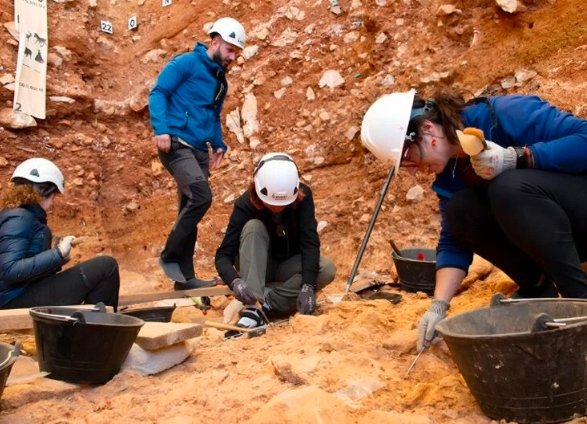
The bones, part of a collection of ten Homo antecessor individuals recovered from the cave, were excavated by a team working with Spain’s Atapuerca Foundation and the Institute of Human Paleoecology and Social Evolution (IPHES).
Cut marks on the vertebrae and skull base of the toddler reveal unmistakable signs of decapitation. Long bones show impact fractures typical of marrow extraction. And smaller bones, such as ribs and phalanges, bear slicing marks consistent with systematic butchery.
“This wasn’t an accident or ritual,” said María D. Guillén, one of the lead anthropologists on the project. “This was a calculated dismemberment — an act of survival and nutrition.”
A Long History of Human Hunger
Cannibalism among early humans has long been a controversial topic — less because of modern moral judgments, and more due to questions of motive and context. Was it a cultural act? A war tactic? A starvation response?
The findings at Gran Dolina add weight to the hypothesis that cannibalism, at least among Homo antecessor, was a regular adaptive strategy rather than an emergency fallback. Previous digs at the site had already revealed defleshed and fractured bones from adolescent and adult individuals. But the inclusion of a very young child, particularly one so carefully processed, broadens the picture.
“This kind of treatment wasn’t reserved for enemies or outsiders,” Guillén said. “It seems everyone, regardless of age, was a potential food source.”
Homo Antecessor: A Species on the Edge
Homo antecessor, a now-extinct early human species, is believed to have inhabited parts of Western Europe between 1.2 million and 800,000 years ago. Thought to be a direct ancestor or close relative of both Neanderthals and modern Homo sapiens, the species displayed a mix of primitive and modern traits.
Gran Dolina, part of the UNESCO-listed Atapuerca Mountains, is one of the richest sites for understanding these ancient humans. The stratigraphy of the cave has preserved everything from stone tools to hearth remains to bones bearing unmistakable evidence of defleshing.
Notably, the toddler’s remains were found in the same sedimentary layer — TD6 — as earlier cannibalized remains. This further strengthens the argument that this behavior wasn’t episodic.
Not the First Child Victim — But the Youngest
Prior discoveries at Gran Dolina had already turned the site into a focal point for paleoanthropologists investigating early human social dynamics and survival behaviors. However, the new find pushes the boundaries of that research.
-
Age of the child: As young as 2 years old
-
Date of the remains: Approximately 850,000 years old
-
Evidence of butchery: Decapitation cuts on neck vertebrae, marrow-cracked bones, slicing on small joints
-
Total individuals recovered in TD6 layer: 10 Homo antecessor skeletons to date
The implications go beyond archaeology. For evolutionary biologists and anthropologists, it prompts fresh questions about kinship, community structure, and ecological stress in early human groups.
Survival in a Harsh Pleistocene World
Northern Spain 850,000 years ago was a rugged, predator-filled landscape. Food security was a constant battle. For Homo antecessor, cannibalism may have been less about cruelty and more about pragmatism.
“There’s no reason to assume they didn’t care for their own,” said Dr. Eudald Carbonell, a senior Atapuerca researcher. “But in times of extreme scarcity, emotional ties may have been trumped by survival instincts.”
He noted that similar cut marks found on deer, bison, and other animals in the same cave layer point to the same kind of processing — further suggesting cannibalism wasn’t uniquely gruesome to these early humans, but part of a broader dietary strategy.
Ethical Distance and Scientific Detachment
While the idea of child cannibalism naturally provokes visceral discomfort today, scientists working at Gran Dolina are careful to avoid moral anachronism.
“We’re not dealing with murder in the legal sense,” said Guillén. “We’re studying an entirely different social and ecological framework — one where food was scarce, winters were lethal, and there were no taboos.”
Still, she acknowledged the emotional weight of the discovery. “It hits you. You’re holding the skull of a child who was not just lost, but consumed.”
What’s Next for Gran Dolina?
Researchers plan to conduct further isotopic and microscopic analysis on the remains to determine seasonality, diet, and even the health of the individuals prior to death. Excavations will continue into deeper layers, where even older hominin traces may be hiding.
Spain’s Ministry of Culture is working with local museums to prepare an exhibit showcasing the TD6 layer findings — including the toddler’s remains, displayed with scientific context and appropriate sensitivity.
Meanwhile, Gran Dolina continues to whisper its ancient, unsettling stories from beneath the ground — about who we were, how we lived, and what we were willing to do to survive.