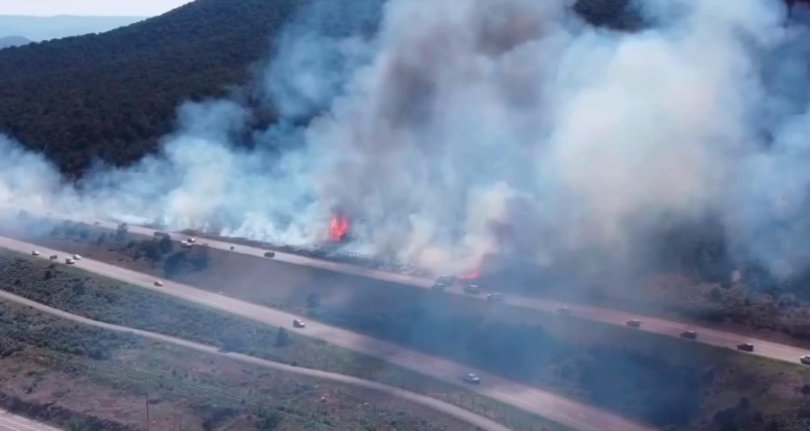
A series of spot fires near mile marker 136 brought westbound traffic on I-70 to a sudden halt Sunday afternoon, forcing authorities to temporarily shut down a key stretch of the interstate in Eagle County. Emergency crews were swift, and thanks to their fast-moving response, both fires were extinguished without injury or major damage.
The road was reopened shortly after, but not before drivers faced delays, detours, and smoke hanging low in the mountain air.
A Sudden Sunday Disruption in the High Country
It happened fast. Sometime just after midday, smoke started rising from the roadside near milepost 136, a section of I-70 that cuts through rugged terrain and sees thousands of vehicles daily—especially during summer travel.
Local residents reported seeing small plumes near the median, followed by a burst of flames licking the dry grass and brush.
Then came the closures.
Eagle County Sheriff’s Office issued alerts warning drivers of shutdowns heading westbound. Eastbound lanes were unaffected, but rubbernecking added to the slowdowns.
Fires Controlled Within Hours Thanks to Fast-Moving Crews
By late afternoon, the situation was under control.
Fire crews from multiple agencies coordinated efforts under Unified Command protocols, which allowed them to knock back flames before they could leap into the forested hillside.
“It could have been a lot worse,” said a roadside maintenance worker who was helping direct traffic during the incident. “But those firefighters got there quick. Like, really quick.”
The Eagle County Sheriff’s Office later posted online:
“A big thank you to all responding crews and our community for the quick, coordinated, and efficient response.”
That public gratitude wasn’t just lip service. Local agencies have worked hard this year to prepare for fast-moving wildfires, especially with 2025 shaping up to be hotter and drier than normal.
How the Fires Started? Still a Mystery
As of Monday morning, officials hadn’t confirmed a cause.
It’s not uncommon for roadside fires to start from:
-
A spark from a dragging chain on a trailer
-
Hot vehicle exhaust near dry grass
-
A discarded cigarette
-
Spontaneous combustion from heat-soaked litter
But without confirmation, it’s all just speculation.
Colorado has been under Red Flag warnings multiple times in June, and fire weather conditions across the Western Slope remain volatile.
Table: 2025 Roadside Fire Incidents Along Colorado’s I-70 Corridor
| Date | Location (Mile Marker) | Cause (If Known) | Road Status | Response Time |
|---|---|---|---|---|
| April 9 | MM 109 | Vehicle fire | Partial closure | 18 mins |
| May 21 | MM 160 | Lightning strike | Full closure (3 hrs) | 12 mins |
| June 2 | MM 130 | Under investigation | Full closure (90 mins) | 15 mins |
| June 23 | MM 136 | Unknown | Full westbound closure | 11 mins |
The June 23 incident marked the fourth such disruption in less than three months, raising concerns about whether more aggressive roadside fire prevention efforts are needed.
Local Drivers Caught Off Guard, Tourists Even More So
The closure sent travelers scrambling for alternate routes. Some took State Highway 131 through Wolcott, while others simply waited it out.
One tourist from Kansas, pulling a camper and heading toward Moab, said he had no idea what was going on. “The maps app just froze. Said the road was open, but the cops said otherwise. So we waited an hour by the side of the road eating trail mix.”
Locals were more resigned. “Happens every year now,” said Liz Romero, a longtime Eagle County resident. “Used to be rare. Now it’s just part of summer.”
Fire Risk This Summer? Very High
Colorado’s wildfire season typically peaks in late summer, but the combination of light snowfall and early heat has moved everything up this year.
Just last week, the Colorado Division of Fire Prevention and Control issued an internal advisory warning that June 2025 may end up with the highest number of small fires in over a decade.
That means even roadside grass fires—which might once have been minor annoyances—can now threaten nearby towns if the wind picks up.
This summer’s forecast includes:
-
Below-average rainfall for most of western Colorado
-
Above-average temperatures through July and August
-
Higher-than-normal fuel dryness in lower elevation grasses
What Happens Next?
Now that the road’s open again, it’s back to business for most commuters. But fire investigators aren’t done.
Officials will review dashcam footage, conduct interviews with nearby drivers, and assess whether human activity, vehicle malfunction, or natural conditions sparked Sunday’s flames.
No citations have been issued yet. No injuries were reported.
And for now, at least, the mountains are quiet again.