Four llamas buried alive more than five centuries ago are shedding new light on how the Inca Empire used ritual animal sacrifice to cement power, win favor with gods, and unite newly conquered communities. And incredibly, their mummified remains still wear colorful strings and fluffy fur.
An Unexpected Discovery at Tambo Viejo
Archaeologists digging at Tambo Viejo, a once-bustling Inca administrative site in southern Peru, weren’t expecting to find anything quite like this. But during their recent excavation, a team led by Dr. Lidio Valdez from the University of Calgary uncovered something striking — four naturally mummified llamas, curled in place, still wearing decorative woven bracelets and colorful strings.
Their condition? Astoundingly intact.
Despite being buried for roughly 500 years, the llamas’ fur remains fluffy in spots, their forms recognizable. It’s not just bones. These are animals that still bear the unmistakable stamp of life — now frozen in death.
One sentence here: They look almost like they laid down for a nap and never got back up.
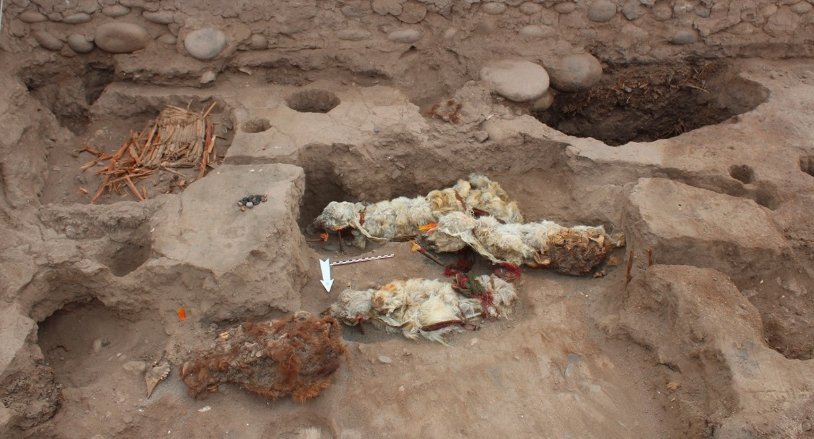
Ritual Without Blood: Llamas Likely Buried Alive
What stunned the team wasn’t just the preservation — it was the lack of trauma.
There were no visible cuts, no signs of butchering or bloodletting. The llamas didn’t appear to have been killed before burial.
And that’s led to a chilling conclusion: they were probably buried alive.
“This wasn’t about food. It was spiritual,” said Dr. Valdez. “The Inca believed these offerings could communicate with gods or spirits — and the life within the animal was part of the offering’s value.”
Unlike human sacrifices, which have been more extensively studied in Incan archaeology, animal sacrifices — especially in this preserved state — are rare finds. That’s what makes this so important.
Power, Politics, and Propaganda in Fur and Thread
The dating on the llamas — estimated between 1432 and 1459 — places the sacrifices right in the middle of the Inca Empire’s rapid expansion across what’s now modern-day Peru.
That timing might not be a coincidence.
Researchers believe these sacrifices were more than just spiritual — they were political theater. A way to:
-
Appease gods after conquest
-
Display Incan power and wealth to local populations
-
Integrate new communities through shared ritual and belief
“These weren’t random killings,” said one researcher from San Cristóbal of Huamanga University, who co-authored the study. “They were deliberate acts, aimed at bringing people together under Inca rule — emotionally, spiritually, and culturally.”
And llamas, beloved across the Andes, were the perfect symbols.
Fluffy, Festive, and Final: How the Llamas Were Buried
The llamas were discovered decorated — not mutilated. This mattered.
Researchers found:
-
Woven strings in vivid colors around their necks and bodies
-
Braided bracelets possibly made of plant fibers or alpaca wool
-
Burial contexts that suggested ceremonial preparation, not haphazard disposal
The burial pits were shallow and intentional — likely dug just deep enough to conceal but not so deep as to suggest mass dumping.
In at least one pit, the animal’s position suggested a calm posture — possibly the result of a ritual drugging or sedation. But that remains speculation.
“It’s not hard to imagine a solemn ritual, with music, chanting, offerings — and these animals lowered into the earth while still alive,” Valdez said quietly.
More Than Just Animals: The Inca View of Sacrifice
For the Inca, llamas weren’t just pack animals or wool sources. They were revered — second only to humans in spiritual value.
Sacrificing a llama was seen as a direct line to the divine.
Animal offerings were used to:
-
Petition the gods for rain or good harvests
-
Mark significant calendar events or royal births
-
Smooth political transitions or quell unrest after conquest
This wasn’t unique to the Inca. But their scale and ceremony were unmatched in the ancient Andes.
So when researchers found these four at Tambo Viejo — a newly secured region during the height of Incan expansion — it fit a broader pattern of ritual unification.
One sentence here: They weren’t just burying llamas — they were binding empires.