Indiana lawmakers just took a big step to make sure people with intellectual disabilities never face execution, while a controversial firing squad bill hit a wall in the Senate.
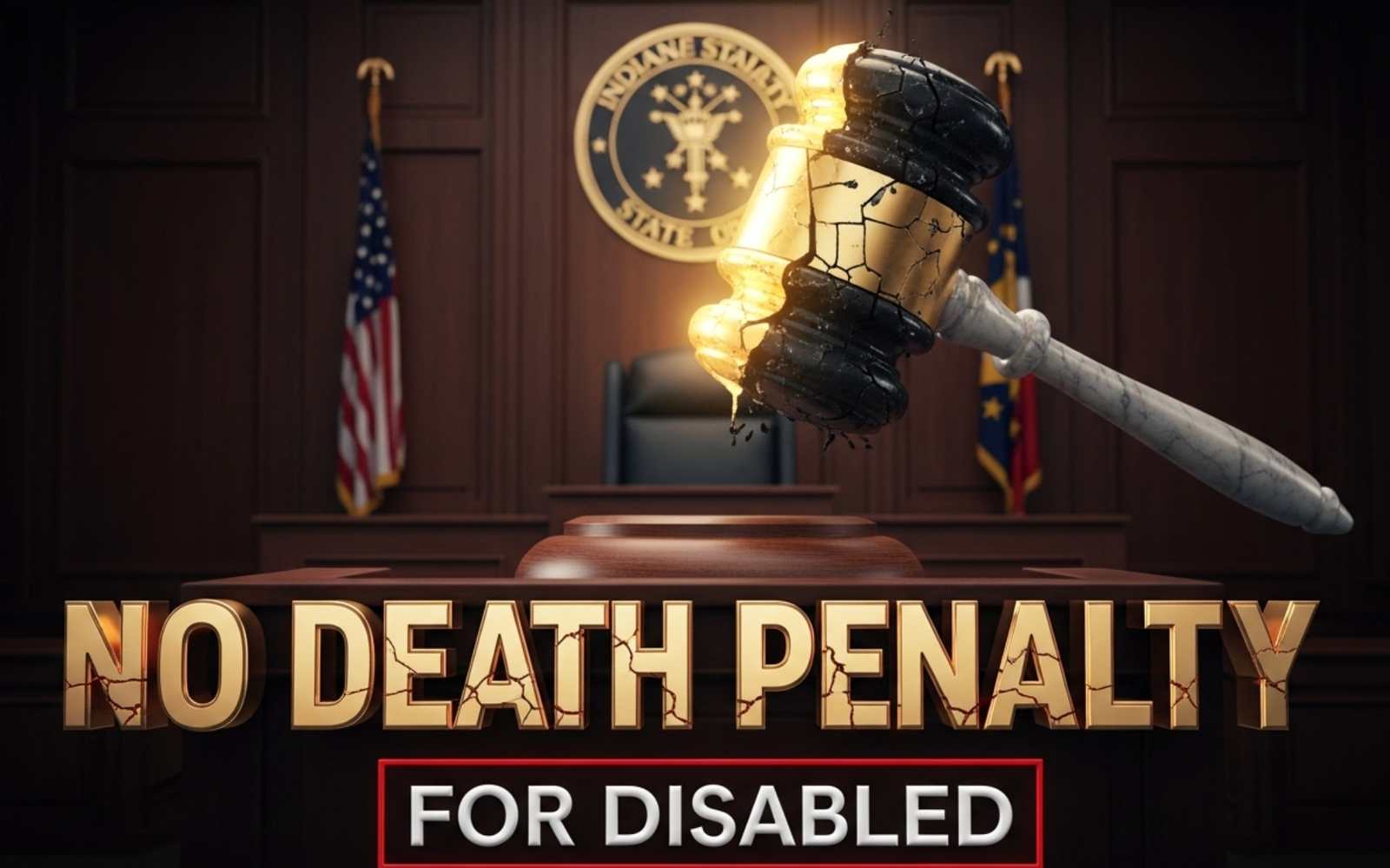
The unanimous vote in a House committee Wednesday shows rare agreement on a life-or-death issue that has divided Hoosiers for years.
House Passes Stronger Safeguards in Capital Cases
The House Courts and Criminal Code Committee voted 11-0 to send House Bill 1432 to the full chamber.
Sponsored by Rep. Garrett Bascom, R-Lawrenceburg, the bill closes a dangerous timing loophole. Right now, defendants must raise intellectual disability as a defense within 20 days of the omnibus date, often just weeks after charges are filed.
The new bill lets courts block the death penalty at any point before trial if intellectual disability is proven.
Bascom, a former public defender, told the committee he has seen clients struggle to get proper evaluations in that short window.
“This isn’t about changing who qualifies for the death penalty,” Bascom said. “It’s about making sure no one slips through the cracks because the clock ran out.”
The amended bill now forces automatic evaluations by two independent experts the moment prosecutors file notice they want death. Reports go first to defense lawyers, who then have 30 days to raise the issue.
Conditions like Down syndrome and Fetal Alcohol Spectrum Disorder would trigger these protections.
Supporters Call It Simple Justice and Smart Money
Tom Crishon from The Arc of Indiana testified the bill is “straightforward and important.”
He told lawmakers current rules value speed over accuracy. “Intellectual disability isn’t always obvious on day one,” Crishon said.
A legislative fiscal note backs him up. Early rulings could save Indiana taxpayers at least $260,000 per case in extra defense costs alone. Counties would avoid hundreds of thousands more in trial expenses.
The Indiana Catholic Conference also endorsed the measure, even though the Church now opposes all executions.
Public Defenders Raise One Big Worry
The Indiana Public Defender Council stayed neutral but flagged a concern.
Zach Stock warned that early evaluations ordered by the court could hurt defendants if the first report is flawed. Once a bad report is in the file, it can “taint” every future expert, he said.
Bascom promised to keep working with capital defenders before the full House vote.
Firing Squad Bill Stalls in Senate
Across the Statehouse, Senate Bill 11 hit a roadblock.
Sen. Mike Young’s proposal to add firing squad as a backup method was pulled from Tuesday’s agenda by committee chair Sen. Aaron Freeman, R-Indianapolis.
Freeman made his position crystal clear: “Indiana is a death penalty state, and as long as I have a say, it will stay that way.”
But he added he prefers lethal injection and has “concerns” raised by the Department of Correction. Freeman hasn’t decided if the bill gets another hearing next week.
Several amendments are ready, including one that would only allow firing squads if the DOC commissioner says drugs or other methods are truly unavailable.
Other Death Penalty Bills Languish
Three more capital punishment bills haven’t even gotten a hearing yet with less than two weeks left before committee deadlines:
- House Bill 1119 would let inmates choose firing squad or nitrogen gas
- House Bill 1314 aims to speed up appeals for death row inmates
- House Bill 1287 would force lawmakers to publicly volunteer for execution teams
All face long odds before the January 26 cutoff.
The contrasting fate of these bills shows Indiana remains deeply split on capital punishment. One side wants stronger safeguards for the most vulnerable. The other wants faster and more reliable ways to carry out executions.
For now, the House just sent a strong message: protecting Hoosiers with intellectual disabilities matters more than any deadline.
What do you think? Should Indiana keep the death penalty at all? Or is it time to join the 23 states that have already ended it? Drop your thoughts below.