
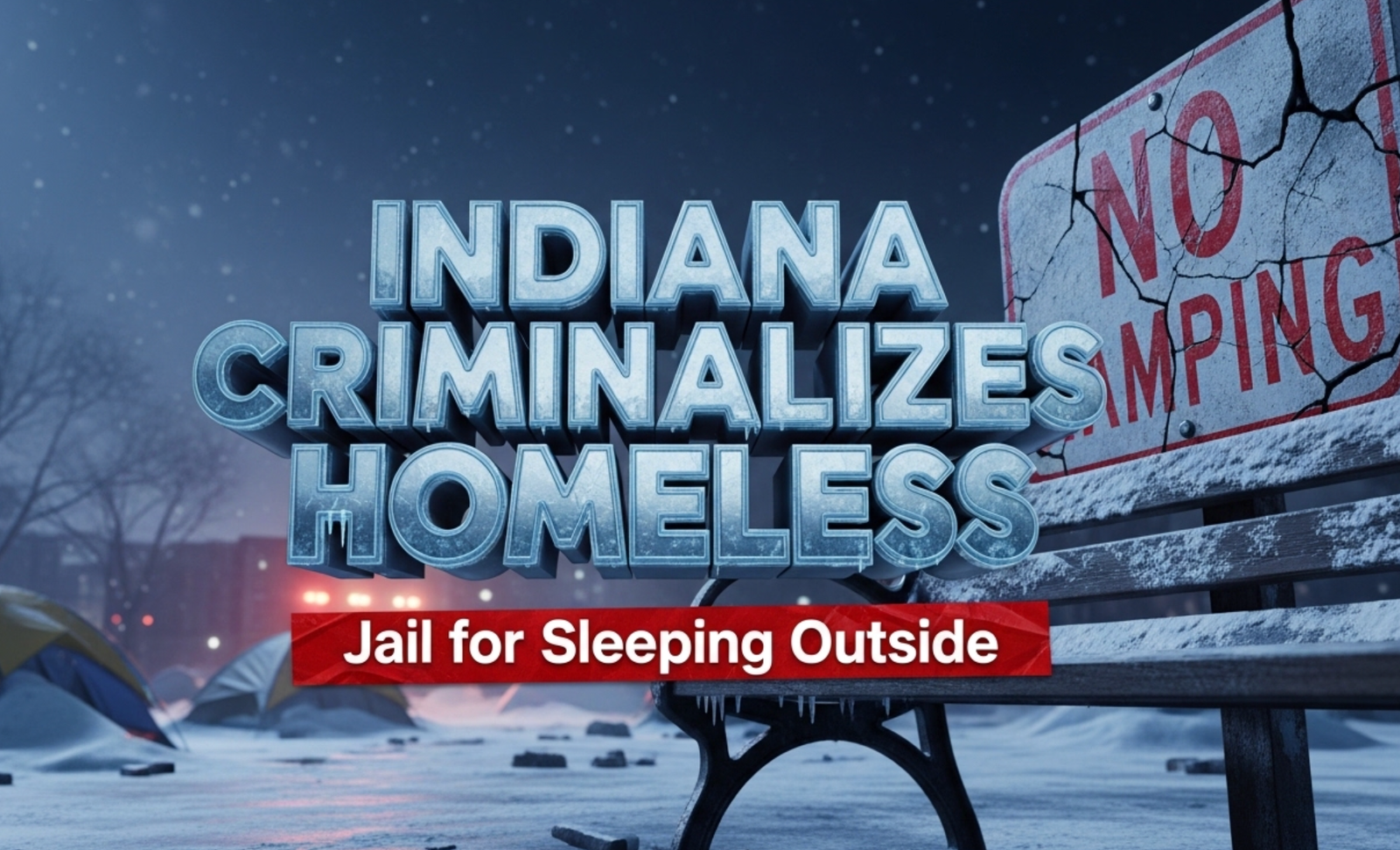
Indiana lawmakers have brought back a controversial proposal that would make it a crime for homeless people to camp or sleep on public land statewide. The move comes just months after the U.S. Supreme Court gave cities the green light to clear encampments, and it has already sparked fierce pushback from shelter leaders, mayors, and advocates who call it cruel and counterproductive.
What the New Bill Actually Does
Senate Bill 209, filed by Indianapolis Republican Senator Aaron Freeman in January 2025 and carried forward into the 2026 session, would make unauthorized camping on any public property a Class B misdemeanor. First offense carries up to 180 days in jail and a $1,000 fine. Repeat offenses could mean felony charges.
The bill also lets the state sue cities that refuse to enforce the ban and withholds certain state funds from “non-compliant” local governments. Supporters say it will restore safety and cleanliness to parks, sidewalks, and rights-of-way. Critics say it simply turns desperation into a crime.
Shelter Leaders Say It Will Make Things Worse
Thomas McArthur, CEO of Fort Wayne Rescue Mission, told 21Alive the legislation does the opposite of what people in crisis need.
“We already turn people away every night because we’re full,” McArthur said. “This bill adds another barrier when what they need is a hand up, not handcuffs.”
Fort Wayne has shelter beds for only 19 percent of its homeless population, according to last year’s count. On the coldest nights, rescue missions and overflow spaces still run out of room. Criminal records from camping tickets would make it even harder for people to get jobs or housing later.
“You can’t arrest your way out of homelessness,” McArthur said. “You solve it with more beds, more treatment, and more affordable housing.”
Mayors and Police Push Back Too
Fort Wayne Mayor Sharon Tucker’s office called the proposal “unworkable” and said it would strain police resources while doing nothing to reduce homelessness.
Indianapolis Mayor Joe Hogsett has taken the same stance. His administration already clears encampments under existing ordinances but says a statewide criminal ban goes too far without massive new funding for shelters and mental health services.
Police departments across the state have quietly told lawmakers they do not want to become de facto homelessness enforcers.
The Numbers Behind the Crisis
Indiana’s homeless population rose 12 percent between 2023 and 2024, according to the latest HUD Point-in-Time count. On any given night, more than 6,100 Hoosiers have nowhere to sleep indoors.
Fort Wayne alone saw a 28 percent jump in street homelessness last year. Cities like South Bend, Evansville, and Bloomington report similar surges.
Shelter capacity has not kept pace. Statewide, Indiana has roughly 3,800 emergency shelter and transitional beds for a population that often exceeds 6,000 on cold nights.
| City | Estimated Homeless (2024) | Emergency Beds Available | Coverage Rate |
|---|---|---|---|
| Fort Wayne | 680 | 130 | 19% |
| Indianapolis | 1,800+ | 1,200 | 66% |
| South Bend | 450 | 180 | 40% |
| Evansville | 520 | 210 | 40% |
| Statewide | 6,100+ | 3,800 | 62% |
Even on paper, more than one in three Hoosiers experiencing homelessness cannot find a bed when temperatures drop below freezing.
National Trend Meets Local Reality
Since the Supreme Court’s Grants Pass decision in June 2024, at least 20 states have introduced or passed similar anti-camping laws. Indiana’s version is one of the strictest because it applies statewide and includes penalties for local governments that look the other way.
Advocates point out that every major study on the issue reaches the same conclusion: criminalization increases costs for jails and hospitals while doing nothing to reduce homelessness long-term. Housing First programs, which give people an apartment and wraparound services without preconditions, cut chronic homelessness by 60 to 80 percent in cities that try them.
Indiana has not invested significant new dollars in Housing First or permanent supportive housing in years.
The bill has passed the Senate Corrections and Criminal Law Committee and could reach the full Senate floor as early as next week. If it becomes law, Indiana would join a growing list of states choosing punishment over solutions at a time when homelessness is climbing and temperatures are dropping.
Lives quite literally hang in the balance this winter. Lawmakers still have time to choose compassion over cuffs, more beds over more bars, and real help over empty gestures. People sleeping outside tonight deserve better than a criminal record for having nowhere else to go.
What do you think Indiana should do? Leave your thoughts below, and if you’re talking about this on social media, use #INHomelessCrisis so others can find the conversation.