
Beneath the Rails, a Sacred Surprise
What started as a mundane cleanup after a landslide on a British railway line has turned into one of the most unexpected archaeological finds in recent memory. Near the quiet town of Guildford in southern England, railway construction workers stumbled across something ancient, small, and sacred: a hidden medieval shrine sealed beneath a hillside, forgotten for centuries, and finally exposed by accident.
The shrine, believed to date back to the 14th century, was discovered embedded in the sandstone near a railway tunnel on the line between Guildford and Portsmouth. The site lies not far from the ruined Chapel of St. Catherine, suggesting a likely religious link that stretches across time, stone, and ritual.
“It’s the sort of find that reminds you how deep the past runs, even under our busiest infrastructure,” said a representative from Archaeology South East, the team called in to investigate the find.
A Cave Marked By Devotion—and Fire
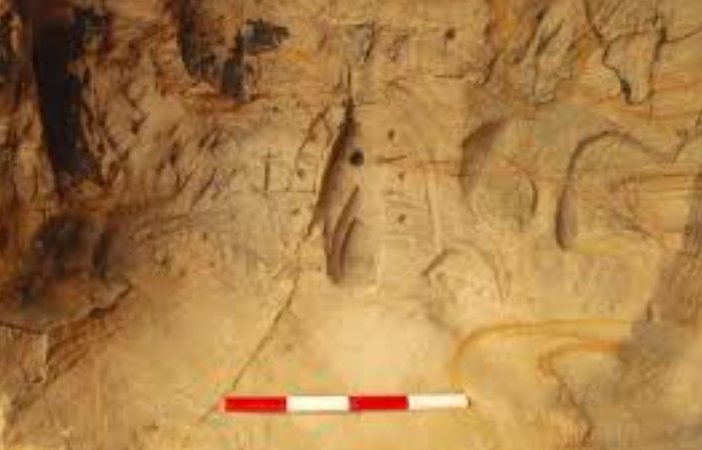
Inside the newly unearthed cave, archaeologists found carved niches and initials—signs that it had once been used for worship or reflection. The markings, weathered by time but still visible under the cave’s soot-covered ceiling, whisper of long-gone worshippers who once knelt in its small hollows, their lamps casting flickering light against the sandstone walls.
There were two fire pits and black dust—presumed to be soot from devotional lamps—coating the roof. Some sections of the cave rise barely 11 inches high, others reach up to 27, leading experts to believe that the structure may have been larger during its prime. Time and earth have shrunk it, but not erased it.
“This is an unexpected and fascinating discovery that helps to visualize and understand the rich history of the area,” said Network Rail Wessex Route Director Mark Killick.
Layers of History: From Roman Roads to Railways
The region surrounding Guildford has always had a historic weight to it. Roman roads, medieval chapels, and ancient farmsteads dot the Surrey countryside, but such finds are often hidden beneath layers of modern development.
The newly discovered shrine may have served as a waystation of sorts for pilgrims or local worshippers en route to the now-ruined St. Catherine’s Chapel, which stands nearby on St. Catherine’s Hill. That hill itself has been considered a spiritually significant site for centuries, and the cave’s proximity raises new questions about the nature of worship during the turbulent 14th century—a period marked by plague, war, and religious fervor.
“This small shrine adds dimension to our understanding of how religious practices were embedded in the everyday geography of medieval England,” said Dr. Helen Ashbridge, a medieval historian unaffiliated with the dig.
Preserving the Past Beneath Modern Tracks
Archaeologists are moving swiftly but cautiously. A detailed record of the cave has been created, including 3D scans and hand-drawn renderings of every etching and indentation. The site’s fragile sandstone construction means any further excavation must proceed with extreme care.
According to Network Rail, while the landslide that revealed the shrine disrupted transport temporarily, the discovery has forced a reassessment of how to proceed with slope stabilization work without damaging the historic structure. “Every effort will be made to preserve elements where possible,” Killick confirmed.
While full public access is unlikely due to the cave’s delicate condition and location, efforts are underway to digitally reconstruct the shrine for educational and cultural presentation.
Accidental Discoveries, Eternal Stories
This isn’t the first time a landslide has revealed history. Across Britain, a patchwork of ancient remains—from Viking settlements to Roman mosaics—has emerged from the earth thanks to accidental finds. But few discoveries are so quiet, so intimate, and so spiritually resonant as this hidden cave shrine.
Whether used by solitary monks, passing pilgrims, or desperate souls seeking solace in uncertain times, the cave’s carvings and soot tell a human story. And like so many ancient discoveries, its unveiling reminds us that even in our most utilitarian places—rail lines, tunnels, construction zones—history still breathes just beneath the surface.