
Archaeologists in Jordan have uncovered over 100 flint figurines from 7500 B.C. that may radically reshape how we think about the dawn of human art. These aren’t just relics — they’re echoes of a bizarre death ritual that might have triggered a major shift in Neolithic creativity.
A Haunting Discovery in the Zarqa River Valley
In the dusty scrublands of Jordan’s Zarqa river valley, a team of researchers made an unassuming find: small flint objects scattered near ancient burial sites. At first, no one blinked. Flint tools are common. But then someone noticed something odd.
These weren’t shaped like axes or scrapers. They had waists. Shoulders. Hips.
“I remember one of the excavators holding one up and saying, ‘This looks like a person,’” recalled Dr. Juan José Ibáñez, the study’s lead author. “At first, we all thought, ‘Nah, it’s just weird flint.’ But then we found more. Dozens more.”
By the time the dust had settled, the team — backed by Spain’s National Research Council and Durham University — had over 100 human-shaped figurines on their hands. Each carved from flint. Each eerily consistent in shape. All found in close proximity to disturbed graves.
A Cult That Dug Up Its Dead
The site, Kharaysin, was already known to archaeologists. But this latest discovery is something different — and unsettling.
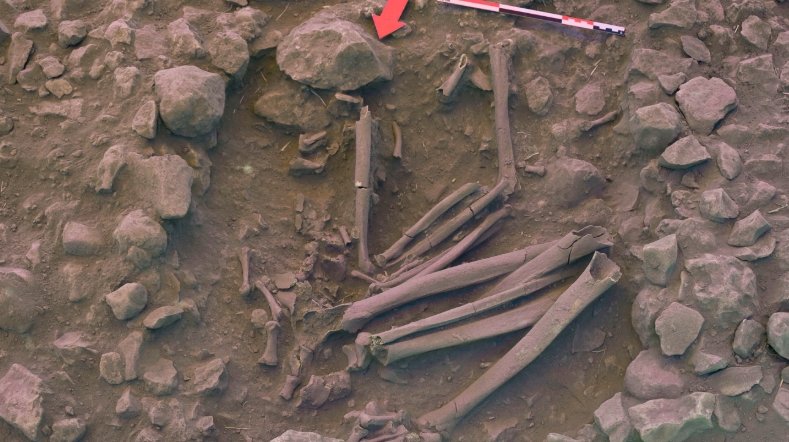
Of the seven original burials uncovered, several showed clear signs of having been dug up after burial. In some cases, skulls were removed. In others, entire skeletons had been shifted. Bones were repositioned, some reburied, others possibly taken away.
This wasn’t random desecration. It was intentional. Ritualistic.
Researchers believe this was part of a death cult remembrance practice — a group that routinely returned to its dead, unearthed them after decomposition, and used these figurines as part of the ceremony.
One sentence here: They didn’t just bury their dead — they kept them close, even in death.
Why the Figurines Matter
Figurines like these might not seem revolutionary at first glance. But their timing matters.
Around 7500 B.C., early human art was still focused heavily on animals — deer, bulls, lions. Depictions of people were rare and usually symbolic.
But these flint shapes? They’re clearly human. And they mark one of the earliest known efforts to consistently represent the human form in Neolithic Western Asia.
• Broad shoulders
• Slim waists
• Pronounced hips
• No heads or facial features
This level of anthropomorphic detail suggests a major shift — one that coincides with growing ritual complexity. Some archaeologists believe this cult’s practice of digging, disturbing, remembering, and crafting may have been the catalyst.
Not just for ritual.
But for art.
What They Found, and What They Think It Means
The Kharaysin site isn’t just a place of bones and flint. It’s a snapshot of a turning point in how humans related to the dead — and perhaps to themselves.
Here’s what the team pieced together:
| Evidence Found | Interpretation |
|---|---|
| Figurines shaped like human torsos | Used in symbolic or remembrance rituals |
| Skeletons reburied after decomposition | Intentional “secondary burial” practice |
| One individual’s skull missing | Possible ancestor veneration or ritual use |
| Figurines found near — not in — graves | Likely left as offerings or ritual tokens |
The placement of the figurines wasn’t haphazard. They were near the bodies. Close enough to matter, but not buried with them. That suggests they were part of the ritual, but separate from the dead themselves — possibly representing the spirit or memory of the person.
“The randomness of the placement is what intrigued us,” said Ibáñez. “They weren’t buried with the bones. They were left beside. It was like they were trying to say: this is for them, not with them.”
Could This Be the Birth of Human Representation?
This is where the story gets truly speculative — and truly fascinating.
Prior to 8000 B.C., most prehistoric art focused on the animal world. Hunters carved the creatures they feared, revered, and chased.
But something shifted.
After sites like Kharaysin, human figures begin to appear more regularly. Figurines become more common. People — not animals — start taking centre stage.
Was this cult — or one like it — the spark?
By handling the dead, reimagining their forms, creating representations of their presence — perhaps early Neolithic communities began thinking about identity. About memory. About self.
It’s a big leap. But it’s a tempting one.
“This could be where the idea of the portrait begins,” said one researcher. “Not with vanity. But with grief.”