
Researchers in Finland have used advanced imaging tools to spot new prehistoric paintings on a cliff that holds ancient secrets. This breakthrough at the Astuvansalmi site near Lake Yövesi reveals details invisible to the human eye and helps preserve these 5,000 year old treasures for the future.
The Astuvansalmi Site: Finland’s Ancient Canvas
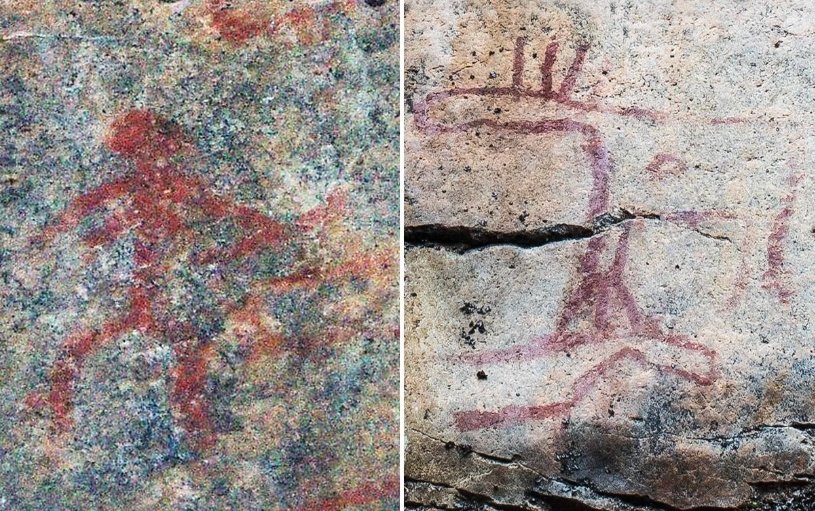
The Astuvansalmi cliff stands tall over the waters of Lake Yövesi in Ristiina, Finland. It hosts the largest collection of prehistoric rock art in the Nordic region, with about 80 known paintings of humans, animals, boats, and abstract shapes.
These works date back to around 3,000 BCE, created by early hunter gatherer communities. The red pigments, made from iron oxide, have faded over millennia due to weather and time. Moss and lichen often hide parts of the cliff face, making full study tough.
Experts believe the art served ritual or storytelling purposes. Similar sites across Scandinavia show patterns of human figures in motion, like dancing or hunting scenes. This location draws visitors yearly, but access is limited to protect the fragile rocks.
Recent trips by teams highlight how the site’s steep angle and water proximity add challenges. Still, its cultural value shines as a window into Stone Age life in northern Europe.
Advanced Tools Bring Hidden Art to Light
A team from the University of Eastern Finland led this effort with cutting edge gear. They deployed hyperspectral cameras that capture light beyond what eyes see, spotting tiny differences in red shades.
Project coordinator Veikko Miettinen noted quick wins during fieldwork. In just three hours, they found three possible new patterns on faded spots. These cameras also analyze pigment chemistry to date the art more precisely.
Panoramic photography and 3D scanners create detailed models of the cliff. Artificial intelligence processes the data to enhance images and remove noise from vegetation or cracks.
This mix of tech marks a shift from basic photos to deep analysis. Past methods relied on sketches or simple snaps, missing subtle layers. Now, researchers can unmix pigments to see if multiple artists worked over time.
The approach builds on global trends, like similar scans at caves in France or Australia. In Finland, it fits with growing interest in digital heritage amid climate threats to outdoor sites.
Key Discoveries from the Latest Scans
Early results show more than just new figures. The scans reveal how pigments evolved, with some areas showing fresher reds overlaid on older fades.
One finding points to a possible boat shape hidden under moss, adding to known watercraft motifs. This could link to ancient lake travel in the region.
Researchers also spotted variations in paint thickness, suggesting different tools or techniques. Iron oxide sources nearby explain the material choice, tying art to local resources.
These insights answer questions about the artists’ lives. Did they paint in groups? How did seasons affect their work? The data suggests seasonal visits, based on pigment weathering patterns.
Beyond visuals, the project maps the site’s condition. Erosion from rain and frost threatens the art, so this baseline helps track changes over years.
Preservation Through Digital Archives
The big win here is creating a virtual twin of the cliff. High resolution 3D models let anyone study the art without touching it, reducing wear from tourists.
This digital archive stores hyperspectral data for future analysis. As AI improves, old scans could yield even more details, like hidden symbols under layers.
Finland’s government supports such efforts to safeguard heritage. Astuvansalmi joins other protected sites, with rules on visits to limit damage.
Experts stress the role of tech in global preservation. Rising sea levels and pollution hit rock art worldwide, so methods like these set examples.
One challenge remains: interpreting the new finds. While tech reveals, human insight decodes meaning. Teams plan more trips to confirm discoveries.
Broader Impact on Prehistoric Studies
This work at Astuvansalmi sparks wider talks in archaeology. It shows how tech democratizes access to ancient history, letting schools and museums use virtual tours.
Comparisons to other sites emerge too. For instance, recent AI use in Spain’s Altamira cave found similar hidden layers, hinting at shared techniques across Europe.
The project also boosts local pride. In Ristiina, it draws eco tourists interested in sustainable history visits.
Looking ahead, funding calls grow for more scans at Nordic sites. This could uncover thousands of lost images, rewriting Stone Age narratives.
| Technology | Old Method | New Advantage |
|---|---|---|
| Imaging | Basic Photography | Hyperspectral detects invisible pigments |
| Modeling | Manual Sketches | 3D Scanners create accurate digital replicas |
| Analysis | Visual Inspection | AI enhances and interprets faded details |
- Hyperspectral cameras: Capture 100+ light wavelengths for pigment breakdown.
- 3D scanners: Build interactive models to measure cliff changes over time.
- AI processing: Removes distortions and highlights potential new art forms.
- Panoramic tools: Offer full site views for context in studies.
As these discoveries unfold, they remind us of humanity’s enduring creativity. Share your thoughts on ancient art in the comments below, and spread the word to keep history alive.