
Moxie, the well-known peregrine falcon nesting high above downtown Fort Wayne, has welcomed her first hatchling of the year, thrilling local residents and bird enthusiasts worldwide who closely follow her every move.
The proud mother, perched atop the Indiana Michigan Power (I&M) building, has been a familiar figure in the city’s skyline for over a decade. This new arrival marks another feather in the cap for a bird who’s become something of a local legend.
A New Chapter Begins at the I&M Building
It’s official: spring has arrived, and with it, new life. On Sunday evening, Moxie’s first chick of the 2025 season broke free from its shell, bringing excitement to the thousands who tune in to the Falcon Cam every year.
Rob Keisling, the External Affairs Manager at I&M, couldn’t hide his excitement. “Each year, people anxiously wait for the newest members of the peregrine falcon family to hatch,” he said. “I&M is honored to be part of this opportunity that is viewed and followed by Falcon fans around the clock, many from different parts of the world.”
Moxie laid her first egg back on March 18, with two more following shortly after on March 22 and March 28. It’s typical for peregrine falcon eggs to hatch about a month after they’re laid. This means more tiny beaks might be cracking through their shells any day now!
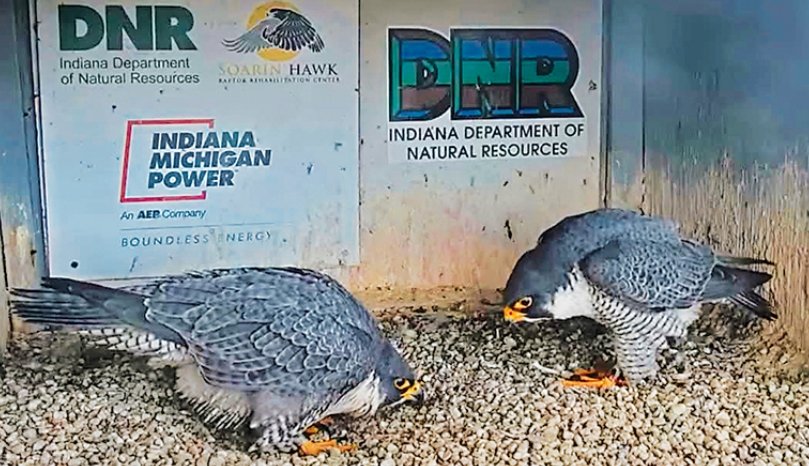
Fort Wayne’s Favorite Falcons: A Record of Success
It’s no small feat what Moxie and her longtime mate Jamie have built up there in the sky. Over the last 12 years, they’ve raised over 30 chicks together, turning the I&M building into a real nursery in the clouds.
Last year was particularly busy — four chicks named River, Storm, Tom, and Cindy joined the world from the same rooftop. If history is anything to go by, 2025 could be just as lively.
Since I&M first installed the nesting box back in 1996, nearly 70 falcon chicks have hatched there. The spot is perfect: high enough to mimic the cliff ledges that peregrines love, with plenty of food and very few natural predators.
You could say it’s prime real estate — Fort Wayne’s hottest property if you have feathers and a sharp beak.
Why Peregrine Falcons Choose the City Skyline
It might sound odd — skyscrapers instead of cliffs? But for falcons, the glass-and-steel landscape works just fine. Tall buildings give them that high ground they instinctively seek. Plus, cities have plenty of pigeons, starlings, and other small birds to hunt.
Here’s why the I&M site is ideal for raising falcon families:
-
Height: The I&M building offers elevation, which falcons use to spot prey and defend their territory.
-
Safety: With fewer natural predators like raccoons or snakes downtown, it’s safer for eggs and chicks.
-
Food Sources: Urban areas provide a buffet of prey species year-round.
-
Access to Water: The nearby rivers and lakes help parents stay hydrated and hunt aquatic birds.
Scientists have long noted that urban peregrine falcons tend to be incredibly successful breeders compared to their rural cousins.
The Team Behind the Scenes: Keeping Watch 24/7
While Moxie and Jamie handle the parenting duties, a whole human team works behind the scenes to make sure everything runs smoothly.
I&M partners with the Fort Wayne-based Soarin’ Hawk Raptor Rehabilitation Center, the Indiana Audubon Society, and the Indiana Department of Natural Resources. Together, they help monitor the birds, band the chicks for future tracking, and even assist in naming the newborns.
Banding the chicks isn’t just for fun. It plays a crucial role in conservation efforts by helping scientists track migration patterns, lifespan, and breeding success rates.
Here’s a quick look at last year’s stats for Fort Wayne’s falcon program:
| Year | Chicks Hatched | Survival Rate (Estimated) | New Names Given |
|---|---|---|---|
| 2024 | 4 | 75% | River, Storm, Tom, Cindy |
| 2023 | 3 | 80% | Sky, Rocket, Willow |
| 2022 | 2 | 100% | Flash, Breeze |
Those survival rates are pretty impressive, especially when compared to wild falcon populations, where only about 50% of chicks typically make it to adulthood.
What’s Next for Moxie’s New Chick?
Right now, the tiny fluffball is mostly sticking close to mom, staying warm and waiting to be fed. Over the next six weeks, the chick will grow rapidly — transforming from a downy bundle into a sleek, fierce young falcon ready for its first flight.
First flights are nerve-wracking but exhilarating. They usually happen about 42 days after hatching. Until then, the chick will practice flapping, hopping, and building those crucial flight muscles.
In about a month or so, if all goes well, Fort Wayne’s skyline will have a new streak of feathers zooming across it.
The city’s Falcon Cam remains live 24/7, drawing thousands of viewers from not just Indiana, but across the globe. Moxie’s story is a reminder that even in a bustling city, nature finds a way to captivate hearts — one hatchling at a time.