
Archaeologists in West Norfolk, England, have uncovered a 2000 year old Celtic war trumpet called a carnyx during a routine dig for new homes. This rare find, announced on January 7, 2026, might connect to Queen Boudica and her Iceni tribe who battled the Romans long ago.
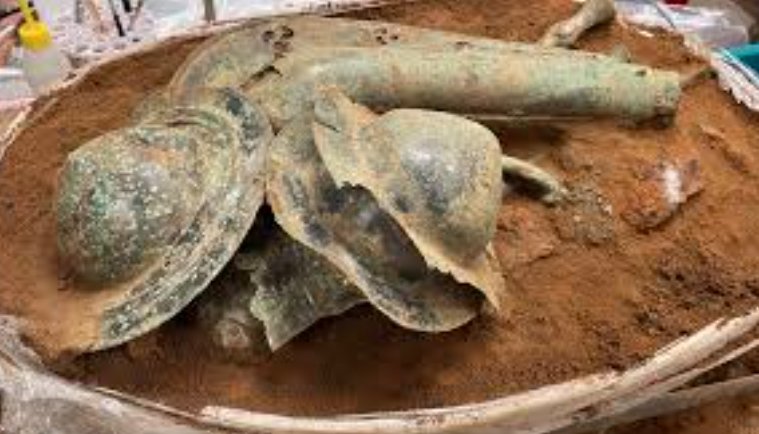
The discovery includes the most complete carnyx found in Europe, along with other Iron Age items like shield bosses and a boar head standard. Experts say it offers fresh insights into ancient Celtic warfare and culture.
The Exciting Find in West Norfolk
Last summer, a team from Pre Construct Archaeology started digging in West Norfolk as part of checks before building houses. They hit upon a hoard of metal objects buried deep in the soil.
This spot sits in what was once Iceni land, a Celtic group known for their fierce stand against Roman invaders. The items date back to between 50 BC and 50 AD, right around the time Romans pushed into Britain.
Workers found the artifacts in a pit, carefully placed together. Conservation experts are now cleaning and studying them to learn more.
The main prize is the carnyx, a tall bronze horn shaped like a boar’s head. It stands out because it is almost whole, unlike most others that are just fragments.
What Makes the Carnyx Special
Celtic warriors used the carnyx in battles to scare foes and rally their own side. It made a loud, eerie sound that echoed across fields.
Historians know about these from old Roman writings and a few surviving pieces. This new one is only the third ever found in Britain.
Here are key facts about known carnyx discoveries:
- Deskford Carnyx: Found in Scotland in 1816, dates to 1st or 2nd century AD.
- Tintignac Carnyx: Several pieces from France, around 1st century BC.
- This West Norfolk find: Most complete in Europe, from Iron Age Britain.
Experts rebuilt modern versions to hear the sound. It is deep and booming, like a mix of trumpet and animal roar.
The carnyx often had an open mouth at the top for the noise to blast out. Warriors held it high during charges.
Links to Boudica and the Iceni Tribe
Boudica led the Iceni in a big revolt against Rome in 60 AD. Her tribe lived in what is now Norfolk and nearby areas.
This discovery happened in their old heartland. Some think the carnyx could have been used in fights against Roman legions.
Boudica’s story inspires many today. She gathered warriors to attack Roman towns after her family suffered under Roman rule.
While no direct proof ties this horn to her, the timing fits. The hoard might have been hidden during troubled times.
Archaeologists note the boar head standard found with it. Boars were symbols of strength in Celtic culture.
If linked, this could rewrite parts of Boudica’s tale. It shows how her people armed themselves.
Recent events like this build on other finds. For example, gold torcs from Iceni lands show their wealth and power.
Expert Views on the Discovery
Archaeologists call this a once in a career event. One lead expert said it is extraordinarily rare.
Teams from museums and universities are involved. They plan to display the items soon.
Public interest spiked after the news broke. Social media buzzed with posts about Celtic history and Boudica.
| Aspect | Details |
|---|---|
| Location | West Norfolk, England |
| Date Found | Summer 2025, announced January 7, 2026 |
| Artifacts | Carnyx, shield bosses, boar head standard |
| Historical Period | Iron Age, 50 BC to 50 AD |
| Possible Connection | Iceni tribe and Boudica’s rebellion |
This table sums up the key points. It helps show why the find matters.
Experts warn against jumping to conclusions. More tests will check the exact age and use.
What Happens Next for the Artifacts
Conservation work continues at a lab. Specialists use gentle methods to preserve the bronze.
Once ready, the hoard might go to a local museum. This could draw visitors interested in ancient Britain.
The find reminds us of hidden treasures under modern sites. It stresses the need for digs before building.
In the future, this could lead to more searches in Norfolk. Who knows what else lies buried?
Share your thoughts on this amazing discovery in the comments below. Did you know about Celtic war trumpets before? Spread the word by sharing this article with friends who love history.