4,200+ acres scorched in Black Canyon’s South Rim; officials brace for long road ahead as park access remains uncertain
Firefighters knew right away this wasn’t going to be a quick one. When the South Rim Fire first sparked from a lightning strike on July 10, responders in Colorado’s Black Canyon of the Gunnison quickly realized they were in for a fight. And not an easy one.
It’s been over a week, and the fire has already burned through 4,227 acres — including a major portion of the park’s most visited area. Containment? Only 14% as of Friday, with more dry days and gusty afternoons on the horizon.
Crews Scramble to Hold the Line
Rusty Stark, the District Fire Management Officer for the Bureau of Land Management’s Southwest District, didn’t sugarcoat it.
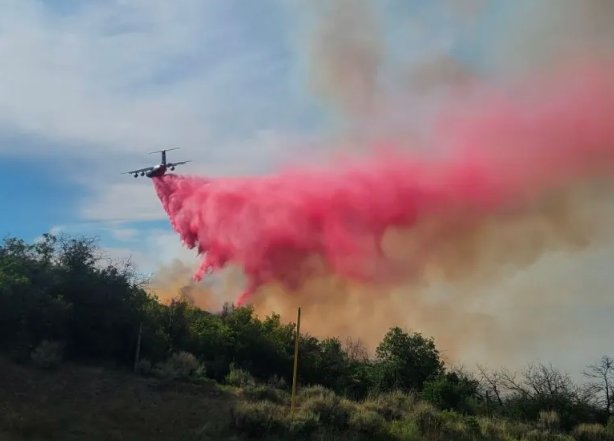
“You know, when we’re running retardant right out the gate — it becomes pretty obvious,” he said. “It was beyond our capabilities within the first operational period.”
That’s not a small admission. But when you look at what they’re up against — the cliffs, the heat, the logistics — it’s no surprise they called in reinforcements fast.
457 personnel are now on the scene. That includes:
-
5 aircraft, dropping retardant and scouting fire movement
-
22 engines, tackling the frontlines
-
15 heavy equipment units, clearing defensible space and creating fire breaks
But it’s slow going.
South Rim Takes the Brunt
Here’s the twist: although only about 12% of the entire park has burned, nearly 80% of the South Rim — the section with the highest visitor traffic — is scorched.
Park Superintendent Stuart West said it straight: the fire hit where it hurts.
This isn’t just a remote canyon slope nobody hikes. It’s the place families stop for photos. The overlooks. The campsites. The heart of the visitor experience.
And now, it’s blackened.
One official described the area as “unrecognizable in spots.”
Why Terrain Is the Enemy
Deputy Incident Commander Jay Miller didn’t mince words about the biggest hurdle.
“The steepness, the terrain, the rocks, the cliffs — we just can’t put boots in some of these places,” he said.
That means certain flanks of the fire are essentially unreachable. Crews have to work around them or try to box them in. And when the wind kicks up? Those boxed-in areas can blow wide open.
The terrain here isn’t just inconvenient — it’s dangerous.
In some areas, rolling a boulder could spark more flame than a lightning bolt.
One firefighter described a section of the ridge as “like walking on broken glass — only vertical.”
Cost Climbing Fast: $6.2 Million and Counting
It’s not just flames they’re battling. It’s dollars.
So far, the South Rim Fire has cost $6.2 million, a number that includes:
| Cost Component | Estimated Share |
|---|---|
| Firefighting Labor | $2.4 million |
| Equipment & Aircraft | $1.8 million |
| Park Resource Damage | $1.2 million |
| Incident Overhead | $800,000 |
Funding is being split between the National Park Service, the Bureau of Land Management, and Montrose County.
That doesn’t include indirect economic costs — like lost tourism revenue or future restoration needs.
And you can bet it’ll go up. Fires don’t get cheaper as they get deeper into July.
Reopening Timeline? No Promises
As for when Black Canyon will reopen to the public — don’t hold your breath. Superintendent West said it’s just too early to set a timeline.
Any reopening will happen in stages, he confirmed, and likely won’t include the full South Rim anytime soon.
There are just too many unknowns:
-
Hidden hot spots
-
Unstable terrain
-
Safety hazards near burnt structures and trees
One ranger said the soil is so scorched in some places, it “crumbles under your boots like toast.”
Community Watches and Waits
Residents in nearby Montrose are keeping a close eye on the smoke columns. Luckily, no homes have been threatened so far. But the canyon draws in thousands of visitors each year, and the fire is already putting a dent in the local economy.
Several small business owners say July bookings have dropped sharply.
One café owner near the park entrance told us, “Usually this time of year we’re slammed with hikers and campers. Now it’s just firefighters grabbing coffee.”
There’s also emotional impact. For locals who’ve spent decades hiking or working in the park, watching it burn is a gut punch.
Weather Could Turn the Tide — Or Make It Worse
Forecasts for the weekend are a mixed bag.
Temperatures will stay high — hovering in the 90s — with occasional wind gusts from the southwest. There’s a slight chance of thunderstorms by Sunday, but that could either help or backfire.
Dry lightning is still a risk. And sudden downdrafts can scatter embers into untouched areas. It’s a gamble.
As one crew chief put it, “We’re watching the sky like hawks right now. If it shifts the wrong way, it’ll be another long night.”