
Beneath the blue waters near Adrasan, Turkey, a 2,000-year-old secret has been waiting — and now, divers have found it, perfectly frozen in time.
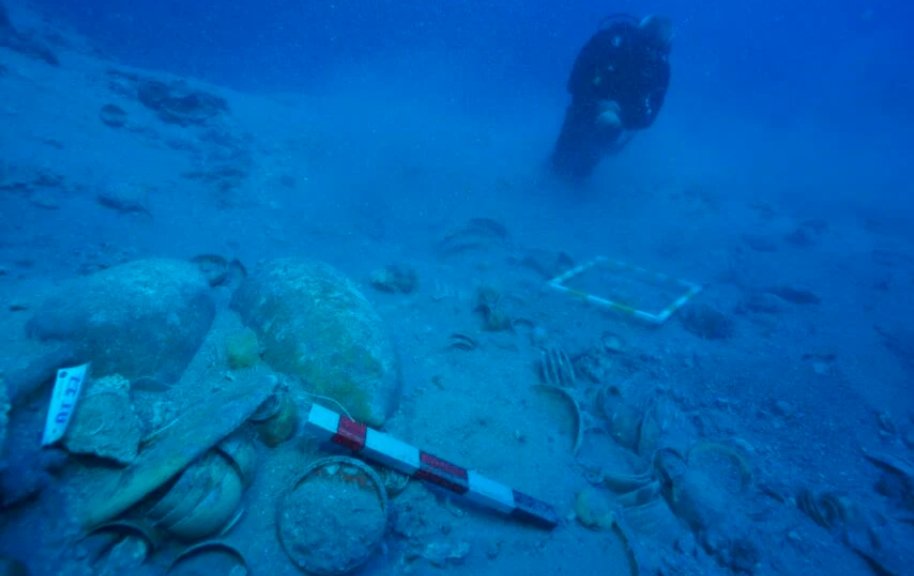
Archaeologists exploring the so-called “Ceramic Shipwreck” have uncovered stacks of bowls, plates, and pots, some still arranged just as they were when the vessel sank during the Late Hellenistic–Early Roman era.
A Time Capsule Under the Sea
Sitting roughly 150 feet below the surface, the shipwreck — known locally as “Seramik Batigi” — is now one of the most astonishing underwater finds in Turkey’s recent history.
One line: These ancient ceramics look almost untouched.
What makes it so remarkable? The pottery pieces still carry their original designs, preserved by an unusual protective layer of raw clay used at the time.
How Were the Ceramics So Intact?
Most shipwrecks get ravaged by saltwater, currents, or marine life — but these ceramics were different.
Experts say the craftsmen coated each bowl and pot in raw clay before firing them. This extra barrier kept their intricate details and colors safe from centuries of seawater.
One sentence: Think of it as nature’s time capsule, sealed shut for two millennia.
Heritage for the Future
Turkey’s Minister of Culture and Tourism, Mehmet Nuri Ersoy, even joined the dive himself. The exploration is part of the Heritage for the Future project, which aims to shed light on the country’s lesser-known underwater treasures.
In a statement, Ersoy said the find proves just how much history still sits undiscovered below Turkey’s coastlines.
And he’s not wrong — the Antalya region alone is dotted with sunken ruins, ancient ports, and lost cargo ships.
A Peek Into Daily Life 2,000 Years Ago
For historians, it’s not just about pretty pottery — it’s about what these everyday items tell us.
Each plate or bowl is a clue about trade routes, local diets, and how people lived at the time.
Check out this simple breakdown:
| Shipwreck Name | Seramik Batigi (“Ceramic Shipwreck”) |
|---|---|
| Age | ~2,000 years old |
| Depth | 150 feet underwater |
| Location | Near Adrasan, Antalya |
| Artifacts Found | Bowls, plates, pots — stacked intact |
One line: Imagine the stories each dish could tell.
What Happens Next?
Now that the ceramics are documented, researchers plan to carefully bring some pieces to the surface for conservation.
Underwater archaeologists say they’ll continue mapping the wreck site to see if other treasures are hidden below the sandy seabed.
-
New technologies like 3D scanning
-
Gentle underwater excavation
-
Conservation labs to keep the ceramics from disintegrating in open air
Turkey hopes the find will help boost cultural tourism in the region — but officials are quick to remind visitors not to disturb underwater sites.
“It’s Just the Beginning”
Experts say this discovery is likely just the start. The Heritage for the Future project is already eyeing other potential wrecks along the Mediterranean coast.
One short line: Who knows what’s still down there?