
In the shadowy hills of southern Peru, where empires once brewed both alliances and ales, archaeologists are toasting an unusual theory: the Wari, a pre-Incan civilization, kept peace in the Andes not with swords or laws—but with a steady stream of beer.
And not just any beer. Chicha—a sour, corn-based drink, brewed in mountainside taverns and served in gatherings that doubled as diplomacy.
A civilization built on social sips
The Wari empire popped up around 600 A.D. in the highlands of Ayacucho, and hung on for a staggering five centuries. That kind of political longevity in the ancient world? Rare. Very rare.
For years, historians puzzled over how the Wari managed such cohesion, especially considering their neighbors were no pushovers. But the secret sauce, it turns out, may have been fermented.
In a new study published in the journal Sustainability, researchers reveal that brewing, drinking, and distributing chicha played a foundational role in maintaining Wari society—both internally and with rival groups like the Tiwanaku.
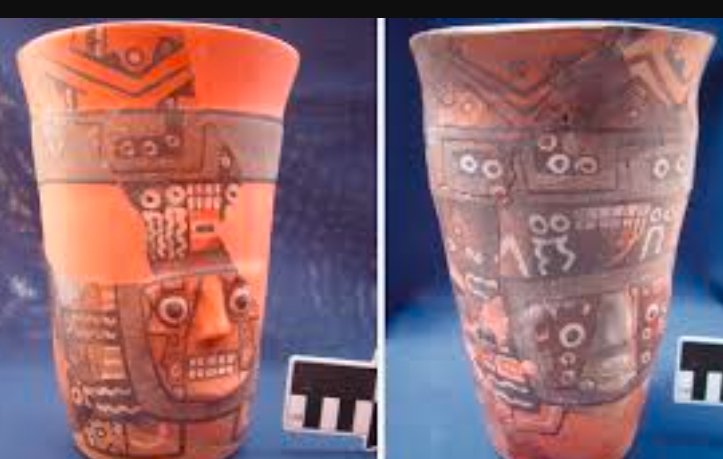
Ceramic secrets unlocked after 20 years
The theory isn’t just built on stories. It’s rooted in molecules.
Back in the early 2000s, archaeologist Ryan Williams and his team at the Field Museum uncovered remnants of an ancient brewery at Cerro Baúl, perched high in Peru’s southern mountains.
The ceramic vessels they found? They held more than dried residue. Thanks to modern laser-based “archaeometric” analysis, scientists could now detect the chemical ghosts of ingredients and even trace fermentation processes used over 1,000 years ago.
One sentence says it all:
“We were able to apply new technologies to capture information about how ancient beer was produced and what it meant to societies in the past,” Williams explained.
And what it meant, apparently, was everything.
Beer diplomacy wasn’t casual—it was calculated
The chicha didn’t just serve as a buzz-inducing beverage. It was a tool. A strategy. A social contract poured into clay cups.
You didn’t just stumble into a brewery. You were invited.
The Wari’s brewing centers, like the one at Cerro Baúl, were carefully designed. These weren’t haphazard backyard stills. They were ceremonial spaces. Microbreweries, sort of. But with state funding and geopolitical stakes.
The beer went bad within a week, so people had to drink it on-site—meaning leaders and emissaries had to travel, mingle, toast, and talk. The act of sharing the chicha was the act of keeping the peace.
What they brewed—and how fast they drank it
The beer, known as chicha, was tangy, cloudy, and a little funky by modern standards. It was made primarily from maize, though other regional ingredients likely flavored certain batches.
Because of its short shelf life, distribution had to happen fast. You couldn’t hoard it. You couldn’t export it. You had to be there—and that was kind of the point.
Bullet points for context:
-
Chicha was brewed from corn, sometimes mixed with fruits or herbs.
-
It took 1-2 days to ferment, but went bad after about 7 days.
-
Brew houses were built beside gathering halls to facilitate quick consumption.
-
These gatherings often included rituals, negotiations, and feasting.
And let’s be real: alcohol has long been a social lubricant. But here, it was statecraft in a clay cup.
The Wari weren’t just drinking—they were organizing
This wasn’t some drunken free-for-all. The Wari used beer to anchor structured social events. The goal wasn’t inebriation—it was integration.
While the Incas are more famous today, the Wari may have set the blueprint for how complex Andean societies organized territory without constant warfare.
Here’s a comparative snapshot of the region’s empires:
| Civilization | Era | Strategy for Social Cohesion | Signature Drink |
|---|---|---|---|
| Wari | 600–1100 AD | Beer-based diplomacy, shared rituals | Chicha |
| Tiwanaku | 400–1000 AD | Ceremonial centers, trade | Likely similar fermented beverages |
| Inca | 1438–1533 AD | Military, infrastructure, religion | Chicha |
Chicha, it seems, was the constant across eras—but the Wari were the ones who made it political.
Brewing connections, not just beer
The study’s implications go beyond the Andes. It challenges the old-school view that centralized power in ancient civilizations always came from hierarchy, violence, or control.
Sometimes, it comes from the cup in your hand. From shared meals. From a moment of vulnerability, sitting together over something warm, frothy, and slightly sour.
In the words of Williams:
“This study helps us understand how beer fed the creation of complex political organizations.”
And maybe, how people long ago weren’t so different from us after all.