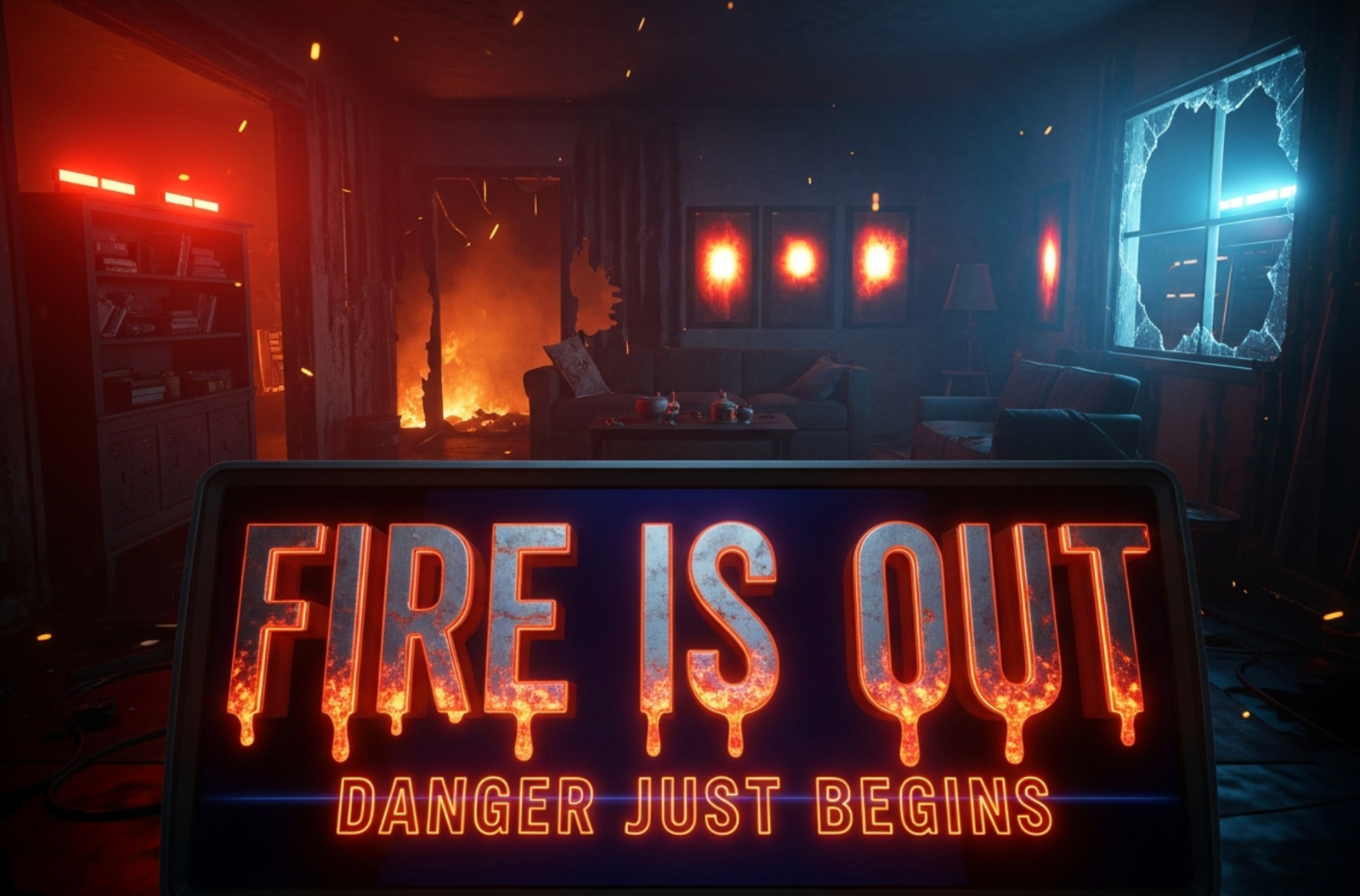
Most people think the job ends when the last flame dies. In reality, that moment marks the beginning of the most critical and dangerous phase of any fire response.
Firefighters across America stay on scene for hours, sometimes days, after the fire is declared “out.” They hunt hidden threats, tear apart walls, and protect families from dangers most homeowners never see coming.
Overhaul: Hunting Ghosts in the Walls
As soon as the visible fire disappears, crews begin overhaul, the methodical search for heat that can reignite hours later.
Firefighters rip open walls, pull down ceilings, and dig through insulation with pike poles. They use thermal imaging cameras to spot hot spots glowing behind sheetrock that look perfectly normal to the naked eye.
Captain Mike Thompson of the Los Angeles Fire Department told reporters after a recent Hollywood Hills blaze: “We found fire still burning inside a wall void six hours after knockdown. If we had left, that house would have been fully involved again by morning.”
This work is exhausting and dangerous. Wet debris, weakened floors, and falling objects injure more firefighters during overhaul than during active firefighting.
Securing Hidden Killers Most People Forget
While one crew performs overhaul, others tackle silent threats that can kill long after flames are gone.
They shut off gas lines, kill electricity at the main breaker, and check for leaking propane tanks or lithium-ion batteries that can spontaneously re-ignite days later.
Carbon monoxide levels often remain deadly for hours. In a Colorado Springs apartment fire last month, CO readings stayed above 300 ppm for four hours after extinguishment, forcing firefighters to keep everyone out until ventilation brought levels down.
The Investigation: Finding Truth in the Ashes
Every structure fire triggers a formal investigation to determine exact cause.
Fire investigators arrive once overhaul is complete. They walk backward from where the fire burned least to where it burned most, reading the damage like a crime scene.
In 2024 alone, careless smoking remains the leading cause of fatal home fires, followed closely by cooking equipment and faulty electrical distribution, according to the latest NFPA report.
The Damage You Can’t See Until It’s Too Late
Smoke and soot contaminate everything they touch, often worse than the flames themselves.
Porous items like mattresses, couches, and clothing absorb toxic chemicals that cannot be cleaned. Food in sealed containers becomes unsafe. Even unopened prescription bottles must be replaced because plastic absorbs carcinogens.
Professional restoration companies now use hydroxyl generators and thermal fogging to neutralize odors and chemicals, but many families lose nearly everything they own to invisible contamination.
Key items homeowners must discard after any house fire:
- All food, even canned goods and items in the refrigerator
- Medicines and cosmetics
- Mattresses and upholstered furniture
- Children’s toys made of plastic or fabric
- Clothing that wasn’t in sealed plastic bins
When Firefighters Finally Leave
Only when thermal cameras show no heat, utilities are secured, investigators complete their work, and the scene is turned over to restoration experts do crews pack up.
In major fires, this process can take 12 to 48 hours of continuous work.
Firefighters themselves face lasting effects. A 2024 study published in the Journal of Occupational and Environmental Medicine found that post-fire overhaul exposes crews to dangerously high levels of benzene, formaldehyde, and asbestos particles.
Yet they keep coming back, because they know what happens if they leave too soon.
The flames may be gone, but the danger lives on in the walls, in the air, in the very fabric of a home. These men and women stay until every last threat is eliminated, working in the smoke and silence long after the sirens stop and the crowds go home.
They do it so families can eventually return to something that feels like normal again.