
A tour guide in Wisconsin spotted a 138-year-old shipwreck while scouting rafting spots in Lake Michigan. Matt Olson found the remains of the Frank D. Barker, which sank in 1887 after bad weather pushed it into rocks near Door County.
This summer, Olson noticed an odd shape on satellite images near Rowleys Bay. He investigated and confirmed the wreck, marking his third such find in recent years.
How the Discovery Happened
Matt Olson runs Door County Adventure Rafting and often checks water conditions for tours. While looking at online maps, he saw a shadow that looked out of place under about 24 feet of water.
He grabbed his gear and headed out on his boat to check it. From the surface, he could see wooden planks and parts of the hull poking through the sand.
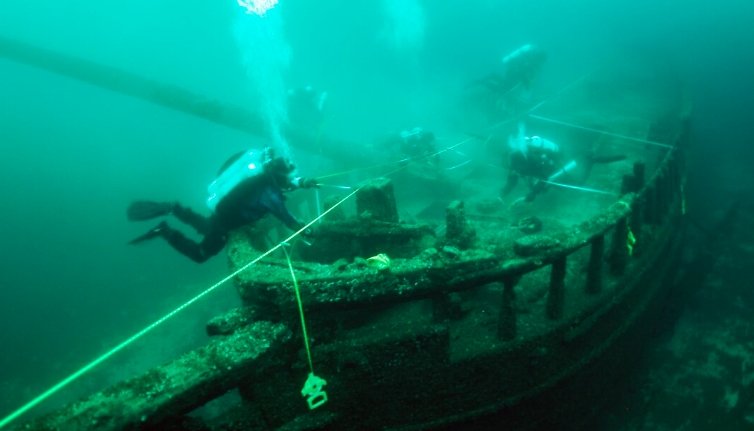
Olson contacted experts right away. Divers from the Wisconsin Historical Society dove in to explore and identify the ship.
The team used underwater cameras and tools to map the site. They found the wreck matched old records of the Frank D. Barker.
This find adds to Olson’s track record. He has located two other wrecks in the area over the past few years, turning his hobby into big news.
History of the Frank D. Barker
The Frank D. Barker was a wooden schooner built in the late 1800s. It carried cargo like lumber and iron across the Great Lakes.
Ships like this were common back then. They helped build towns and move goods in a growing region.
Records show the Barker sailed from ports in Wisconsin and Michigan. It faced rough waters often, as Lake Michigan can turn stormy fast.
Experts say over 6,000 ships have sunk in the Great Lakes. Many remain hidden due to cold, fresh water that preserves wood well.
The Barker was one of many lost to accidents. Its story highlights the dangers of early lake travel.
Here are key facts about the ship:
- Built: 1873 in Detroit, Michigan
- Type: Three-masted schooner
- Length: About 135 feet
- Cargo: Often lumber or ore
- Crew: Typically 7 to 10 people
The Fateful Sinking in 1887
On October 3, 1887, the Frank D. Barker left Chicago bound for Escanaba, Michigan. Thick fog rolled in, making navigation tough.
The captain tried to steer clear of shore, but winds pushed the ship off course. It struck a limestone reef near Rowleys Bay.
Water flooded the hull quickly. The crew escaped in lifeboats and rowed to safety on land.
No one died in the wreck, but the ship broke apart over time. Parts drifted away, and the rest sank into the lake bed.
Newspapers at the time reported the loss. Owners filed claims, but the exact spot stayed unknown for over a century.
Divers today see ceiling planking and iron fittings still intact. The cold water kept much of it from rotting.
Why This Find Matters Today
Shipwrecks like this teach us about past trade and travel. They show how people lived and worked on the lakes.
In Wisconsin, Door County draws tourists for its history and outdoors. This discovery could boost visits to the area.
Experts plan to study the site more. They want to learn about shipbuilding from that era.
Preservation is key. Laws protect wrecks from looting, so divers can visit but not take items.
This year alone, several Great Lakes finds have made headlines. In 2025, tech like drones helps locate more lost ships.
| Timeline of the Frank D. Barker | |
|---|---|
| 1873 | Ship built in Detroit |
| 1880s | Active in cargo transport |
| October 3, 1887 | Sinks near Door County |
| 1887-2025 | Location unknown |
| Summer 2025 | Discovered by Matt Olson |
| August 2025 | Confirmed by experts |
Future Plans for the Site
The Wisconsin Historical Society will add the wreck to state records. They might create maps or virtual tours for the public.
Local groups hope to offer guided dives or boat trips to view it. Safety comes first, as currents can be strong.
Researchers could find artifacts nearby. Any items would go to museums for display.
This ties into broader efforts to map Lake Michigan’s bottom. New tech reveals secrets hidden for generations.
Share your thoughts on this amazing find. Have you explored shipwrecks? Comment below or pass this story to friends who love history.