
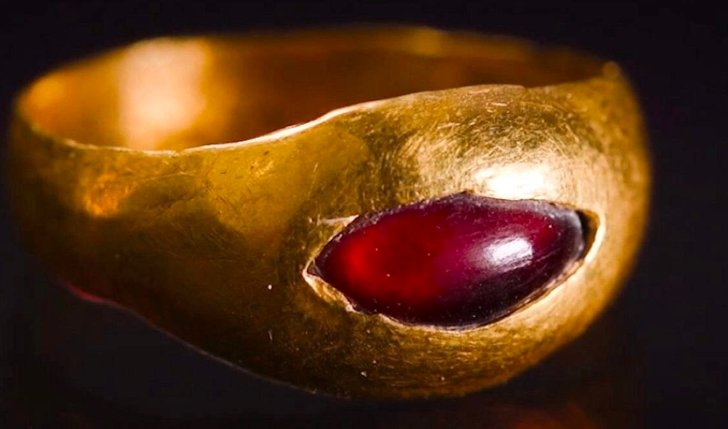
During ongoing excavations in Jerusalem’s historic City of David area, archaeologists uncovered a remarkably well-preserved gold ring set with a red garnet gemstone—an artifact dating back approximately 2,300 years to the Second Temple period (late 3rd to early 2nd century B.C.E.). The ring, thought initially to be modern jewelry, astonished researchers with its pristine condition and intricate craftsmanship.
Discovery That Sparked Excitement Among Excavators
The gold ring was found in the dirt near the foundations of an ancient building at Jerusalem Walls National Park. Rivka Lengler, one of the excavators, recounted the moment: “Ben pulled a gold ring out of the dirt while sifting through the soil. He was certain it was a modern piece dropped accidentally by one of our team, but when I examined it, I realized it was ancient. The entire team gathered around, amazed by the find—it was very exciting.”
This is not the first ring of its kind found at the site—last year, a similar gold ring dating from the same period was uncovered nearby, reinforcing the significance of this discovery.
More Than Just a Ring: A Jewelry Hoard with Cultural Significance
Alongside the ring, archaeologists uncovered other pieces of jewelry, including bronze earrings, a gold earring depicting a horned animal, and a decorated gold bead. These finds were discovered beneath the floor of the ancient building, suggesting deliberate burial rather than accidental loss.
Experts propose these artifacts could relate to a Hellenistic-era coming-of-age tradition. This custom, prevalent during the early Hellenistic period, involved betrothed women burying childhood belongings—including jewelry—in the foundations of their homes as a symbolic gesture marking the transition from childhood to adulthood.
Dr. Marion Zindel, who studied the ring, explained, “The fact that these small rings and other jewelry were buried under the building’s floors suggests intentional placement, possibly linked to the practice of betrothed girls burying childhood possessions as part of a rite of passage.”
Clues to Wealth and Status
The exquisite craftsmanship and choice of materials hint that the owner came from a wealthy family. The ring’s bright garnet gemstone aligns with fashionable trends of the era and would have been costly. Nearby foundations of a large building further underscore the likely affluent status of the household.
The ring itself is small—so much so that it was likely worn by a young girl, possibly the daughter of this prosperous family.
Historical Context: The Second Temple Period and Hellenistic Influences
The Second Temple period in Jerusalem was a time of significant cultural exchange and influence, especially from Hellenistic (Greek) traditions following the conquests of Alexander the Great. The practice of burying childhood belongings to mark adulthood fits within this cultural milieu, shedding light on the social customs of the time.
Summary of Key Points
-
Artifact: Gold ring set with red garnet, dating from late 3rd to early 2nd century B.C.E.
-
Location: City of David, Jerusalem Walls National Park
-
Condition: Exceptionally well-preserved, initially mistaken for modern jewelry
-
Cultural Significance: Likely connected to Hellenistic coming-of-age customs for girls
-
Accompanying Finds: Bronze earrings, gold earring with animal motif, decorated gold bead
-
Owner: Likely a wealthy family, ring probably worn by a young girl
-
Site: Buried beneath ancient building foundations, indicating deliberate placement
This extraordinary find offers a rare, tangible connection to the lives and customs of Jerusalem’s inhabitants over two millennia ago, illuminating the intersection of culture, tradition, and daily life during the Second Temple era.